Frequently Asked Questions
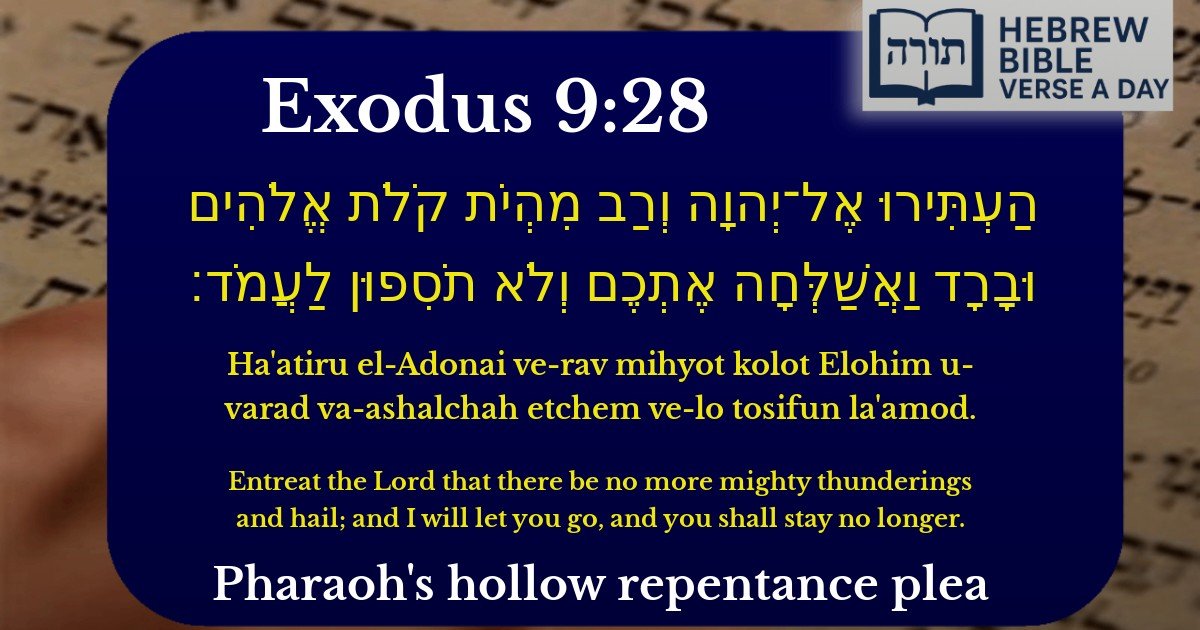
Q: What does Pharaoh mean when he says 'Entreat the Lord' in Exodus 9:28?
A: Pharaoh is asking Moshe (Moses) to pray to Hashem to stop the plague of hail and thunder. According to Rashi, this shows Pharaoh's temporary recognition of Hashem's power during the plagues, though his repentance was not sincere (as seen later when he hardens his heart again).
Q: Why does Pharaoh mention 'thunderings and hail' specifically in this verse?
A: The thunder and hail were part of the seventh plague in Egypt (Exodus 9:22-26). The Midrash explains that this plague was especially terrifying because it combined fire (hail) and water, which normally cannot coexist—demonstrating Hashem's complete control over nature.
Q: What can we learn from Pharaoh's request in Exodus 9:28?
A: The Rambam teaches that Pharaoh's behavior here is an example of insincere repentance—he only sought relief from suffering but did not truly change his ways. This teaches us that real teshuvah (repentance) requires sincere commitment to improvement, not just temporary pleading during hardship.
Q: How does this verse show the power of prayer in Judaism?
A: Even though Pharaoh was wicked, his request acknowledges that Moshe's prayers to Hashem could affect change. This reflects a key Jewish belief—as taught in the Talmud (Berachot 10a)—that sincere prayer can influence Divine decrees, especially when offered by righteous individuals like Moshe.
Q: Why does Pharaoh say 'I will let you go' if he later refuses?
A: As Rashi explains, Pharaoh repeatedly made false promises during the plagues. His words here were empty—he had no intention of freeing Bnei Yisrael permanently. This pattern shows the danger of deceit and the importance of keeping one's word, a value emphasized in Jewish ethics (see Talmud, Shevuot 39a).


Context in the Exodus Narrative
This verse (Exodus 9:28) appears during the seventh plague of hail, where Pharaoh, temporarily humbled by the devastation, asks Moshe and Aharon to intercede with Hashem to stop the thunder and hail. Rashi explains that Pharaoh's plea demonstrates his recognition of Hashem's power at that moment, though his repentance was not sincere, as he later hardened his heart again (Shemot Rabbah 12:1).
Pharaoh's Conditional Promise
The phrase "וַאֲשַׁלְּחָה אֶתְכֶם וְלֹא תֹסִיפוּן לַעֲמֹד" ("I will let you go, and you shall stay no longer") reveals Pharaoh's insincerity. The Ramban notes that Pharaoh does not commit to freeing Bnei Yisrael permanently but only to a temporary cessation of their labor—a far cry from Moshe's demand of complete liberation. The Midrash Tanchuma (Va'eira 14) highlights that Pharaoh consistently sought to negotiate partial concessions rather than submit fully to Hashem's will.
The Nature of the Plague
The "קֹלֹת אֱלֹהִים וּבָרָד" ("mighty thunderings and hail") were uniquely terrifying. The Talmud (Berachot 54b) teaches that the hail contained fire within ice—a supernatural phenomenon symbolizing Hashem's mastery over opposing forces. The Sforno adds that the thunder (kolot) served as divine warnings, giving Egyptians time to repent by bringing their servants and livestock indoors (Exodus 9:19-20).
Lessons in Prayer and Leadership