

Join Our Newsletter To Be Informed When New Videos Are Posted
Hebrew Text
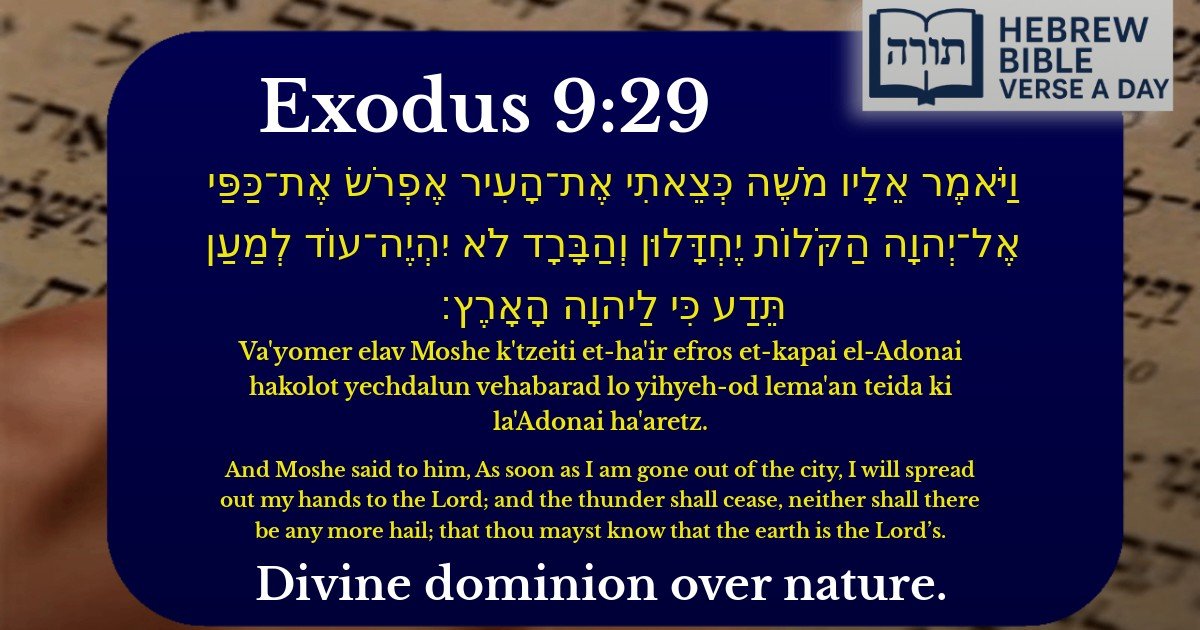
וַיֹּאמֶר אֵלָיו מֹשֶׁה כְּצֵאתִי אֶת־הָעִיר אֶפְרֹשׂ אֶת־כַּפַּי אֶל־יְהוָה הַקֹּלוֹת יֶחְדָּלוּן וְהַבָּרָד לֹא יִהְיֶה־עוֹד לְמַעַן תֵּדַע כִּי לַיהוָה הָאָרֶץ׃
English Translation
And Moshe said to him, As soon as I am gone out of the city, I will spread out my hands to the Lord; and the thunder shall cease, neither shall there be any more hail; that thou mayst know that the earth is the Lord’s.
Transliteration
Va'yomer elav Moshe k'tzeiti et-ha'ir efros et-kapai el-Adonai hakolot yechdalun vehabarad lo yihyeh-od lema'an teida ki la'Adonai ha'aretz.
Hebrew Leining Text
וַיֹּ֤אמֶר אֵלָיו֙ מֹשֶׁ֔ה כְּצֵאתִי֙ אֶת־הָעִ֔יר אֶפְרֹ֥שׂ אֶת־כַּפַּ֖י אֶל־יְהֹוָ֑ה הַקֹּל֣וֹת יֶחְדָּל֗וּן וְהַבָּרָד֙ לֹ֣א יִֽהְיֶה־ע֔וֹד לְמַ֣עַן תֵּדַ֔ע כִּ֥י לַיהֹוָ֖ה הָאָֽרֶץ׃
🎵 Listen to leining
Parasha Commentary
📚 Talmud Citations
This verse is quoted in the Talmud.
📖 Ta'anit 7b
The verse is referenced in a discussion about the power of prayer and how Moses' actions demonstrate the efficacy of spreading out one's hands in prayer to God.
📖 Berakhot 32b
The verse is cited in a discussion about the importance of prayer and how Moses' prayer for the cessation of the plagues serves as a model for effective supplication.
Context of the Verse
The verse (Shemot 9:29) occurs during the seventh plague of hail (ברד) in Egypt. Moshe informs Pharaoh that once he leaves the city, he will pray to Hashem to end the hail, demonstrating that the earth belongs to Hashem.
Rashi's Explanation
Rashi (Rabbi Shlomo Yitzchaki) comments on this verse:
Rambam's Perspective
The Rambam (Maimonides) in Hilchot Tefillah (5:6) discusses the importance of proper prayer posture, noting that Moshe's spreading of his hands reflects humility and total reliance on Hashem.
Midrashic Insights
The Midrash (Shemot Rabbah 12:5) elaborates:
Ibn Ezra's Commentary
Ibn Ezra highlights that Moshe's prayer was immediate and effective to prove that the plagues were not natural phenomena but direct acts of Hashem, countering Egyptian beliefs in natural forces as deities.
Halachic Implications
The Gemara (Berachot 10b) derives from this verse that one should avoid praying in a place of idolatry or moral degradation, reinforcing the principle of hitchadshut ha'tefillah (renewing prayer in a sanctified space).
Spiritual Message
This verse teaches: