
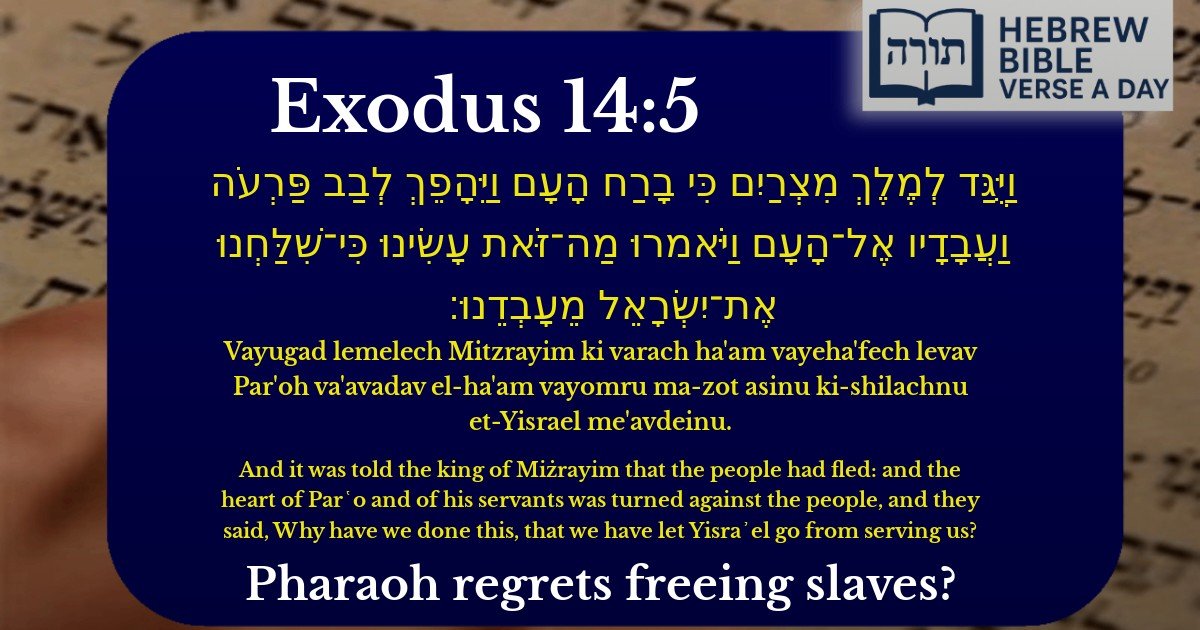

Exodus 14:5 - Pharaoh regrets freeing slaves?

Exodus 14:5 - שמות 14:5

Hebrew Text

וַיֻּגַּד לְמֶלֶךְ מִצְרַיִם כִּי בָרַח הָעָם וַיֵּהָפֵךְ לְבַב פַּרְעֹה וַעֲבָדָיו אֶל־הָעָם וַיֹּאמרוּ מַה־זֹּאת עָשִׂינוּ כִּי־שִׁלַּחְנוּ אֶת־יִשְׂרָאֵל מֵעָבְדֵנוּ׃

English Translation

And it was told the king of Miżrayim that the people had fled: and the heart of Par῾o and of his servants was turned against the people, and they said, Why have we done this, that we have let Yisra᾽el go from serving us?

Transliteration

Vayugad lemelech Mitzrayim ki varach ha'am vayeha'fech levav Par'oh va'avadav el-ha'am vayomru ma-zot asinu ki-shilachnu et-Yisrael me'avdeinu.

Hebrew Leining Text

וַיֻּגַּד֙ לְמֶ֣לֶךְ מִצְרַ֔יִם כִּ֥י בָרַ֖ח הָעָ֑ם וַ֠יֵּהָפֵ֠ךְ לְבַ֨ב פַּרְעֹ֤ה וַעֲבָדָיו֙ אֶל־הָעָ֔ם וַיֹּֽאמְרוּ֙ מַה־זֹּ֣את עָשִׂ֔ינוּ כִּֽי־שִׁלַּ֥חְנוּ אֶת־יִשְׂרָאֵ֖ל מֵעׇבְדֵֽנוּ׃

🎵 Listen to leining

Parasha Commentary

Pharaoh's Change of Heart

The verse describes Pharaoh's sudden regret after allowing Bnei Yisrael to leave Egypt. Rashi (Shemot 14:5) explains that Pharaoh and his servants initially consented to their departure due to the overwhelming devastation of the Ten Plagues. However, upon realizing that Bnei Yisrael had no intention of returning after their three-day journey (as initially requested), their hearts hardened again.

The Nature of "וַיֵּהָפֵךְ לְבַב" (The Heart Was Turned)

The phrase "וַיֵּהָפֵךְ לְבַב" indicates a complete reversal of attitude. The Midrash Tanchuma (Beshalach 1) teaches that this was a divine intervention—Hashem hardened Pharaoh's heart to pursue Bnei Yisrael, thereby setting the stage for the final redemption at the Yam Suf. Rambam (Hilchot Teshuvah 6:3) discusses how repeated sinful behavior can lead to a state where repentance becomes impossible, which aligns with Pharaoh's persistent defiance.

Pharaoh's Servants' Realization

The exclamation "מַה־זֹּאת עָשִׂינוּ" ("What have we done?") reflects their belated recognition of the economic and labor consequences of losing Bnei Yisrael. The Malbim (Shemot 14:5) notes that their regret stemmed from self-interest rather than moral reflection—they lamented the loss of their slaves, not the injustice of slavery itself.

Lessons in Divine Providence

  • Hashem's Plan: The Sforno (Shemot 14:4) emphasizes that this reversal was part of Hashem's design to demonstrate His complete power over Pharaoh and Egypt.
  • Human Arrogance: The Kli Yakar (Shemot 14:5) highlights how Pharaoh's pride blinded him to the futility of chasing Bnei Yisrael after witnessing Hashem's miracles.
  • Freedom vs. Servitude: The Netziv (Ha'amek Davar) contrasts Bnei Yisrael's journey toward spiritual freedom with Egypt's enslavement to their own stubbornness.

📚 Talmud Citations

This verse is not quoted in the Talmud.

Frequently Asked Questions

Q: What does it mean that Pharaoh's heart was 'turned' against the Israelites?
A: Rashi explains that Pharaoh and his servants had a change of heart after letting the Israelites go. Initially, they agreed to release them, but when they realized the economic impact of losing their slave labor, they regretted their decision. This shows how Pharaoh's stubbornness persisted even after the plagues.
Q: Why did Pharaoh and his servants say, 'What have we done?'
A: The Midrash teaches that Pharaoh and his advisors suddenly realized the consequences of freeing the Israelites—they lost a vast workforce that built their cities and served them. Their regret demonstrates how people often only recognize the value of others when they are gone, a lesson in appreciating those who contribute to our lives.
Q: How does this verse connect to the splitting of the Red Sea?
A: This verse sets the stage for the next events in the Torah. Pharaoh's regret leads him to chase the Israelites with his army, which ultimately results in the miracle of Kriyat Yam Suf (the splitting of the Red Sea). The Rambam teaches that this shows divine providence—Hashem hardened Pharaoh's heart to bring about the final redemption with great wonders.
Q: What lesson can we learn from Pharaoh's change of heart?
A: The Talmud (Berachot 7a) discusses how Pharaoh's stubbornness teaches the danger of refusing to change. Even after suffering through the plagues, he reverted to his old ways. This reminds us to internalize lessons from our experiences and not fall back into negative patterns.
Q: Why does the Torah mention Pharaoh's servants also regretting their decision?
A: Rashi points out that Pharaoh's advisors initially supported letting the Israelites go (Exodus 12:31), but here they join him in regret. This teaches that peer pressure and fear of loss can sway even leaders to make poor decisions, emphasizing the importance of standing firm in doing what is right.