

Join Our Newsletter To Be Informed When New Videos Are Posted
Hebrew Text
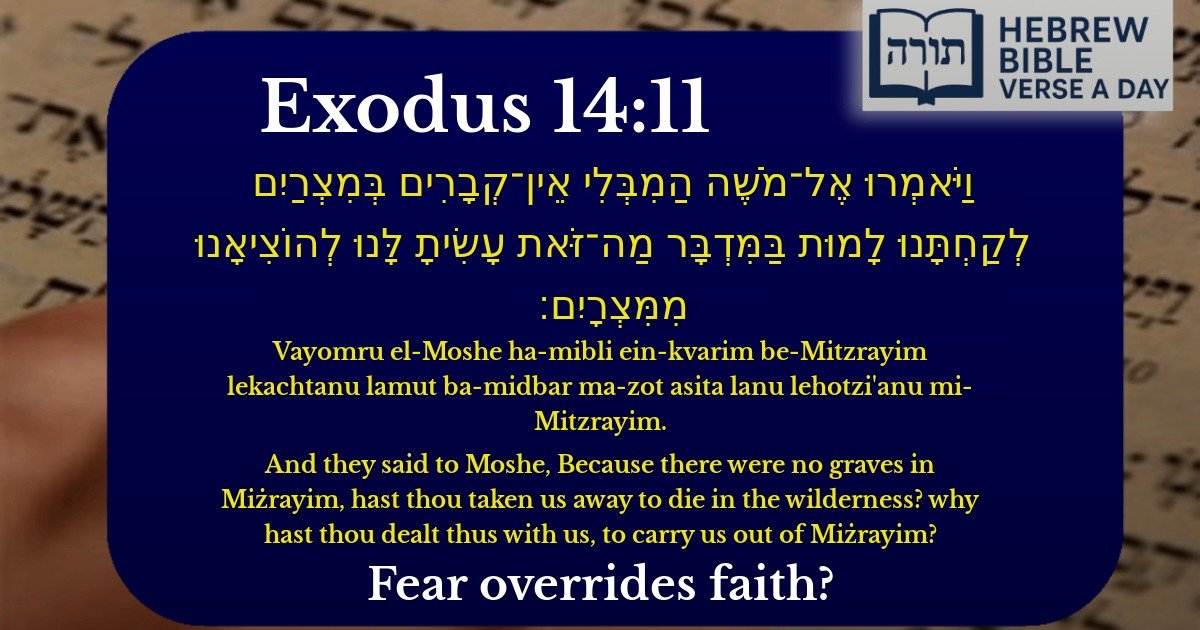
וַיֹּאמְרוּ אֶל־מֹשֶׁה הַמִבְּלִי אֵין־קְבָרִים בְּמִצְרַיִם לְקַחְתָּנוּ לָמוּת בַּמִּדְבָּר מַה־זֹּאת עָשִׂיתָ לָּנוּ לְהוֹצִיאָנוּ מִמִּצְרָיִם׃
English Translation
And they said to Moshe, Because there were no graves in Miżrayim, hast thou taken us away to die in the wilderness? why hast thou dealt thus with us, to carry us out of Miżrayim?
Transliteration
Vayomru el-Moshe ha-mibli ein-kvarim be-Mitzrayim lekachtanu lamut ba-midbar ma-zot asita lanu lehotzi'anu mi-Mitzrayim.
Hebrew Leining Text
וַיֹּאמְרוּ֮ אֶל־מֹשֶׁה֒ הֲֽמִבְּלִ֤י אֵין־קְבָרִים֙ בְּמִצְרַ֔יִם לְקַחְתָּ֖נוּ לָמ֣וּת בַּמִּדְבָּ֑ר מַה־זֹּאת֙ עָשִׂ֣יתָ לָּ֔נוּ לְהוֹצִיאָ֖נוּ מִמִּצְרָֽיִם׃
🎵 Listen to leining
Parasha Commentary
📚 Talmud Citations
This verse is quoted in the Talmud.
📖 Ta'anit 20b
The verse is referenced in the context of discussing the complaints of the Israelites during their journey in the wilderness, illustrating their lack of faith and gratitude despite the miracles performed for them.
📖 Sanhedrin 111a
The verse is cited in a discussion about the generation of the wilderness and their complaints against Moses, highlighting their ingratitude and lack of trust in God's plan.
Context of the Verse
This verse (Shemot 14:11) is spoken by Bnei Yisrael at the shores of the Yam Suf, when they see Pharaoh's army approaching. After experiencing the miracles of Yetziat Mitzrayim, they express fear and frustration, questioning Moshe's leadership.
Rashi's Explanation
Rashi explains that the phrase "הַמִבְּלִי אֵין־קְבָרִים בְּמִצְרַיִם" ("Because there were no graves in Mitzrayim") is sarcastic. Bnei Yisrael were implying that Mitzrayim had ample graves—after all, they had just endured the plague of the firstborn, which caused many deaths. Their complaint suggests they believed dying in Mitzrayim would have been preferable to dying in the wilderness.
Ibn Ezra's Insight
Ibn Ezra notes that this complaint reflects their lack of emunah (faith) despite witnessing Hashem's miracles. They had just left Mitzrayim with great wealth (as described in Shemot 12:35-36), yet they immediately doubted Hashem's plan when faced with danger.
Midrashic Interpretation
The Midrash (Shemot Rabbah 21:5) compares Bnei Yisrael's attitude to a person rescued from prison who immediately complains about the journey home. The Midrash emphasizes their ingratitude, highlighting how quickly they forgot the suffering of slavery when confronted with a new challenge.
Rambam's Perspective
In Moreh Nevuchim (1:23), Rambam explains that this episode demonstrates human nature—people often fear immediate dangers more than they appreciate past salvations. Their lack of patience and trust in Hashem's plan is a recurring theme in the wilderness narratives.
Lessons from the Verse