Frequently Asked Questions
Q: What does Exodus 15:11 mean?
A: Exodus 15:11 is part of the 'Song of the Sea' (Shirat HaYam), sung by the Israelites after crossing the Red Sea. It praises Hashem's uniqueness and incomparable power, holiness, and ability to perform miracles. The verse emphasizes that no other force or deity can compare to Hashem in greatness and awe-inspiring deeds (Rashi, Ramban).
Q: Why is Exodus 15:11 important in Judaism?
A: This verse is central to Jewish prayer and liturgy, recited daily in the 'Yishtabach' prayer and during Pesach (Passover) as part of the Hallel. It reinforces monotheism—the belief in one, all-powerful G-d—and reminds us of Hashem's miracles, particularly the Exodus from Egypt (Talmud Pesachim 117a, Siddur).
Q: What can we learn from 'Who is like You, Hashem?'
A: The verse teaches humility and gratitude. By acknowledging that no one compares to Hashem, we recognize His supreme authority and our dependence on Him. It also inspires awe (yirah) and encourages us to reflect on His wonders in history and our lives (Midrash Mechilta, Rambam Hilchot Yesodei HaTorah).
Q: How does Exodus 15:11 apply to daily life?
A: This verse reminds us to attribute miracles and blessings to Hashem, not to human strength or other forces. When facing challenges, we recall His past wonders (like the Red Sea) to strengthen our faith. It’s also a model for how to praise Hashem with sincerity (Tanya, Sha’ar HaYichud VeHaEmunah).
Q: What does 'glorious in holiness' mean?
A: 'Glorious in holiness' (נֶאְדָּר בַּקֹּדֶשׁ) refers to Hashem's absolute purity and transcendence. Holiness (kedushah) means separateness from all imperfection. The Midrash (Shemot Rabbah 23:1) explains that Hashem’s holiness is unmatched, and through mitzvot, we strive to emulate His sanctity in our lives.


Introduction to the Verse
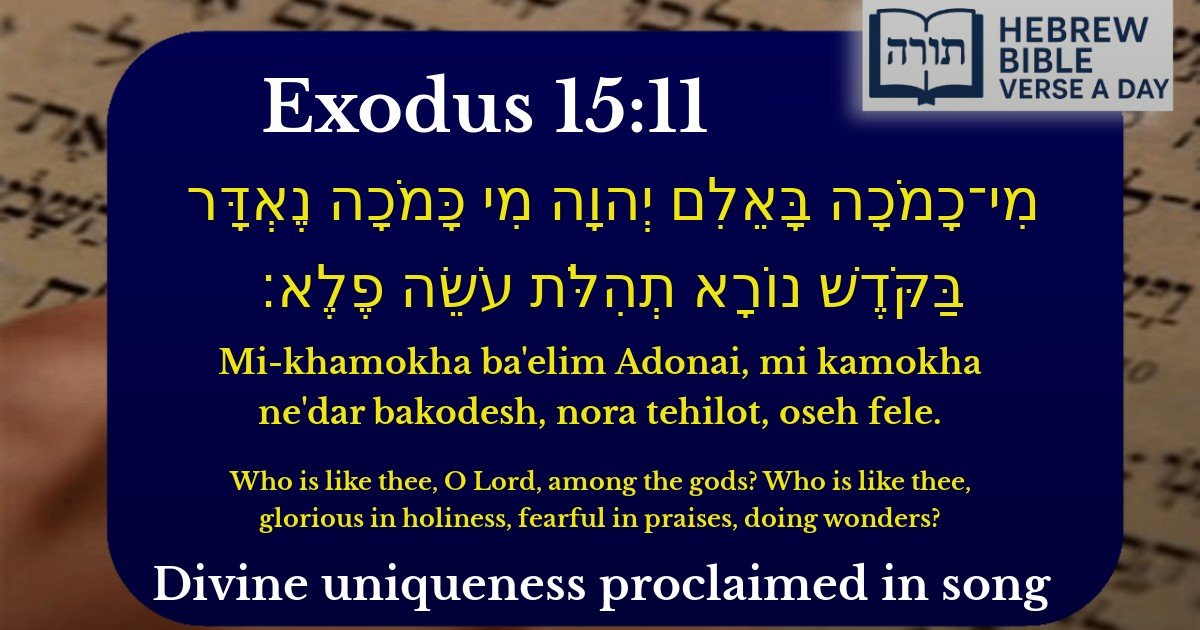
The verse "מִי־כָמֹכָה בָּאֵלִם יְהוָה מִי כָּמֹכָה נֶאְדָּר בַּקֹּדֶשׁ נוֹרָא תְהִלֹּת עֹשֵׂה פֶלֶא" (Shemot 15:11) is part of Shirat HaYam, the Song of the Sea, sung by Bnei Yisrael after the miraculous splitting of the Red Sea. This verse is a declaration of Hashem's unparalleled greatness, holiness, and power.
Analysis of the Phrase "מִי־כָמֹכָה בָּאֵלִם יְהוָה"
Rashi explains that this rhetorical question emphasizes that no other being—whether celestial or earthly—can compare to Hashem. The term "בָּאֵלִם" (among the gods) refers to the false deities worshipped by other nations, highlighting their utter insignificance in contrast to the Almighty. Ibn Ezra adds that this phrase underscores the futility of idol worship, as no created being possesses true divinity.
The Meaning of "נֶאְדָּר בַּקֹּדֶשׁ"
The phrase "נֶאְדָּר בַּקֹּדֶשׁ" (glorious in holiness) describes Hashem's transcendent sanctity. Ramban teaches that this refers to the divine attribute of kedushah (holiness), which is beyond human comprehension. The Malbim explains that Hashem's holiness is not passive but actively manifested through His deeds, such as the miracles performed for Bnei Yisrael.
Interpretation of "נוֹרָא תְהִלֹּת"
The term "נוֹרָא תְהִלֹּת" (fearful in praises) conveys that even as we praise Hashem, we must do so with awe and reverence. Sforno notes that human praise can never fully capture Hashem's greatness, and thus our praises are accompanied by trembling. The Targum Onkelos renders this phrase as "awesome in praises," emphasizing that Hashem's deeds inspire both wonder and fear.
The Significance of "עֹשֵׂה פֶלֶא"
The concluding words "עֹשֵׂה פֶלֶא" (doing wonders) refer to Hashem's supernatural interventions in history. Rashi connects this to the miracles of Yetziat Mitzrayim (the Exodus), while Midrash Shemot Rabbah expands it to include all future wonders Hashem will perform for His people. The Rambam (Hilchot Yesodei HaTorah) teaches that recognizing these wonders strengthens our emunah (faith) in Hashem's providence.
Key Themes in Orthodox Jewish Thought