

Join Our Newsletter To Be Informed When New Videos Are Posted
Hebrew Text
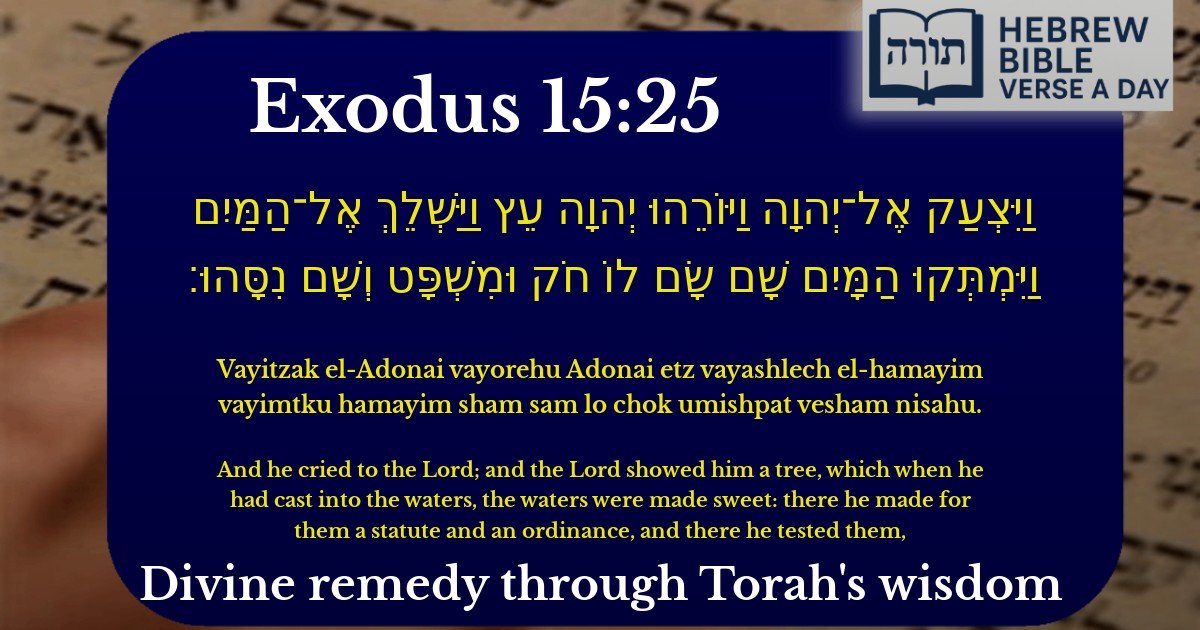
וַיִּצְעַק אֶל־יְהוָה וַיּוֹרֵהוּ יְהוָה עֵץ וַיַּשְׁלֵךְ אֶל־הַמַּיִם וַיִּמְתְּקוּ הַמָּיִם שָׁם שָׂם לוֹ חֹק וּמִשְׁפָּט וְשָׁם נִסָּהוּ׃
English Translation
And he cried to the Lord; and the Lord showed him a tree, which when he had cast into the waters, the waters were made sweet: there he made for them a statute and an ordinance, and there he tested them,
Transliteration
Vayitzak el-Adonai vayorehu Adonai etz vayashlech el-hamayim vayimtku hamayim sham sam lo chok umishpat vesham nisahu.
Hebrew Leining Text
וַיִּצְעַ֣ק אֶל־יְהֹוָ֗ה וַיּוֹרֵ֤הוּ יְהֹוָה֙ עֵ֔ץ וַיַּשְׁלֵךְ֙ אֶל־הַמַּ֔יִם וַֽיִּמְתְּק֖וּ הַמָּ֑יִם שָׁ֣ם שָׂ֥ם ל֛וֹ חֹ֥ק וּמִשְׁפָּ֖ט וְשָׁ֥ם נִסָּֽהוּ׃
🎵 Listen to leining
Parasha Commentary
📚 Talmud Citations
This verse is quoted in the Talmud.
📖 Ta'anit 7a
The verse is referenced in a discussion about the power of prayer and divine intervention, illustrating how God responds to cries for help.
📖 Sanhedrin 56b
The verse is cited in the context of discussing the laws and statutes given to the Israelites, particularly focusing on the concept of divine testing and commandments.
Context of the Verse
This verse (Shemot 15:25) describes the incident at Marah, where the Israelites found bitter water after crossing the Red Sea. Moshe cried out to Hashem, who instructed him to cast a tree into the water, miraculously sweetening it. The verse concludes by mentioning that Hashem established statutes and ordinances there and tested Bnei Yisrael.
The Miracle of the Tree
Rashi explains that the "tree" (עֵץ) was not an ordinary piece of wood but something with a miraculous quality to transform bitterness into sweetness. The Midrash Tanchuma (Beshalach 24) suggests this tree was bitter itself, teaching that just as the bitter wood sweetened the water, so too will the bitterness of Torah study (which may seem difficult at first) ultimately bring sweetness to those who engage in it.
The Statutes and Ordinances
Ramban notes that the "statute and ordinance" (חֹק וּמִשְׁפָּט) given at Marah likely refers to foundational mitzvot such as Shabbat, honoring parents, and basic civil laws—preceding the full revelation at Sinai. The Mechilta (Beshalach 6) specifies that these included the mitzvah of the Parah Adumah (Red Heifer), symbolizing submission to divine commandments even when their reasoning is unclear.
The Test at Marah
The Sforno explains that the test (נִסָּהוּ) was whether Bnei Yisrael would trust Hashem's providence despite the hardship of bitter water. The Kli Yakar adds that this tested their willingness to accept Torah—just as they accepted the "bitter" becoming "sweet" through divine intervention, they would need to accept both the pleasant and challenging aspects of Torah life.
Symbolic Lessons