

Join Our Newsletter To Be Informed When New Videos Are Posted
Hebrew Text
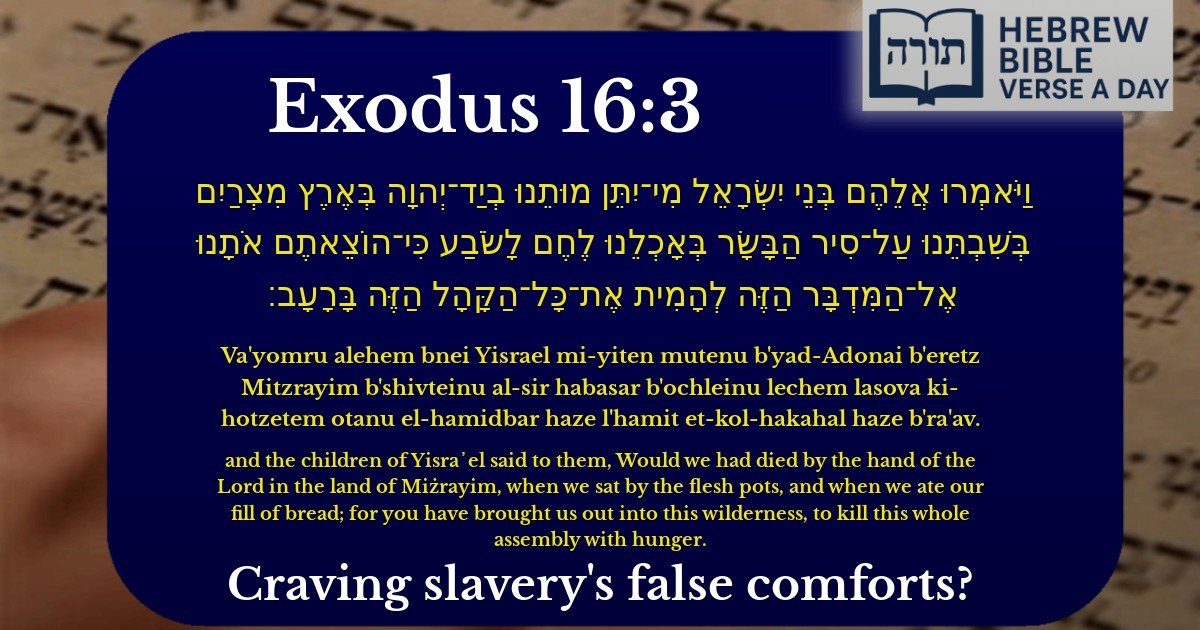
וַיֹּאמְרוּ אֲלֵהֶם בְּנֵי יִשְׂרָאֵל מִי־יִתֵּן מוּתֵנוּ בְיַד־יְהוָה בְּאֶרֶץ מִצְרַיִם בְּשִׁבְתֵּנוּ עַל־סִיר הַבָּשָׂר בְּאָכְלֵנוּ לֶחֶם לָשֹׂבַע כִּי־הוֹצֵאתֶם אֹתָנוּ אֶל־הַמִּדְבָּר הַזֶּה לְהָמִית אֶת־כָּל־הַקָּהָל הַזֶּה בָּרָעָב׃
English Translation
and the children of Yisra᾽el said to them, Would we had died by the hand of the Lord in the land of Miżrayim, when we sat by the flesh pots, and when we ate our fill of bread; for you have brought us out into this wilderness, to kill this whole assembly with hunger.
Transliteration
Va'yomru alehem bnei Yisrael mi-yiten mutenu b'yad-Adonai b'eretz Mitzrayim b'shivteinu al-sir habasar b'ochleinu lechem lasova ki-hotzetem otanu el-hamidbar haze l'hamit et-kol-hakahal haze b'ra'av.
Hebrew Leining Text
וַיֹּאמְר֨וּ אֲלֵהֶ֜ם בְּנֵ֣י יִשְׂרָאֵ֗ל מִֽי־יִתֵּ֨ן מוּתֵ֤נוּ בְיַד־יְהֹוָה֙ בְּאֶ֣רֶץ מִצְרַ֔יִם בְּשִׁבְתֵּ֙נוּ֙ עַל־סִ֣יר הַבָּשָׂ֔ר בְּאׇכְלֵ֥נוּ לֶ֖חֶם לָשֹׂ֑בַע כִּֽי־הוֹצֵאתֶ֤ם אֹתָ֙נוּ֙ אֶל־הַמִּדְבָּ֣ר הַזֶּ֔ה לְהָמִ֛ית אֶת־כׇּל־הַקָּהָ֥ל הַזֶּ֖ה בָּרָעָֽב׃ {ס}
🎵 Listen to leining
Parasha Commentary
📚 Talmud Citations
This verse is quoted in the Talmud.
📖 Yoma 75b
The verse is referenced in a discussion about the manna and the complaints of the Israelites in the wilderness, illustrating their ingratitude despite God's providence.
📖 Sanhedrin 110b
The verse is cited in the context of discussing the rebellion of Korach and his followers, highlighting the complaints of the Israelites against Moses and Aaron.
Context in the Torah
This verse appears in Shemot (Exodus) 16:3, where the Israelites complain to Moshe and Aharon shortly after their miraculous exodus from Egypt. Despite witnessing the Ten Plagues and the splitting of the Red Sea, they express longing for their former lives in Egypt, lamenting their current hunger in the wilderness.
Rashi's Commentary
Rashi explains that the phrase "מִי־יִתֵּן מוּתֵנוּ בְיַד־יְהוָה בְּאֶרֶץ מִצְרַיִם" ("Would we had died by the hand of the Lord in the land of Egypt") reflects their distorted perspective. They preferred dying in Egypt—where they were enslaved but had food—over trusting in Hashem’s providence in the wilderness. Rashi notes that their complaint was ungrateful, as they had already witnessed Hashem’s miracles.
Rambam on Human Nature
Rambam (Maimonides) in Moreh Nevuchim (Guide for the Perplexed) discusses how people often fear change, even when it leads to freedom. The Israelites, accustomed to slavery, struggled with the uncertainty of the wilderness, demonstrating how human nature resists transformation despite its benefits.
Midrashic Interpretation
The Midrash Shemot Rabbah (25:5) criticizes the Israelites' complaint, comparing it to a child rescued from a dangerous place who later complains about hunger. The Midrash emphasizes that their focus on "סִיר הַבָּשָׂר" ("the flesh pots") and "לֶחֶם לָשֹׂבַע" ("bread to satiety") reveals misplaced priorities—valuing physical comfort over spiritual redemption.
Talmudic Insight
The Talmud (Sanhedrin 110a) teaches that this complaint was one of several instances where the Israelites tested Hashem’s patience. Their lack of faith after experiencing miracles serves as a cautionary lesson about the dangers of ingratitude and shortsightedness.
Key Lessons