

Join Our Newsletter To Be Informed When New Videos Are Posted
Hebrew Text
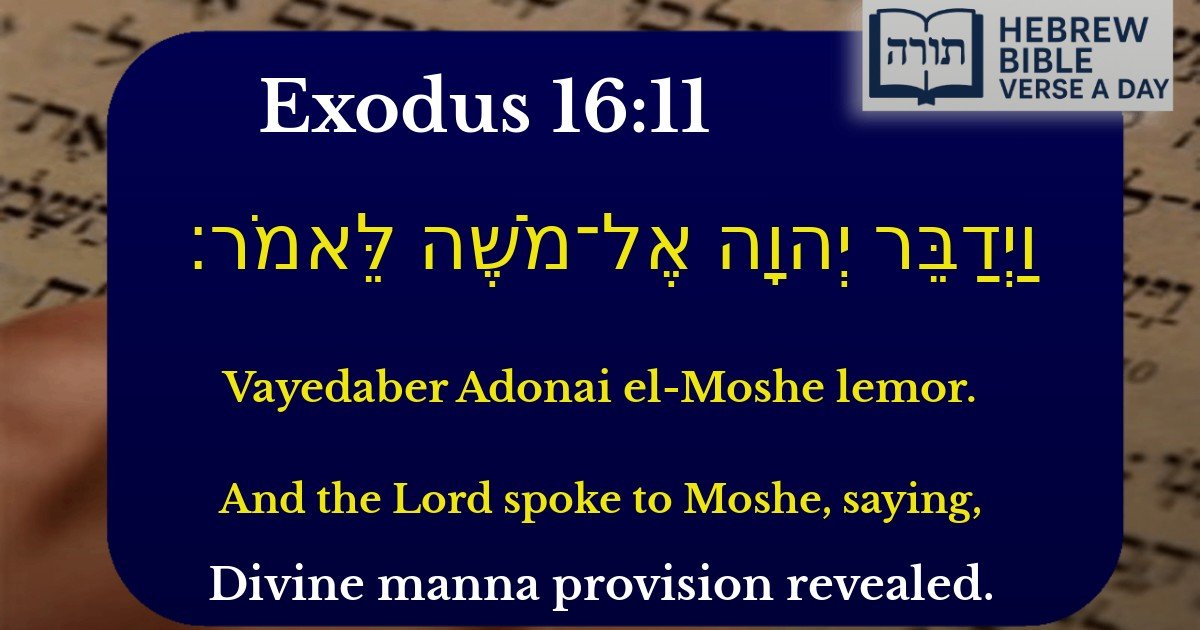
וַיְדַבֵּר יְהוָה אֶל־מֹשֶׁה לֵּאמֹר׃
English Translation
And the Lord spoke to Moshe, saying,
Transliteration
Vayedaber Adonai el-Moshe lemor.
Hebrew Leining Text
וַיְדַבֵּ֥ר יְהֹוָ֖ה אֶל־מֹשֶׁ֥ה לֵּאמֹֽר׃
🎵 Listen to leining
Parasha Commentary
📚 Talmud Citations
This verse is not quoted in the Talmud.
Introduction to Divine Communication
The verse "וַיְדַבֵּר יְהוָה אֶל־מֹשֶׁה לֵּאמֹר" ("And the Lord spoke to Moshe, saying") appears frequently in the Torah, marking the beginning of divine communication. Rashi (Shemot 6:2) notes that this phrase emphasizes the direct and unmediated nature of Hashem's speech to Moshe, distinguishing it from prophecy given to other prophets, which often came through visions or dreams (Bamidbar 12:6-8).
The Significance of "לֵּאמֹר"
The word "לֵּאמֹר" ("saying") is interpreted by the Midrash (Shemot Rabbah 28:6) as an instruction for Moshe to convey Hashem's words exactly to Bnei Yisrael, without adding or omitting anything. Rambam (Hilchos Yesodei HaTorah 7:6) elaborates that this underscores Moshe's unique role as the faithful transmitter of the Torah.
Divine Speech as a Foundational Principle
This verse reflects a core tenet of Jewish belief—the divine origin of the Torah. The Ramban (Introduction to Sefer Shemot) explains that the repetition of this phrase throughout the Torah reinforces that every commandment and narrative stems from Hashem's direct will, not Moshe's independent authority.