

Join Our Newsletter To Be Informed When New Videos Are Posted
Hebrew Text
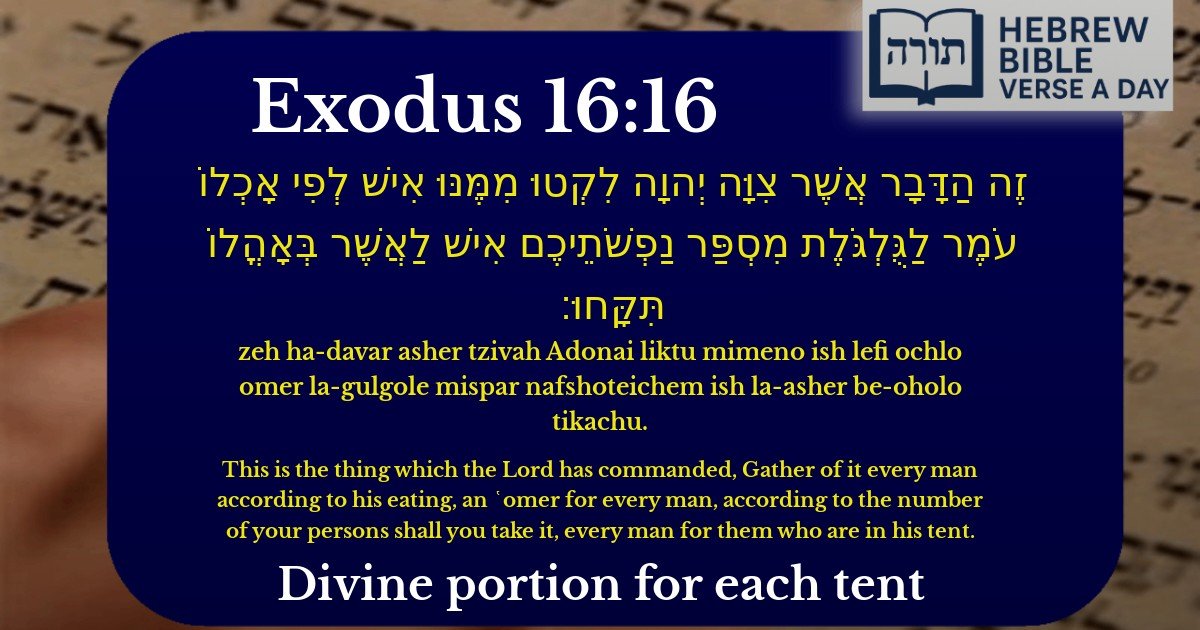
זֶה הַדָּבָר אֲשֶׁר צִוָּה יְהוָה לִקְטוּ מִמֶּנּוּ אִישׁ לְפִי אָכְלוֹ עֹמֶר לַגֻּלְגֹּלֶת מִסְפַּר נַפְשֹׁתֵיכֶם אִישׁ לַאֲשֶׁר בְּאָהֳלוֹ תִּקָּחוּ׃
English Translation
This is the thing which the Lord has commanded, Gather of it every man according to his eating, an ῾omer for every man, according to the number of your persons shall you take it, every man for them who are in his tent.
Transliteration
Zeh ha-davar asher tzivah Adonai liktu mimeno ish lefi ochlo omer la-gulgole mispar nafshoteichem ish la-asher be-oholo tikachu.
Hebrew Leining Text
זֶ֤ה הַדָּבָר֙ אֲשֶׁ֣ר צִוָּ֣ה יְהֹוָ֔ה לִקְט֣וּ מִמֶּ֔נּוּ אִ֖ישׁ לְפִ֣י אׇכְל֑וֹ עֹ֣מֶר לַגֻּלְגֹּ֗לֶת מִסְפַּר֙ נַפְשֹׁ֣תֵיכֶ֔ם אִ֛ישׁ לַאֲשֶׁ֥ר בְּאׇהֳל֖וֹ תִּקָּֽחוּ׃
🎵 Listen to leining
Parasha Commentary
📚 Talmud Citations
This verse is quoted in the Talmud.
📖 Yoma 75a
The verse is referenced in a discussion about the manna that fell in the wilderness, illustrating how each person gathered according to their need.
📖 Chullin 89b
The verse is cited in a broader discussion about divine commandments and the specifics of how they were to be carried out by the Israelites.
Context of the Verse
The verse (Shemot 16:16) appears in the context of the manna, the miraculous food provided by Hashem to Bnei Yisrael in the wilderness. This instruction follows the initial appearance of the manna and outlines how the people should gather it.
Explanation of the Command
Rashi explains that the phrase "זֶה הַדָּבָר" ("This is the thing") emphasizes the precision of the command. The Torah specifies that each person should gather "עֹמֶר לַגֻּלְגֹּלֶת" (an omer per head), meaning a fixed measure for each individual, regardless of their personal appetite or strength. The measure of an omer was enough to sustain a person for the day.
Equal Portions for All
The Talmud (Yoma 75a) derives from this verse that the manna was distributed equally to all, regardless of individual needs. The Rambam (Moreh Nevuchim 3:12) notes that this was a divine lesson in trust—each person received exactly what they required, reinforcing faith in Hashem's providence.
Gathering for One's Household
The phrase "אִישׁ לַאֲשֶׁר בְּאָהֳלוֹ תִּקָּחוּ" ("every man for them who are in his tent") teaches, as the Midrash (Mechilta) explains, that the head of the household was responsible for gathering on behalf of his family. This underscores the principle of collective responsibility within the family unit.
Lessons in Faith and Contentment