

Join Our Newsletter To Be Informed When New Videos Are Posted
Hebrew Text
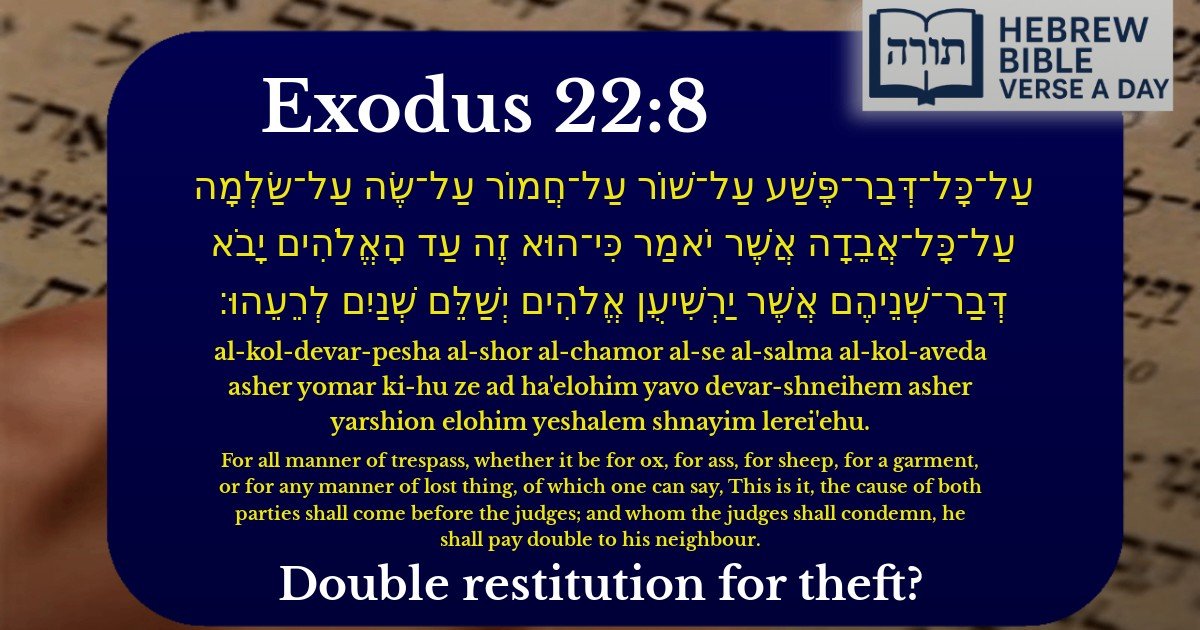
עַל־כָּל־דְּבַר־פֶּשַׁע עַל־שׁוֹר עַל־חֲמוֹר עַל־שֶׂה עַל־שַׂלְמָה עַל־כָּל־אֲבֵדָה אֲשֶׁר יֹאמַר כִּי־הוּא זֶה עַד הָאֱלֹהִים יָבֹא דְּבַר־שְׁנֵיהֶם אֲשֶׁר יַרְשִׁיעֻן אֱלֹהִים יְשַׁלֵּם שְׁנַיִם לְרֵעֵהוּ׃
English Translation
For all manner of trespass, whether it be for ox, for ass, for sheep, for a garment, or for any manner of lost thing, of which one can say, This is it, the cause of both parties shall come before the judges; and whom the judges shall condemn, he shall pay double to his neighbour.
Transliteration
Al-kol-devar-pesha al-shor al-chamor al-se al-salma al-kol-aveda asher yomar ki-hu ze ad ha'elohim yavo devar-shneihem asher yarshion elohim yeshalem shnayim lerei'ehu.
Hebrew Leining Text
עַֽל־כׇּל־דְּבַר־פֶּ֡שַׁע עַל־שׁ֡וֹר עַל־חֲ֠מ֠וֹר עַל־שֶׂ֨ה עַל־שַׂלְמָ֜ה עַל־כׇּל־אֲבֵדָ֗ה אֲשֶׁ֤ר יֹאמַר֙ כִּי־ה֣וּא זֶ֔ה עַ֚ד הָֽאֱלֹהִ֔ים יָבֹ֖א דְּבַר־שְׁנֵיהֶ֑ם אֲשֶׁ֤ר יַרְשִׁיעֻן֙ אֱלֹהִ֔ים יְשַׁלֵּ֥ם שְׁנַ֖יִם לְרֵעֵֽהוּ׃ {ס}
🎵 Listen to leining
Parasha Commentary
📚 Talmud Citations
This verse is quoted in the Talmud.
📖 Bava Metzia 34b
The verse is discussed in the context of laws regarding the responsibility of a paid guardian (shomer sakhar) and the requirement to pay double for theft, as derived from this verse.
📖 Bava Kamma 63b
The verse is referenced in discussions about the liability for theft and the requirement to pay double restitution, particularly in cases involving animals or garments.
📖 Sanhedrin 3a
The verse is cited in the context of judicial procedures and the role of judges in resolving disputes over lost or stolen property.
Overview of the Verse
The verse (Shemot 22:8) discusses the laws of restitution for theft or disputed ownership of property. It outlines the judicial process when two parties claim possession of the same item, requiring them to bring their case before Elohim (judges or a Beit Din). The guilty party must pay double restitution to the rightful owner.
Key Terms and Their Meanings
Legal Principles Derived
This verse establishes several halachic principles:
Midrashic Insights
The Midrash Tanchuma (Mishpatim 15) connects this verse to broader ethical teachings, emphasizing that dishonesty in monetary matters undermines trust in society. The requirement to pay double serves as a deterrent against false oaths and reinforces the sanctity of truthful testimony.
Application in Halacha
According to the Shulchan Aruch (Choshen Mishpat 88:1), this law applies when:
The Ketzot HaChoshen adds that the double payment is only enforced if the stolen item still exists in its original form at the time of judgment.