Frequently Asked Questions
Q: What does Exodus 22:23 mean?
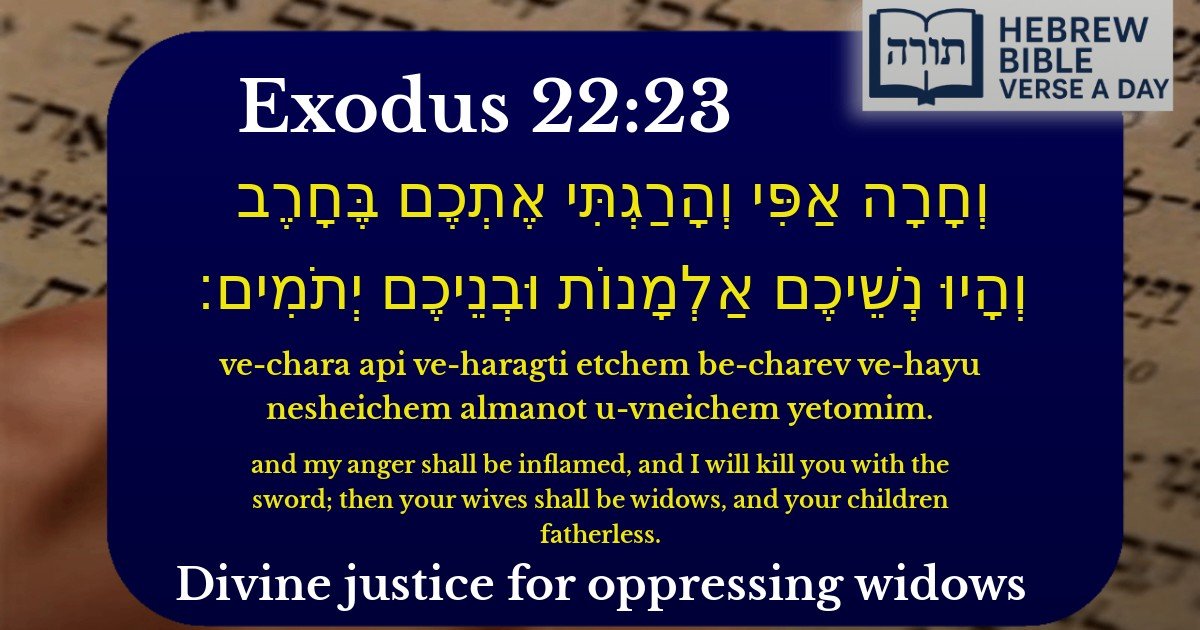
A: Exodus 22:23 is a warning from Hashem that if people oppress widows and orphans, His anger will be kindled, and He will punish the oppressors severely—even to the point of death by the sword, leaving their own families widowed and orphaned. This emphasizes the severity of mistreating the vulnerable in society.
Q: Why is Exodus 22:23 important in Judaism?
A: This verse is important because it highlights the Torah’s deep concern for protecting widows and orphans, who are among the most vulnerable in society. The Rambam (Hilchos De’os 6:10) teaches that mistreating them is a grave sin, and the Talmud (Bava Metzia 59b) states that their cries reach Hashem directly. The severe consequences mentioned reinforce the ethical obligation to care for them.
Q: What can we learn from Exodus 22:23 today?
A: We learn that Hashem holds us accountable for how we treat those who are helpless. The verse teaches that oppression of the vulnerable provokes Divine anger, while kindness to them brings blessing. Today, this applies to supporting widows, orphans, and anyone in need, whether through charity (tzedakah), emotional support, or fair treatment in business and law.
Q: How does Rashi explain Exodus 22:23?
A: Rashi explains that this verse follows the prohibition against mistreating widows and orphans (Exodus 22:21–22). He emphasizes that Hashem’s response is immediate and personal—He will hear their cries and punish the oppressors directly, even if human courts fail to do so. Rashi also notes that the phrase 'I will kill you with the sword' implies death in war or through Divine intervention.
Q: Does Exodus 22:23 only apply to widows and orphans?
A: While the verse specifically mentions widows and orphans, Chazal (our Sages) extend its principles to all vulnerable individuals. The Talmud (Shabbos 31a) teaches that ethical treatment of every person—especially those who lack protection—is fundamental to Judaism. The Rambam (Hilchos De’os 6:10) includes converts and the poor in this category, stressing that their suffering is met with swift Divine justice.


Context in the Torah
This verse appears in Shemot 22:23 (Exodus 22:23) as part of a warning against oppressing widows and orphans. The Torah emphasizes that mistreating the vulnerable incurs severe divine retribution, as Hashem hears their cries and responds with justice.
Rashi's Explanation
Rashi (Exodus 22:23) explains that the phrase "וְחָרָה אַפִּי" ("and My anger shall be inflamed") signifies an intense and immediate divine response. He notes that the punishment—death by the sword—is measure-for-measure: those who harm the defenseless will themselves fall by violence. Rashi further connects this to the principle that middah k'neged middah (divine retribution corresponds to one's actions).
Rambam's Perspective
Rambam (Hilchos De'os 6:10) discusses the ethical imperative to protect widows and orphans, emphasizing that their suffering evokes Hashem's direct intervention. He interprets this verse as a warning to society: neglecting justice for the vulnerable invites collective punishment, as the community bears responsibility for upholding righteousness.
Midrashic Insights
Halachic Implications
The Shulchan Aruch (Choshen Mishpat 97:1) codifies the obligation to treat widows and orphans with exceptional care, citing this verse as the basis for stringent protections. The Rema adds that judges must prioritize their cases, as delaying justice for them provokes divine anger.
Moral Lesson
This verse underscores the Torah's demand for societal justice. The Kli Yakar (Exodus 22:23) explains that harming those without protectors is akin to challenging Hashem Himself, who acts as their guardian. The severity of the punishment reflects the severity of the sin—exploiting the vulnerable fractures the covenant between Hashem and His people.