

Join Our Newsletter To Be Informed When New Videos Are Posted
Hebrew Text
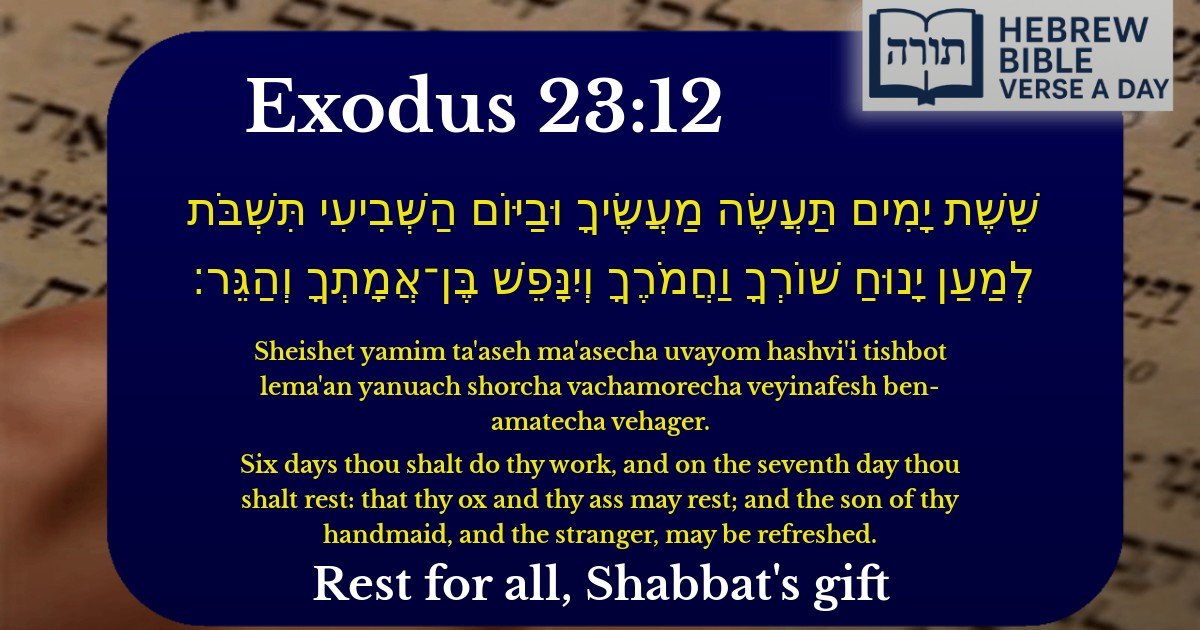
שֵׁשֶׁת יָמִים תַּעֲשֶׂה מַעֲשֶׂיךָ וּבַיּוֹם הַשְּׁבִיעִי תִּשְׁבֹּת לְמַעַן יָנוּחַ שׁוֹרְךָ וַחֲמֹרֶךָ וְיִנָּפֵשׁ בֶּן־אֲמָתְךָ וְהַגֵּר׃
English Translation
Six days thou shalt do thy work, and on the seventh day thou shalt rest: that thy ox and thy ass may rest; and the son of thy handmaid, and the stranger, may be refreshed.
Transliteration
Sheishet yamim ta'aseh ma'asecha uvayom hashvi'i tishbot lema'an yanuach shorcha vachamorecha veyinafesh ben-amatecha vehager.
Hebrew Leining Text
שֵׁ֤שֶׁת יָמִים֙ תַּעֲשֶׂ֣ה מַעֲשֶׂ֔יךָ וּבַיּ֥וֹם הַשְּׁבִיעִ֖י תִּשְׁבֹּ֑ת לְמַ֣עַן יָנ֗וּחַ שֽׁוֹרְךָ֙ וַחֲמֹרֶ֔ךָ וְיִנָּפֵ֥שׁ בֶּן־אֲמָתְךָ֖ וְהַגֵּֽר׃
🎵 Listen to leining
Parasha Commentary
📚 Talmud Citations
This verse is quoted in the Talmud.
📖 Shabbat 113b
The verse is cited in a discussion about the importance of resting on the Sabbath, emphasizing the commandment to cease work so that both humans and animals may rest.
📖 Mekhilta d'Rabbi Yishmael Ki Tisa
The verse is referenced in the context of expounding on the laws of Sabbath, highlighting the ethical dimension of providing rest for all members of the household, including servants and animals.
The Commandment of Shabbat Rest
The verse (Shemot 23:12) commands the observance of Shabbat by ceasing from labor on the seventh day. Rashi explains that this mitzvah serves a dual purpose: it is both a remembrance of Creation (as stated in Shemot 20:11) and a humanitarian obligation to provide rest for all members of one's household, including animals and servants.
Inclusivity of Shabbat Rest
The Torah emphasizes that Shabbat rest extends to:
The Concept of "Veyinafesh" (Refreshment)
The term "וְיִנָּפֵשׁ" (may be refreshed) is interpreted by the Mechilta as meaning both physical rest and spiritual rejuvenation. Ibn Ezra explains this refers to the opportunity for all beings to recover their strength after six days of labor.
Halachic Implications
The Rambam (Hilchot Shabbat 6:1) rules that this verse establishes biblical prohibitions against:
Philosophical Dimension
The Sefer HaChinuch (Mitzvah 32) explains that this commandment trains us in emunah (faith) by recognizing that our sustenance comes from Hashem, not merely from our labor. By resting on Shabbat, we demonstrate our belief that the world continues to function through Divine providence.