

Join Our Newsletter To Be Informed When New Videos Are Posted
Hebrew Text
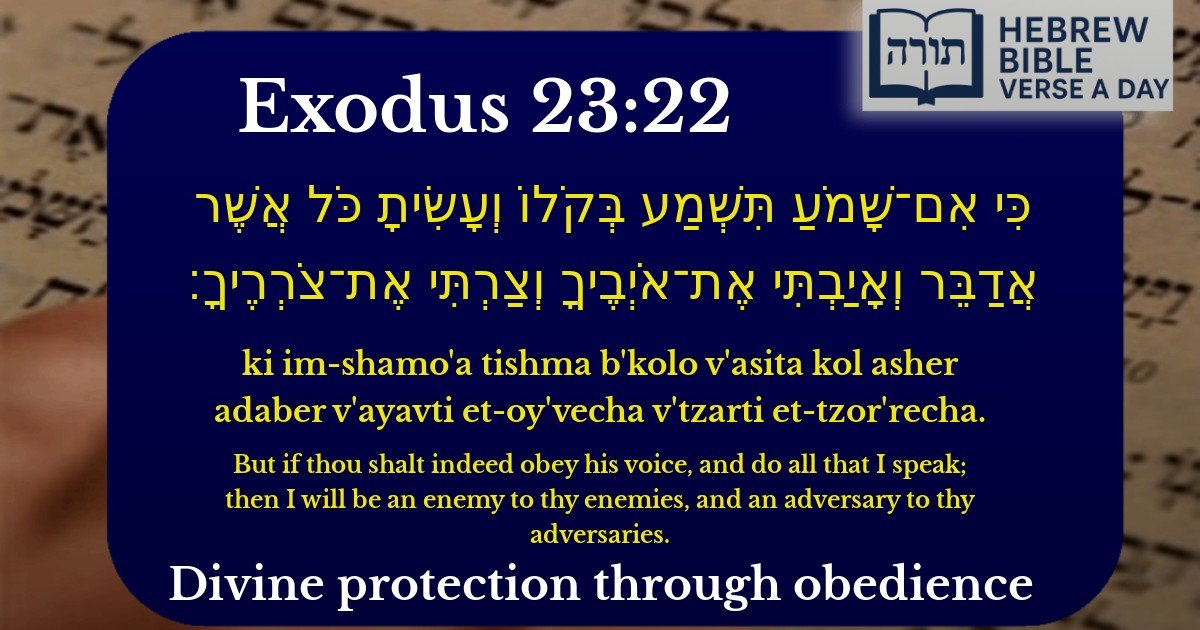
כִּי אִם־שָׁמֹעַ תִּשְׁמַע בְּקֹלוֹ וְעָשִׂיתָ כֹּל אֲשֶׁר אֲדַבֵּר וְאָיַבְתִּי אֶת־אֹיְבֶיךָ וְצַרְתִּי אֶת־צֹרְרֶיךָ׃
English Translation
But if thou shalt indeed obey his voice, and do all that I speak; then I will be an enemy to thy enemies, and an adversary to thy adversaries.
Transliteration
Ki im-shamo'a tishma b'kolo v'asita kol asher adaber v'ayavti et-oy'vecha v'tzarti et-tzor'recha.
Hebrew Leining Text
כִּ֣י אִם־שָׁמ֤וֹעַ תִּשְׁמַע֙ בְּקֹל֔וֹ וְעָשִׂ֕יתָ כֹּ֖ל אֲשֶׁ֣ר אֲדַבֵּ֑ר וְאָֽיַבְתִּי֙ אֶת־אֹ֣יְבֶ֔יךָ וְצַרְתִּ֖י אֶת־צֹרְרֶֽיךָ׃
🎵 Listen to leining
Parasha Commentary
📚 Talmud Citations
This verse is not quoted in the Talmud.
Understanding the Verse in Context
The verse (Shemot 23:22) appears in the context of Hashem's promise to Bnei Yisrael as they prepare to enter Eretz Yisrael. It follows the commandments regarding proper conduct and justice, emphasizing the reciprocal relationship between obedience to Hashem's will and Divine protection.
Rashi's Explanation
Rashi interprets the phrase "כִּי אִם־שָׁמֹעַ תִּשְׁמַע בְּקֹלוֹ" ("if thou shalt indeed obey his voice") as a call for meticulous observance. The double language of "שָׁמֹעַ תִּשְׁמַע" implies not only hearing but internalizing and fulfilling the mitzvot with diligence. Rashi further explains that "his voice" refers to the voice of the malach (angel) mentioned earlier in the parsha, who represents Hashem's presence guiding Bnei Yisrael.
Rambam on Obedience and Reward
Rambam (Hilchot Teshuva 9:1) discusses the principle of reward and punishment, aligning with this verse's message. He teaches that Divine assistance in overcoming enemies is contingent upon adherence to Torah. The phrase "וְעָשִׂיתָ כֹּל אֲשֶׁר אֲדַבֵּר" ("and do all that I speak") underscores the necessity of complete commitment to mitzvot, not selective observance.
Midrashic Insights
Ibn Ezra on the Conditional Nature
Ibn Ezra highlights the conditional phrasing of the verse, noting that Hashem's protection is not automatic but dependent on Bnei Yisrael's actions. The terms "אֹיְבֶיךָ" ("thy enemies") and "צֹרְרֶיךָ" ("thy adversaries") are interpreted as encompassing both physical and spiritual threats, with Hashem's intervention extending to all challenges faced by the nation.
Practical Implication in Halacha
The Sefer HaChinuch (Mitzvah 80) derives from this verse the importance of emunah (faith) in Hashem's providence. It teaches that trust in Divine protection must be coupled with active fulfillment of mitzvot, as the two are inextricably linked.