

Join Our Newsletter To Be Informed When New Videos Are Posted
Hebrew Text
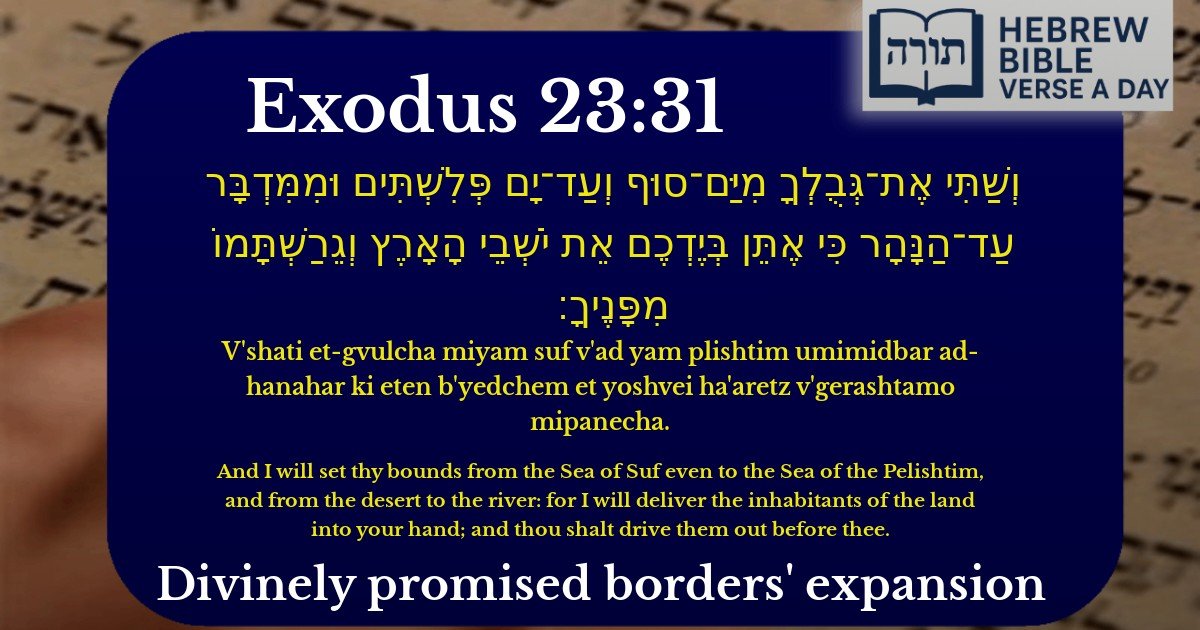
וְשַׁתִּי אֶת־גְּבֻלְךָ מִיַּם־סוּף וְעַד־יָם פְּלִשְׁתִּים וּמִמִּדְבָּר עַד־הַנָּהָר כִּי אֶתֵּן בְּיֶדְכֶם אֵת יֹשְׁבֵי הָאָרֶץ וְגֵרַשְׁתָּמוֹ מִפָּנֶיךָ׃
English Translation
And I will set thy bounds from the Sea of Suf even to the Sea of the Pelishtim, and from the desert to the river: for I will deliver the inhabitants of the land into your hand; and thou shalt drive them out before thee.
Transliteration
V'shati et-gvulcha miyam suf v'ad yam plishtim umimidbar ad-hanahar ki eten b'yedchem et yoshvei ha'aretz v'gerashtamo mipanecha.
Hebrew Leining Text
וְשַׁתִּ֣י אֶת־גְּבֻלְךָ֗ מִיַּם־סוּף֙ וְעַד־יָ֣ם פְּלִשְׁתִּ֔ים וּמִמִּדְבָּ֖ר עַד־הַנָּהָ֑ר כִּ֣י&thinsp
🎵 Listen to leining
Parasha Commentary
📚 Talmud Citations
This verse is not quoted in the Talmud.
Geographical Boundaries of Eretz Yisrael
The verse delineates the borders of Eretz Yisrael as promised by Hashem. Rashi (Shemot 23:31) explains that "Sea of Suf" refers to the Red Sea on the southern border, while "Sea of the Pelishtim" is the Mediterranean Sea to the west. The eastern border extends "from the desert" (the wilderness of Sinai) "to the river" (the Euphrates, as per Bereishit 15:18). These boundaries represent the full extent of the land promised to Avraham Avinu.
Divine Assurance of Conquest
The phrase "כי אתן בידכם" ("for I will deliver into your hand") emphasizes that the conquest is not dependent on Israel's military strength, but on Divine intervention. Rambam (Hilchot Melachim 5:1) derives from this that wars for Eretz Yisrael are considered milchemet mitzvah (obligatory wars), where Hashem fights alongside Israel. The Malbim notes the progression from Divine deliverance ("אתן בידכם") to human action ("וגרשתמו"), teaching that we must partner with Hashem's plan.
The Obligation to Drive Out the Inhabitants
The command "וגרשתמו מפניך" ("you shall drive them out before you") establishes the mitzvah of removing the seven Canaanite nations. The Ramban (Bamidbar 33:53) explains this includes not allowing them to remain as residents, lest they lead Israel astray. The Sforno adds that complete possession of the land depends on fulfilling this condition of expulsion.
Spiritual Dimensions of the Borders
The Midrash Tanchuma (Masei 8) teaches that these boundaries correspond to spiritual realms: "from the Sea of Suf" alludes to transcending limitations (suf=end), while "to the river" represents the flow of Torah. The Zohar (III 10a) sees these borders as defining the space where kedusha can fully manifest. Thus, the physical conquest enables the spiritual mission of creating a dwelling place for the Divine Presence.