

Join Our Newsletter To Be Informed When New Videos Are Posted
Hebrew Text
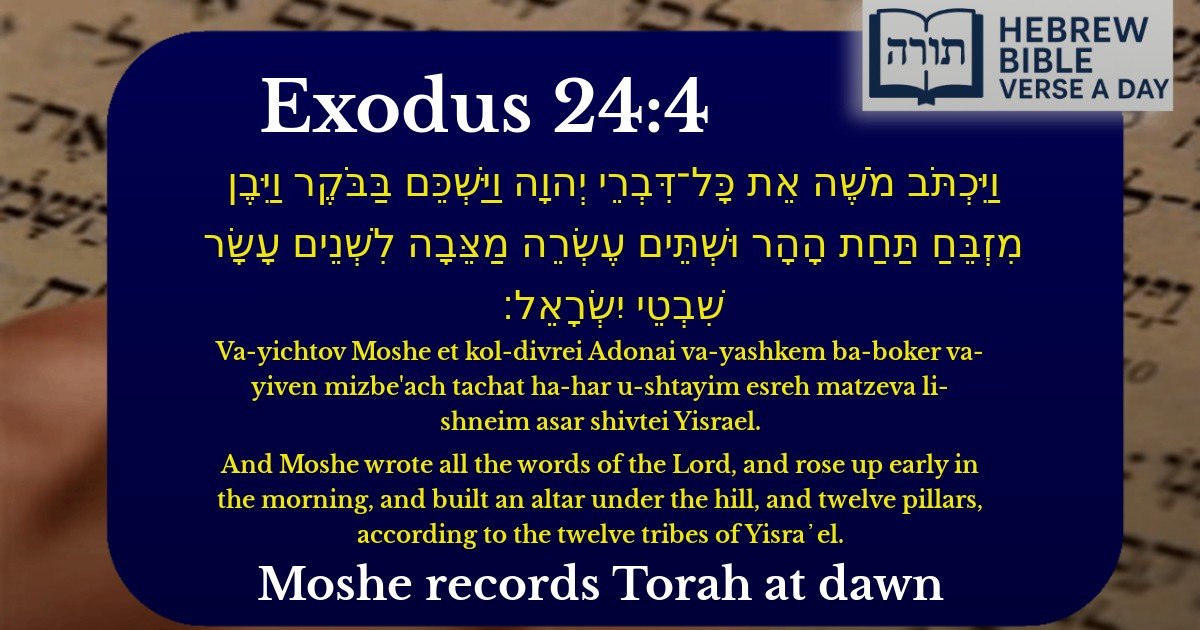
וַיִּכְתֹּב מֹשֶׁה אֵת כָּל־דִּבְרֵי יְהוָה וַיַּשְׁכֵּם בַּבֹּקֶר וַיִּבֶן מִזְבֵּחַ תַּחַת הָהָר וּשְׁתֵּים עֶשְׂרֵה מַצֵּבָה לִשְׁנֵים עָשָׂר שִׁבְטֵי יִשְׂרָאֵל׃
English Translation
And Moshe wrote all the words of the Lord, and rose up early in the morning, and built an altar under the hill, and twelve pillars, according to the twelve tribes of Yisra᾽el.
Transliteration
Va-yichtov Moshe et kol-divrei Adonai va-yashkem ba-boker va-yiven mizbe'ach tachat ha-har u-shtayim esreh matzeva li-shneim asar shivtei Yisrael.
Hebrew Leining Text
וַיִּכְתֹּ֣ב מֹשֶׁ֗ה אֵ֚ת כׇּל־דִּבְרֵ֣י יְהֹוָ֔ה וַיַּשְׁכֵּ֣ם בַּבֹּ֔קֶר וַיִּ֥בֶן מִזְבֵּ֖חַ תַּ֣חַת הָהָ֑ר וּשְׁתֵּ֤ים עֶשְׂרֵה֙ מַצֵּבָ֔ה לִשְׁנֵ֥ים עָשָׂ֖ר שִׁבְטֵ֥י יִשְׂרָאֵֽל׃
🎵 Listen to leining
Parasha Commentary
📚 Talmud Citations
This verse is quoted in the Talmud.
📖 Shabbat 86b
The verse is referenced in a discussion about the timing of the giving of the Torah and Moses' actions the following morning.
📖 Megillah 19b
Mentioned in the context of the writing of the Torah and the establishment of the covenant at Sinai.
Moses Writing the Words of Hashem
The verse states, "וַיִּכְתֹּב מֹשֶׁה אֵת כָּל־דִּבְרֵי יְהוָה" ("And Moshe wrote all the words of the Lord"). Rashi explains that this refers to Moshe writing down the commandments from the beginning of Sefer Shemos (Exodus) until the giving of the Torah at Har Sinai, as well as the laws communicated at Mara (Shemos 15:25). The Ramban adds that this writing was a covenant document, similar to a sefer brit (book of the covenant), which was later read aloud to Bnei Yisrael (Shemos 24:7).
Early Morning Action
The phrase "וַיַּשְׁכֵּם בַּבֹּקֶר" ("and rose up early in the morning") emphasizes Moshe's diligence in fulfilling Hashem's command. The Midrash Tanchuma (Mishpatim 5) highlights that tzaddikim (righteous individuals) are swift to perform mitzvos, as seen with Avraham (Bereishis 22:3) and Yaakov (Bereishis 28:18). This teaches the importance of zerizus (alacrity) in divine service.
The Altar and Twelve Pillars
Moshe built "מִזְבֵּחַ תַּחַת הָהָר" ("an altar under the hill") and "שְׁתֵּים עֶשְׂרֵה מַצֵּבָה" ("twelve pillars"). Rashi notes that the altar commemorated Matan Torah (the giving of the Torah), while the twelve pillars corresponded to the twelve tribes, symbolizing their unity in accepting the Torah. The Ibn Ezra explains that the placement "under the hill" (Har Sinai) signifies humility—the foundation of Torah observance.
Connection to the Tribes
The phrase "לִשְׁנֵים עָשָׂר שִׁבְטֵי יִשְׂרָאֵל" ("according to the twelve tribes of Yisra᾽el") underscores the collective responsibility of Klal Yisrael. The Sforno explains that each tribe’s unique role was essential in upholding the Torah, just as the pillars supported the covenant. This foreshadows the future division of Eretz Yisrael among the tribes, rooted in their shared commitment at Har Sinai.