
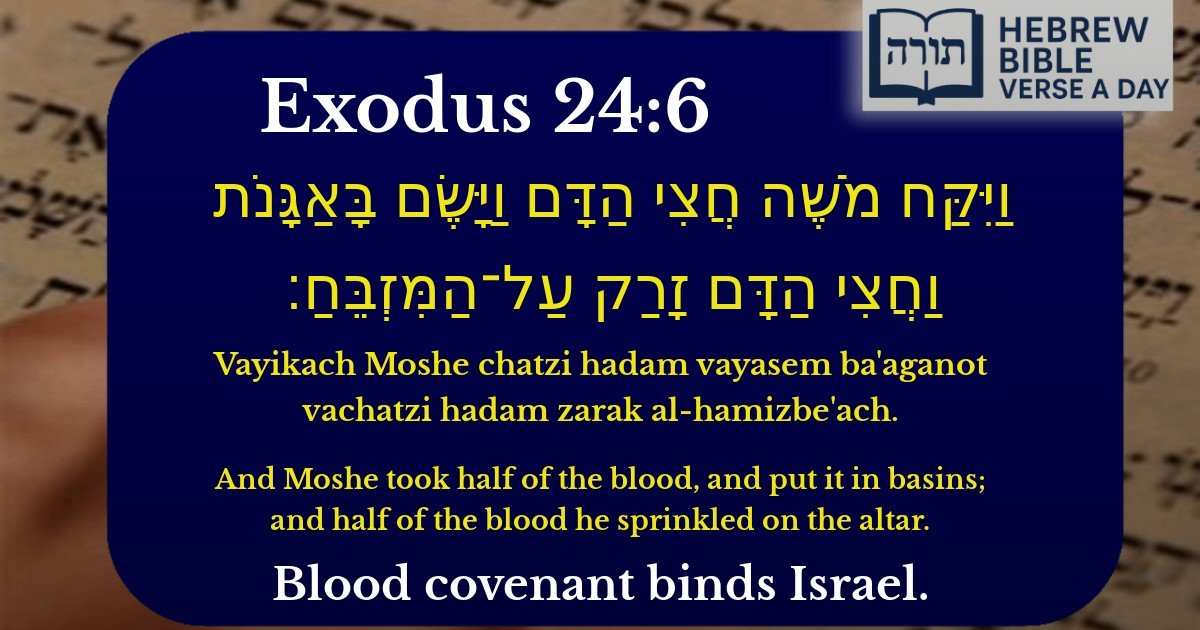

Exodus 24:6 - Blood covenant binds Israel.

Exodus 24:6 - שמות 24:6

Hebrew Text

וַיִּקַּח מֹשֶׁה חֲצִי הַדָּם וַיָּשֶׂם בָּאַגָּנֹת וַחֲצִי הַדָּם זָרַק עַל־הַמִּזְבֵּחַ׃

English Translation

And Moshe took half of the blood, and put it in basins; and half of the blood he sprinkled on the altar.

Transliteration

Vayikach Moshe chatzi hadam vayasem ba'aganot vachatzi hadam zarak al-hamizbe'ach.

Hebrew Leining Text

וַיִּקַּ֤ח מֹשֶׁה֙ חֲצִ֣י הַדָּ֔ם וַיָּ֖שֶׂם בָּאַגָּנֹ֑ת וַחֲצִ֣י הַדָּ֔ם זָרַ֖ק עַל־הַמִּזְבֵּֽחַ׃

🎵 Listen to leining

Parasha Commentary

Context in the Torah

The verse (Shemot 24:6) describes Moshe's actions during the covenant ceremony at Har Sinai, where he divided the blood of the korbanot (sacrifices) between the altar and the people, symbolizing the mutual commitment between Hashem and Bnei Yisrael.

Rashi's Explanation

Rashi (ad loc.) explains that Moshe divided the blood into two parts:

  • The first half was placed in basins (אַגָּנֹת) to later be sprinkled on the people (as described in verse 8).
  • The second half was immediately sprinkled on the mizbe'ach (altar), representing Hashem's role in the covenant.

Symbolism of the Blood Division

The Midrash (Mechilta) and Ramban (Nachmanides) elaborate on the deeper meaning:

  • The blood on the altar signifies Hashem's presence in the covenant, as the altar represents divine service.
  • The blood in the basins (later sprinkled on the people) represents Bnei Yisrael's acceptance of the Torah's obligations.

Halachic Significance

The Rambam (Hilchot Yesodei HaTorah 1:7) derives from this episode that the covenant at Sinai established an eternal bond between Hashem and Klal Yisrael. The division of blood teaches that:

  • The relationship is mutual - both parties are actively involved.
  • The covenant requires action (symbolized by sprinkling) not just verbal agreement.

Kabbalistic Insight

The Zohar (Shemot 88a) interprets the two halves as representing:

  • The revealed aspects of Torah (sprinkled on the people)
  • The hidden aspects of Torah (offered on the altar to Hashem)

📚 Talmud Citations

This verse is quoted in the Talmud.

📖 Zevachim 96a
The verse is discussed in the context of the procedures for sacrificial offerings, particularly how the blood was divided and applied during the covenant at Sinai.

Frequently Asked Questions

Q: What does Exodus 24:6 mean when it says Moshe took half the blood and sprinkled half on the altar?
A: This verse describes part of the covenant ceremony at Mount Sinai. According to Rashi, the blood was divided to symbolize the mutual commitment between Hashem and the Jewish people—half representing G-d's role and half representing the people's acceptance of the Torah (Exodus 24:8). The blood sprinkled on the altar represented sanctification and connection to divine service.
Q: Why was blood used in the covenant ceremony in Exodus 24:6?
A: In Jewish tradition, blood represents life (Leviticus 17:11). The Midrash explains that using blood in the covenant symbolized the life-force of the Jewish people being dedicated to Torah observance. The sprinkling on the altar (representing G-d's presence) and the basins (for the people) showed both parties were bound in this eternal agreement.
Q: What can we learn today from Moshe dividing the blood in Exodus 24:6?
A: The Rambam teaches that this act reminds us that Torah observance requires active participation from both Hashem and the Jewish people. Just as the covenant wasn't complete without both halves of the blood, our relationship with G-d today requires our full commitment to mitzvot while recognizing divine providence in our lives.
Q: How does the altar in Exodus 24:6 connect to later Jewish practice?
A: The Talmud (Zevachim 6a) explains that this early altar service established principles for all future Temple offerings. The division of blood parallels how later korbanot (sacrifices) required portions for the altar and portions for the priests, teaching that divine service involves both heavenly and earthly components.
Q: What do the basins (agannot) represent in Exodus 24:6?
A: The Mechilta explains that these basins held the blood that would later be sprinkled on the people (Exodus 24:8), representing how Torah must be 'contained' within vessels—meaning our hearts and minds must properly receive and internalize Torah wisdom. The physical vessels hint at the need for spiritual preparedness when approaching divine matters.