

Join Our Newsletter To Be Informed When New Videos Are Posted
Hebrew Text
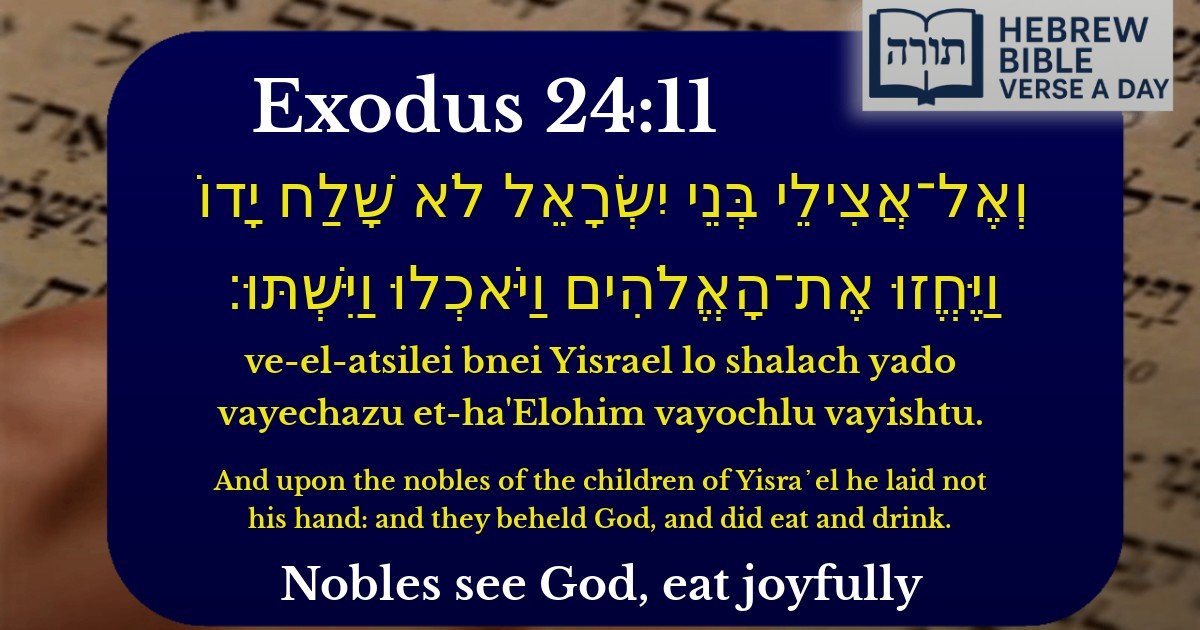
וְאֶל־אֲצִילֵי בְּנֵי יִשְׂרָאֵל לֹא שָׁלַח יָדוֹ וַיֶּחֱזוּ אֶת־הָאֱלֹהִים וַיֹּאכְלוּ וַיִּשְׁתּוּ׃
English Translation
And upon the nobles of the children of Yisra᾽el he laid not his hand: and they beheld God, and did eat and drink.
Transliteration
Ve-el-atsilei bnei Yisrael lo shalach yado vayechazu et-ha'Elohim vayochlu vayishtu.
Hebrew Leining Text
וְאֶל־אֲצִילֵי֙ בְּנֵ֣י יִשְׂרָאֵ֔ל לֹ֥א שָׁלַ֖ח יָד֑וֹ וַיֶּֽחֱזוּ֙ אֶת־הָ֣אֱלֹהִ֔ים וַיֹּאכְל֖וּ וַיִּשְׁתּֽוּ׃ {ס}
🎵 Listen to leining
Parasha Commentary
📚 Talmud Citations
This verse is quoted in the Talmud.
📖 Yoma 4b
The verse is referenced in a discussion about the unique status of the nobles of Israel who were privileged to see God and yet were not harmed, contrasting with the general prohibition against seeing God.
📖 Megillah 10b
The verse is mentioned in the context of discussing the special privileges and divine revelations granted to the leaders of Israel, highlighting their unique spiritual status.
Context in Shemot (Exodus) 24:11
This verse appears in the context of the revelation at Har Sinai, where Moshe, Aharon, Nadav, Avihu, and the seventy elders ascend the mountain and experience a divine vision. The phrase "וְאֶל־אֲצִילֵי בְּנֵי יִשְׂרָאֵל לֹא שָׁלַח יָדוֹ" ("And upon the nobles of the children of Yisrael He laid not His hand") suggests that these leaders were granted a unique spiritual experience without suffering harm, despite the inherent danger of beholding the Divine.
Rashi's Interpretation
Rashi (Shemot 24:11) explains that the "nobles" (אֲצִילֵי) refer to the seventy elders chosen to accompany Moshe. He notes that the phrase "לֹא שָׁלַח יָדוֹ" implies they were not punished at that moment, though later (in Bamidbar 11:1-2), they faced consequences for improper behavior. Rashi also comments on "וַיֶּחֱזוּ אֶת־הָאֱלֹהִים," stating that they had a prophetic vision of the Divine, but it was not as clear as Moshe's direct communication with Hashem.
Rambam's Perspective
In Moreh Nevuchim (1:5), Rambam discusses the nature of divine visions. He explains that "וַיֶּחֱזוּ" refers to a prophetic experience, not a physical sighting, as Hashem has no corporeal form. The eating and drinking ("וַיֹּאכְלוּ וַיִּשְׁתּוּ") symbolize their physical sustenance during this spiritual elevation, showing that prophecy does not require complete detachment from the material world.
Talmudic and Midrashic Insights
Kabbalistic Dimension
The Zohar (Shemot 184b) interprets their vision as an experience of the Sefirah of Tiferet (Divine harmony). The eating and drinking symbolize drawing spiritual sustenance from this revelation, sustaining their souls just as food sustains the body.
Halachic Implications
Rambam (Hilchos Yesodei HaTorah 7:6) derives from this verse that prophets may receive visions while in a physical state, but the highest prophecy (like Moshe's) requires total spiritual readiness. This distinction informs Jewish understanding of prophetic levels.