

Join Our Newsletter To Be Informed When New Videos Are Posted
Hebrew Text
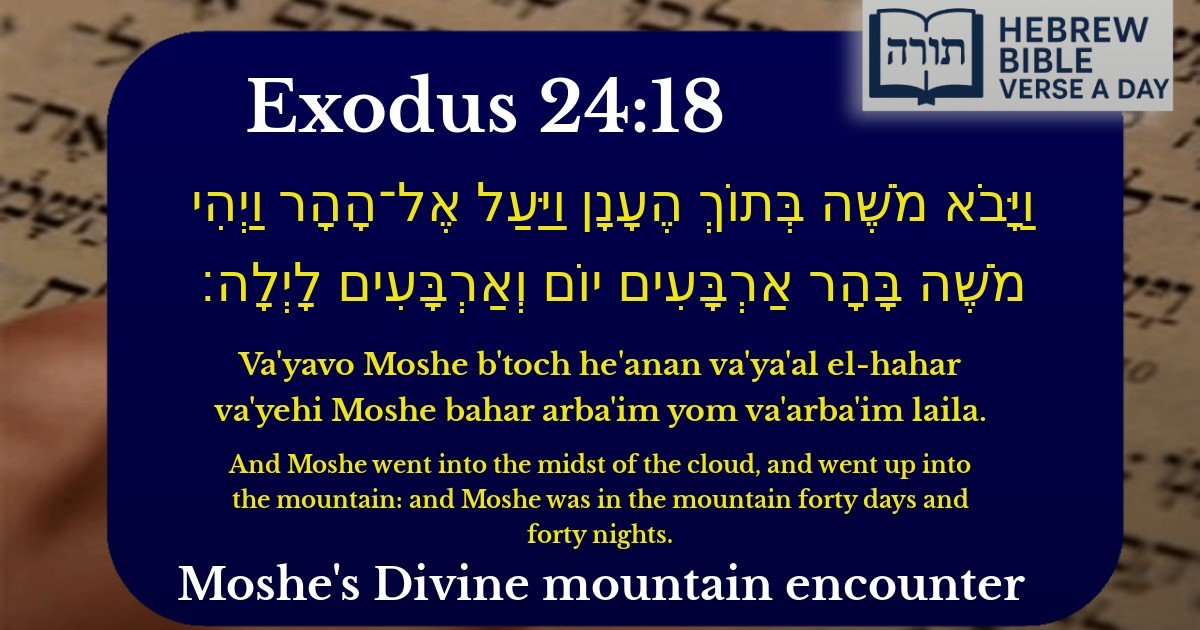
וַיָּבֹא מֹשֶׁה בְּתוֹךְ הֶעָנָן וַיַּעַל אֶל־הָהָר וַיְהִי מֹשֶׁה בָּהָר אַרְבָּעִים יוֹם וְאַרְבָּעִים לָיְלָה׃
English Translation
And Moshe went into the midst of the cloud, and went up into the mountain: and Moshe was in the mountain forty days and forty nights.
Transliteration
Va'yavo Moshe b'toch he'anan va'ya'al el-hahar va'yehi Moshe bahar arba'im yom va'arba'im laila.
Hebrew Leining Text
וַיָּבֹ֥א מֹשֶׁ֛ה בְּת֥וֹךְ הֶעָנָ֖ן וַיַּ֣עַל אֶל־הָהָ֑ר וַיְהִ֤י מֹשֶׁה֙ בָּהָ֔ר אַרְבָּעִ֣ים י֔וֹם וְאַרְבָּעִ֖ים לָֽיְלָה׃ {פ}
🎵 Listen to leining
Parasha Commentary
📚 Talmud Citations
This verse is quoted in the Talmud.
📖 Yoma 4b
The verse is referenced in a discussion about Moses' ascent to Mount Sinai and the duration of his stay there.
📖 Shabbat 88b
The verse is mentioned in the context of the giving of the Torah and Moses' unique role in receiving it.
Entering the Cloud
The verse states, "And Moshe went into the midst of the cloud" (Shemot 24:18). Rashi explains that this cloud was the Anan HaKavod (Cloud of Glory), which represented the Divine Presence. Moshe's entry into the cloud symbolizes his unique closeness to Hashem, as no other prophet achieved this level of direct communion (Rashi, Shemot 24:18). The Midrash Tanchuma (Ki Tisa 30) elaborates that Moshe was enveloped in a spiritual purity that allowed him to withstand the intensity of the Divine Presence.
Ascending the Mountain
The phrase "and went up into the mountain" refers to Har Sinai, where Moshe received the Torah. Rambam (Hilchos Yesodei HaTorah 7:6) teaches that Moshe's ascent was both physical and spiritual, as he transcended human limitations to receive divine wisdom. The Talmud (Shabbat 89a) adds that Moshe ascended to the highest level of prophecy, unlike any other prophet before or after him.
Forty Days and Forty Nights
The verse concludes by noting that Moshe remained on the mountain for "forty days and forty nights." The number forty is significant in Jewish tradition, representing periods of transformation and renewal (e.g., the Flood, the spies' mission, and the mikveh's forty se'ah). The Midrash (Shemot Rabbah 41:6) explains that these forty days corresponded to the time needed for Moshe to internalize the entirety of the Torah—both the Written and Oral Law. The Talmud (Menachot 99b) further states that Moshe spent the days learning Torah directly from Hashem and the nights reviewing it, demonstrating the importance of constant Torah study.