

Join Our Newsletter To Be Informed When New Videos Are Posted
Hebrew Text
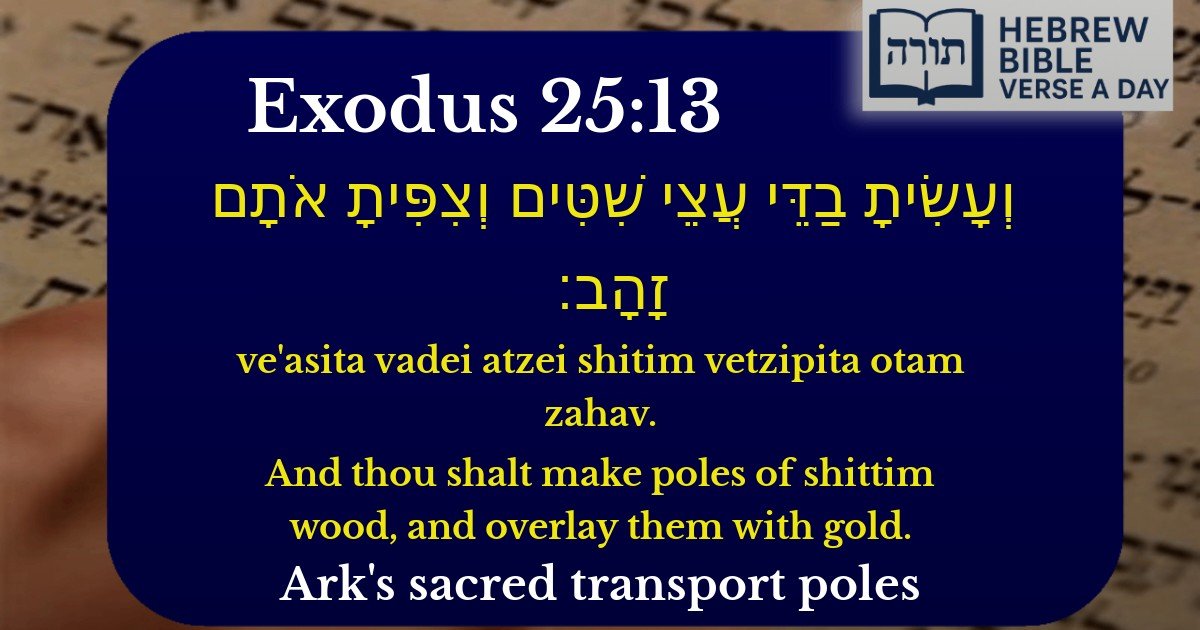
וְעָשִׂיתָ בַדֵּי עֲצֵי שִׁטִּים וְצִפִּיתָ אֹתָם זָהָב׃
English Translation
And thou shalt make poles of shittim wood, and overlay them with gold.
Transliteration
Ve'asita vadei atzei shitim vetzipita otam zahav.
Hebrew Leining Text
וְעָשִׂ֥יתָ בַדֵּ֖י עֲצֵ֣י שִׁטִּ֑ים וְצִפִּיתָ֥ אֹתָ֖ם זָהָֽב׃
🎵 Listen to leining
Parasha Commentary
📚 Talmud Citations
This verse is quoted in the Talmud.
📖 Yoma 72a
The verse is referenced in a discussion about the construction and sanctity of the Ark of the Covenant, emphasizing the materials used and their significance.
📖 Menachot 98a
The verse is cited in a discussion about the dimensions and materials of the Ark, comparing it to other sacred objects in the Tabernacle.
Source and Context
This verse (Shemot 25:13) is part of the Torah's detailed instructions for constructing the Aron HaKodesh (Holy Ark), which housed the Luchot HaBrit (Tablets of the Covenant). The poles (badim) were used to carry the Ark and were never to be removed (Shemot 25:15).
Material Significance: Shittim Wood and Gold
Rashi (on Shemot 25:5) explains that shittim wood (עֲצֵי שִׁטִּים) refers to acacia wood, a durable and spiritually symbolic material. The Midrash (Tanchuma, Terumah 9) teaches that Yaakov Avinu prophetically planted these trees in Egypt, knowing they would later be used for the Mishkan.
The gold overlay (צִפִּיתָ אֹתָם זָהָב) represents both physical beauty and spiritual refinement. The Ramban (on Shemot 25:11) notes that gold symbolizes the divine presence, while the wood underneath represents human participation in holiness.
Halachic and Symbolic Dimensions
Mishkan as Microcosm
The Kli Yakar (Shemot 25:13) connects the poles to the concept of Ma'aseh Merkavah (Divine Chariot), where the Ark represents the Throne of Glory and the poles symbolize the "arms" that carry divine presence into the world, much like the angels in Yechezkel's vision (Yechezkel 1:8).