

Join Our Newsletter To Be Informed When New Videos Are Posted
Hebrew Text
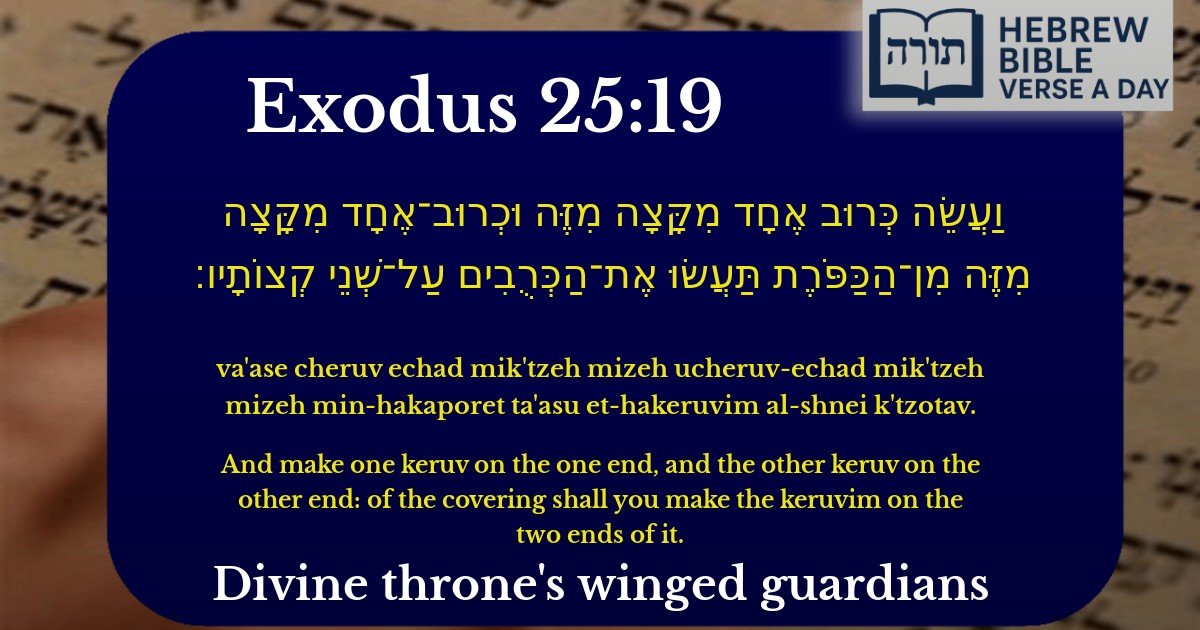
וַעֲשֵׂה כְּרוּב אֶחָד מִקָּצָה מִזֶּה וּכְרוּב־אֶחָד מִקָּצָה מִזֶּה מִן־הַכַּפֹּרֶת תַּעֲשׂוּ אֶת־הַכְּרֻבִים עַל־שְׁנֵי קְצוֹתָיו׃
English Translation
And make one keruv on the one end, and the other keruv on the other end: of the covering shall you make the keruvim on the two ends of it.
Transliteration
Va'ase cheruv echad mik'tzeh mizeh ucheruv-echad mik'tzeh mizeh min-hakaporet ta'asu et-hakeruvim al-shnei k'tzotav.
Hebrew Leining Text
וַ֠עֲשֵׂ֠ה כְּר֨וּב אֶחָ֤ד מִקָּצָה֙ מִזֶּ֔ה וּכְרוּב־אֶחָ֥ד מִקָּצָ֖ה מִזֶּ֑ה מִן־הַכַּפֹּ֛רֶת תַּעֲשׂ֥וּ אֶת־הַכְּרֻבִ֖ים עַל־שְׁנֵ֥י קְצוֹתָֽיו׃
🎵 Listen to leining
Parasha Commentary
📚 Talmud Citations
This verse is quoted in the Talmud.
📖 Yoma 54a
The verse is discussed in relation to the construction of the keruvim (cherubim) on the Ark of the Covenant and their positioning.
📖 Sukkah 5b
The verse is referenced in a discussion about the dimensions and placement of the keruvim in the Temple.
Context of the Verse
The verse (Exodus 25:19) describes the construction of the keruvim (cherubim) atop the kaporet (ark cover) of the Aron HaKodesh (Holy Ark) in the Mishkan (Tabernacle). The keruvim were two golden figures with wings spread upward, facing one another, as detailed in the surrounding verses.
Rashi's Commentary
Rashi (Exodus 25:19) explains that the keruvim were not separate pieces attached to the kaporet but were formed from the same block of gold as the cover itself—"min hakaporet ta'asu et hakeruvim" ("of the covering shall you make the keruvim"). This emphasizes their unity with the kaporet, symbolizing that the Divine Presence rests upon the Ark only when there is complete harmony between the Jewish people, as represented by the two keruvim facing each other (Sotah 37a).
Symbolism of the Keruvim
Rambam's Perspective
Rambam (Moreh Nevuchim 3:45) discusses the keruvim as part of the Mishkan’s structure meant to inspire awe and reverence, not as objects of worship. Their presence reinforced the idea that the Shekhinah (Divine Presence) dwelled among Israel, as stated in Exodus 25:22, where Hashem speaks from between the keruvim.
Halachic Details
The Mishnah (Menachot 11:7) and Talmud (Yoma 54a) elaborate on the precise dimensions and positioning of the keruvim, emphasizing that their wings stretched upward, overshadowing the kaporet, while their faces were inclined slightly inward—a posture of humility and mutual connection.