

Join Our Newsletter To Be Informed When New Videos Are Posted
Hebrew Text
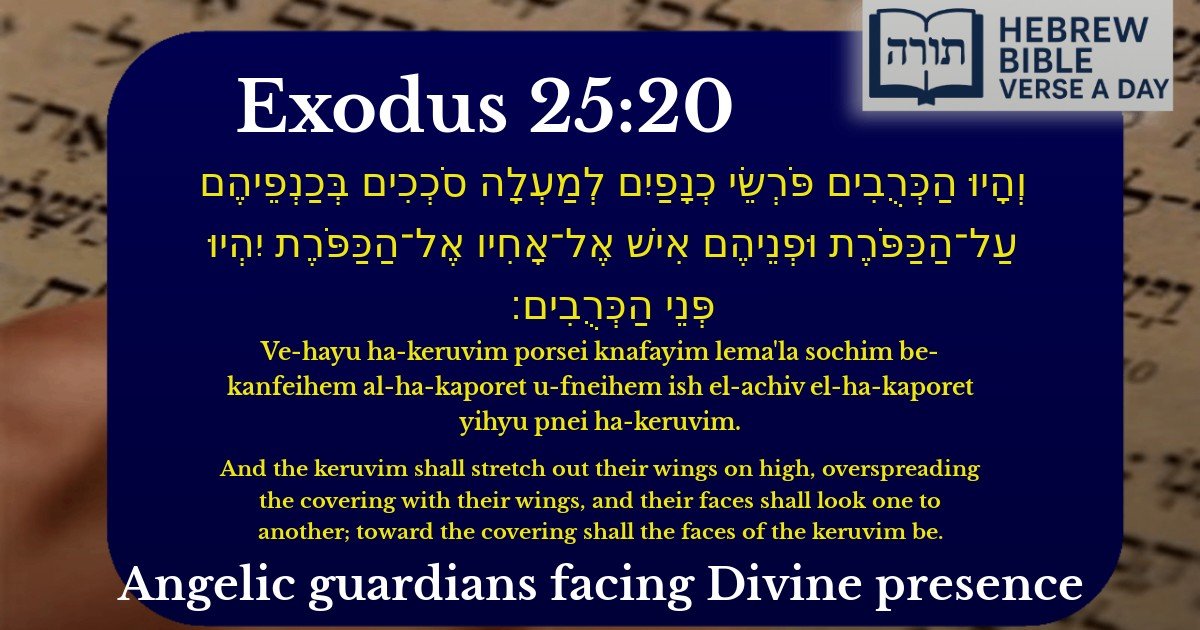
וְהָיוּ הַכְּרֻבִים פֹּרְשֵׂי כְנָפַיִם לְמַעְלָה סֹכְכִים בְּכַנְפֵיהֶם עַל־הַכַּפֹּרֶת וּפְנֵיהֶם אִישׁ אֶל־אָחִיו אֶל־הַכַּפֹּרֶת יִהְיוּ פְּנֵי הַכְּרֻבִים׃
English Translation
And the keruvim shall stretch out their wings on high, overspreading the covering with their wings, and their faces shall look one to another; toward the covering shall the faces of the keruvim be.
Transliteration
Ve-hayu ha-keruvim porsei knafayim lema'la sochim be-kanfeihem al-ha-kaporet u-fneihem ish el-achiv el-ha-kaporet yihyu pnei ha-keruvim.
Hebrew Leining Text
וְהָי֣וּ הַכְּרֻבִים֩ פֹּרְשֵׂ֨י כְנָפַ֜יִם לְמַ֗עְלָה סֹכְכִ֤ים בְּכַנְפֵיהֶם֙ עַל־הַכַּפֹּ֔רֶת וּפְנֵיהֶ֖ם אִ֣ישׁ אֶל־אָחִ֑יו אֶ֨ל־הַכַּפֹּ֔רֶת יִהְי֖וּ פְּנֵ֥י הַכְּרֻבִֽים׃
🎵 Listen to leining
Parasha Commentary
📚 Talmud Citations
This verse is quoted in the Talmud.
📖 Yoma 54a
The verse is discussed in the context of the keruvim in the Holy of Holies and their positioning, particularly during the Second Temple period.
📖 Bava Batra 99a
The verse is referenced in a discussion about the construction and design of the keruvim in the Temple.
📖 Chagigah 13b
The verse is mentioned in a mystical discussion about the nature and appearance of the keruvim.
The Keruvim on the Ark Covering
The verse describes the positioning of the keruvim (cherubim) atop the kaporet (ark covering) in the Mishkan (Tabernacle). According to Rashi (Exodus 25:20), the keruvim faced each other with their wings spread upward, symbolizing their role as heavenly beings serving Hashem. Their faces turned inward toward the kaporet, representing their focus on the Divine Presence resting between them.
Symbolism of the Keruvim
The Talmud (Bava Batra 99a) explains that the keruvim had the form of children, symbolizing purity and closeness to Hashem. Rambam (Moreh Nevuchim 3:45) suggests that their human-like faces signify the intellectual connection between Bnei Yisrael and Hashem, while their wings represent spiritual elevation.
The Kaporet as the Throne of Mercy
The Zohar (Terumah 129a) describes the kaporet as the seat of Divine Mercy, with the keruvim serving as attendants to the Shekhinah. Their position above the Ark, which contained the Luchot (Tablets), underscores the balance between justice (the Torah) and mercy (the kaporet).