

Join Our Newsletter To Be Informed When New Videos Are Posted
Hebrew Text
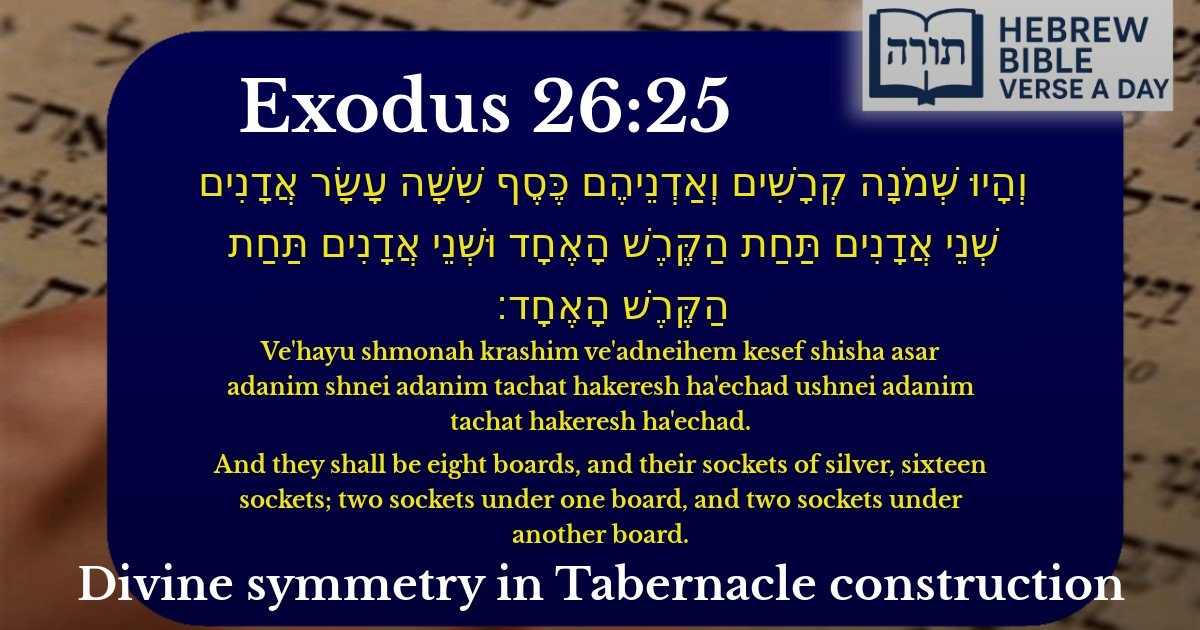
וְהָיוּ שְׁמֹנָה קְרָשִׁים וְאַדְנֵיהֶם כֶּסֶף שִׁשָּׁה עָשָׂר אֲדָנִים שְׁנֵי אֲדָנִים תַּחַת הַקֶּרֶשׁ הָאֶחָד וּשְׁנֵי אֲדָנִים תַּחַת הַקֶּרֶשׁ הָאֶחָד׃
English Translation
And they shall be eight boards, and their sockets of silver, sixteen sockets; two sockets under one board, and two sockets under another board.
Transliteration
Ve'hayu shmonah krashim ve'adneihem kesef shisha asar adanim shnei adanim tachat hakeresh ha'echad ushnei adanim tachat hakeresh ha'echad.
Hebrew Leining Text
וְהָיוּ֙ שְׁמֹנָ֣ה קְרָשִׁ֔ים וְאַדְנֵיהֶ֣ם כֶּ֔סֶף שִׁשָּׁ֥ה עָשָׂ֖ר אֲדָנִ֑ים שְׁנֵ֣י אֲדָנִ֗ים תַּ֚חַת הַקֶּ֣רֶשׁ הָאֶחָ֔ד וּשְׁנֵ֣י אֲדָנִ֔ים תַּ֖חַת הַקֶּ֥רֶשׁ הָאֶחָֽד׃
🎵 Listen to leining
Parasha Commentary
📚 Talmud Citations
This verse is not quoted in the Talmud.
The Structure of the Mishkan's Walls
The verse describes the construction of the western wall of the Mishkan (Tabernacle), consisting of eight boards (kerashim) with silver sockets (adanim) as their foundation. Rashi (Exodus 26:25) explains that these eight boards completed the western side, which was narrower than the northern and southern sides (each made of 20 boards). The sockets provided stability, with two sockets per board, totaling sixteen sockets for the eight boards.
Symbolism of the Silver Sockets
The adanim (sockets) were made of silver, which the Midrash (Tanchuma, Terumah 10) connects to the atonement for the sin of the Golden Calf. Silver, representing purity and repentance, formed the foundation of the Mishkan, signifying that proper service to Hashem must be built upon sincere teshuvah (repentance). The Vilna Gaon notes that the dual sockets under each board allude to the dual foundations of Torah and mitzvot, which uphold a Jew's spiritual life.
The Number Eight
The use of eight boards carries significance, as the number eight in Jewish thought represents transcendence beyond nature (symbolized by seven, like the days of creation). The Ramban (Exodus 26:25) suggests this hints at the Mishkan’s role as a dwelling place for the Divine Presence (Shechinah), which transcends physical limitations. The Talmud (Menachot 29a) also associates the number eight with the future redemption, implying the Mishkan foreshadowed the eternal Beit HaMikdash.
Structural Precision