

Join Our Newsletter To Be Informed When New Videos Are Posted
Hebrew Text
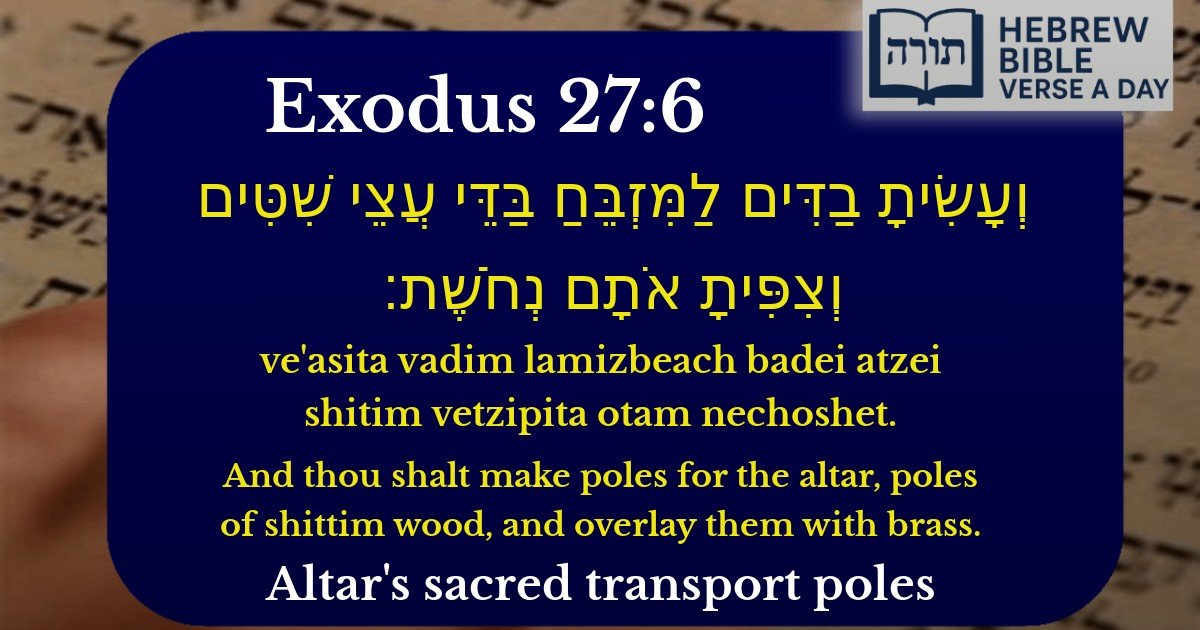
וְעָשִׂיתָ בַדִּים לַמִּזְבֵּחַ בַּדֵּי עֲצֵי שִׁטִּים וְצִפִּיתָ אֹתָם נְחֹשֶׁת׃
English Translation
And thou shalt make poles for the altar, poles of shittim wood, and overlay them with brass.
Transliteration
Ve'asita vadim lamizbeach badei atzei shitim vetzipita otam nechoshet.
Hebrew Leining Text
וְעָשִׂ֤יתָ בַדִּים֙ לַמִּזְבֵּ֔חַ בַּדֵּ֖י עֲצֵ֣י שִׁטִּ֑ים וְצִפִּיתָ֥ אֹתָ֖ם נְחֹֽשֶׁת׃
🎵 Listen to leining
Parasha Commentary
📚 Talmud Citations
This verse is not quoted in the Talmud.
The Poles of the Altar
The verse (Shemot 27:6) commands the construction of poles for the Mizbe'ach (altar), specifying that they must be made of shittim wood (acacia) and overlaid with nechoshet (brass). These poles were essential for transporting the altar during the Israelites' travels in the wilderness.
Material Significance: Shittim Wood
Rashi explains that shittim wood was chosen because it is durable and resistant to decay, symbolizing the eternal nature of the Divine service. The Midrash (Shemot Rabbah 35:2) further notes that the shittim tree does not bear fruit, representing the idea that the altar—and by extension, the service of Hashem—should be free from ulterior motives or personal gain.
Overlay with Brass (Nechoshet)
The Rambam (Hilchot Klei HaMikdash 2:3) explains that the brass overlay served both a practical and symbolic purpose:
Function of the Poles
The Talmud (Zevachim 59b) teaches that the poles were never removed from the altar once inserted, symbolizing the permanence of the sacrificial service. The Sforno adds that their constant presence also served as a reminder that the altar—and the service of Hashem—must always be "portable" in the sense of being accessible and relevant in all circumstances.
Spiritual Lessons
The Kli Yakar highlights that the combination of wood (a growing, organic material) and brass (a refined metal) teaches that Divine service requires both natural human effort (wood) and disciplined refinement (brass). Just as the poles carried the altar, our spiritual efforts must "carry" our commitment to holiness in every aspect of life.