Frequently Asked Questions
Q: What does Exodus 27:15 describe?
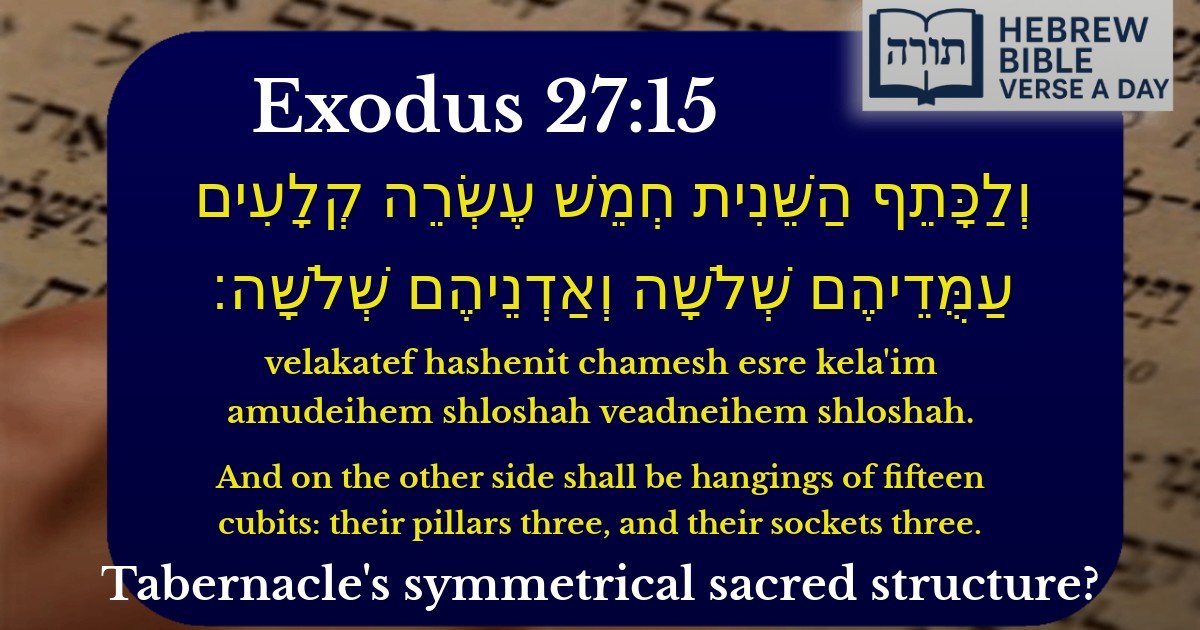
A: Exodus 27:15 describes part of the construction of the Mishkan (Tabernacle). It specifies that on one side, there should be hangings (curtains) measuring fifteen cubits, supported by three pillars with three sockets (bases). This was part of the detailed instructions for building the sacred space where the Divine Presence would dwell.
Q: Why does the Torah give such specific measurements for the Mishkan?
A: The Torah provides precise measurements for the Mishkan to emphasize the importance of holiness, order, and attention to detail in serving Hashem. As Rashi explains, every element of the Mishkan had spiritual significance, and following these instructions exactly ensured that it would be a fitting dwelling place for the Divine Presence (Shechinah).
Q: What can we learn from the description of the Mishkan's curtains and pillars?
A: The curtains and pillars teach us that every part of the Mishkan, even the supporting structures, had a sacred purpose. The Talmud (Yoma 72a) compares the Jewish people to the Mishkan—just as every detail mattered in the Mishkan, every mitzvah and detail in our lives matters in building a relationship with Hashem.
Q: How does the Mishkan's construction apply to us today?
A: Although we no longer have the physical Mishkan, the Rambam teaches that the principles behind its construction—dedication, precision in mitzvot, and creating space for holiness—apply to our homes and synagogues today. Just as the Mishkan was a microcosm of a sanctified world, we are meant to sanctify our own surroundings.


Context in the Mishkan
The verse (Shemot 26:12) describes the dimensions and structure of the hangings (kelaim) on the western side of the Mishkan (Tabernacle). According to Rashi, this refers to the excess curtain material that draped over the back of the Mishkan after covering the primary structure. The "other side" (hakatef hashenit) indicates the opposite side of the entrance, which faced westward.
Measurements and Symbolism
The hangings measured fifteen cubits in length, supported by three pillars with three sockets. Ramban explains that the number three here corresponds to the three divisions of the Jewish people: Kohanim, Levi'im, and Yisraelim—all united in the service of the Mishkan. The Malbim adds that the precise measurements reflect the divine order and harmony required in sacred spaces.
Structural Details
Halachic Insights
The Talmud (Shabbat 98b) derives from this verse that the hangings were not merely decorative but served a functional purpose—preventing wind or debris from entering the Mishkan. The Rambam (Hilchot Beit HaBechirah 1:15) later applies these principles to the design of the Beit HaMikdash, demonstrating continuity in sacred architecture.