Frequently Asked Questions
Q: What is the significance of the colors (blue, purple, scarlet) in the gate screen of the Mishkan (Tabernacle)?
A: According to Rashi and Midrashic sources, the colors—blue (techelet), purple (argaman), and scarlet (tola'at shani)—symbolize different spiritual concepts. Blue represents the heavens and divine wisdom, purple signifies royalty and dignity, and scarlet reflects human passion and earthly matters. Together, they show the harmony between heavenly and earthly service to Hashem.
Q: Why does the gate of the Mishkan have four pillars and sockets?
A: The four pillars and their sockets (bases) symbolize stability and completeness, as the number four often represents wholeness in Jewish tradition (e.g., the four directions of the world). The Ramban explains that the structure reflects the Mishkan’s role as a dwelling place for the Divine Presence, requiring strength and balance.
Q: What does the 'fine twined linen' (shesh moshzar) represent in this verse?
A: The 'shesh moshzar' (fine twined linen) represents purity and refinement in avodat Hashem (service to G-d). The Talmud (Yoma 71b) teaches that linen garments were worn by the Kohen Gadol (High Priest) to atone for arrogance, showing that humility is essential when approaching holiness.
Q: How does the gate screen of the Mishkan apply to us today?
A: The gate screen teaches that entering sacred spaces—whether physical (like a synagogue) or spiritual (like prayer)—requires preparation and reverence. The colors and craftsmanship remind us to elevate our actions with intention, just as the Mishkan’s beauty reflected devotion to Hashem (based on teachings from the Kli Yakar).
Q: Why was the screen 20 cubits long?
A: The 20-cubit measurement ensured the entrance was prominent and accessible while maintaining dignity. The Midrash (Shemot Rabbah) connects this to the 20 generations from Adam to Avraham, suggesting that just as Avraham opened the way for monotheism, the Mishkan’s gate invites people to connect with Hashem.

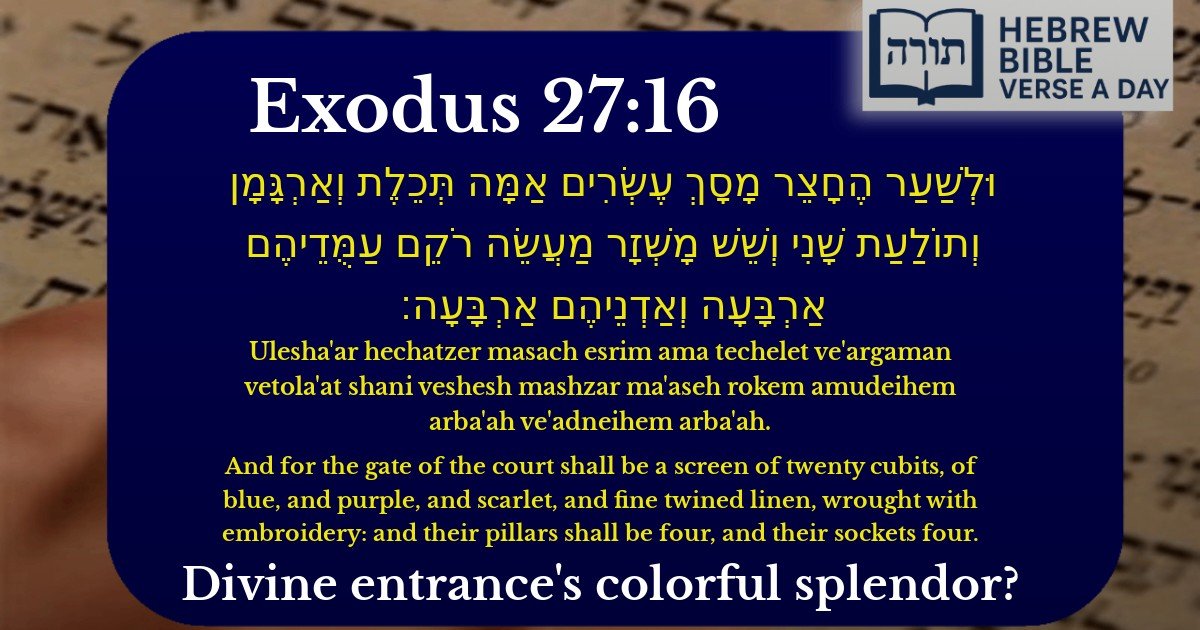

The Screen of the Courtyard Gate
The verse describes the screen (masach) at the entrance of the Mishkan's courtyard, made of four colored materials—blue (techelet), purple (argaman), scarlet (tola'at shani), and fine twined linen (shesh moshzar)—woven with embroidery (ma'aseh rokem). Rashi (Exodus 27:16) explains that this screen was similar to the screen at the entrance of the Mishkan itself (Exodus 26:36), emphasizing the beauty and sanctity of the entranceway.
Symbolism of the Colors
The Midrash (Tanchuma, Terumah 11) associates the four colors with different aspects of divine service and creation:
Structural Details
The screen was supported by four pillars (amudim) with four sockets (adanim). The Talmud (Zevachim 59b) notes that the number four corresponds to the four directions of the world, symbolizing that the Mishkan was a place of universal spiritual influence. The Ibn Ezra (Exodus 27:16) adds that the symmetry of the structure reflects divine order and balance in creation.
Embroidery and Craftsmanship
The phrase ma'aseh rokem ("wrought with embroidery") indicates intricate artistry. Ramban (Exodus 26:36) explains that this embroidery was not merely decorative but carried deep symbolic meaning, representing the intertwining of divine wisdom (chochmah) and human effort in serving Hashem.