

Join Our Newsletter To Be Informed When New Videos Are Posted
Hebrew Text
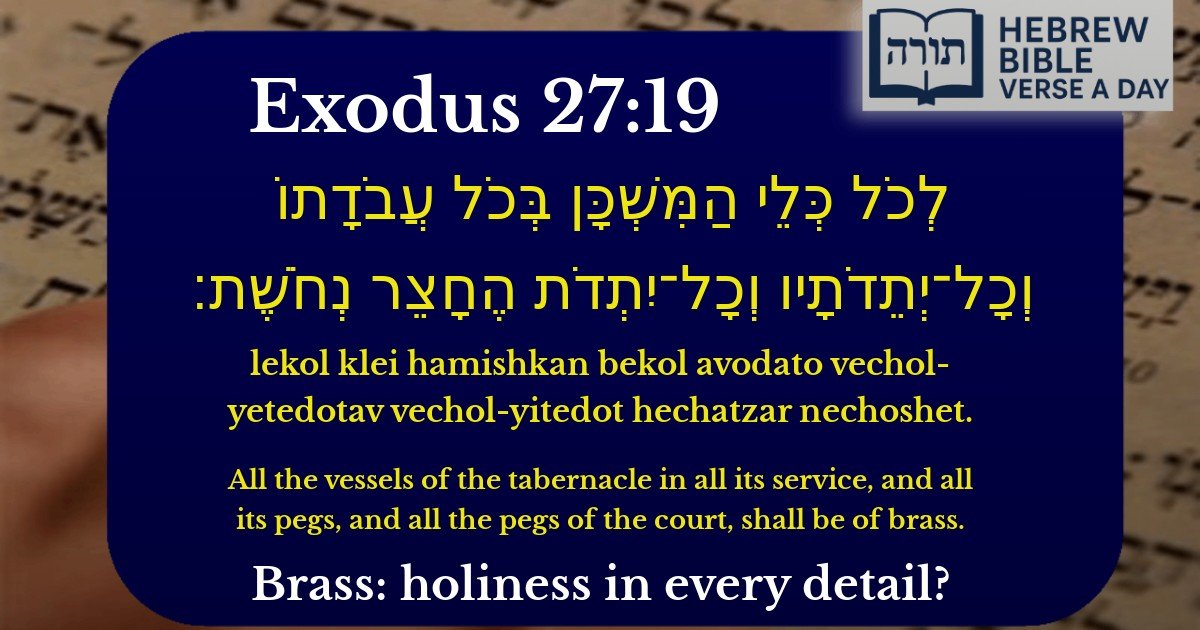
לְכֹל כְּלֵי הַמִּשְׁכָּן בְּכֹל עֲבֹדָתוֹ וְכָל־יְתֵדֹתָיו וְכָל־יִתְדֹת הֶחָצֵר נְחֹשֶׁת׃
English Translation
All the vessels of the tabernacle in all its service, and all its pegs, and all the pegs of the court, shall be of brass.
Transliteration
Lekol klei hamishkan bekol avodato vechol-yetedotav vechol-yitedot hechatzar nechoshet.
Hebrew Leining Text
לְכֹל֙ כְּלֵ֣י הַמִּשְׁכָּ֔ן בְּכֹ֖ל עֲבֹדָת֑וֹ וְכׇל־יְתֵדֹתָ֛יו וְכׇל־יִתְדֹ֥ת הֶחָצֵ֖ר נְחֹֽשֶׁת׃ {ס}
🎵 Listen to leining
Parasha Commentary
📚 Talmud Citations
This verse is not quoted in the Talmud.
Overview of the Verse
The verse (Shemot 27:19) describes the requirement that all the vessels of the Mishkan (Tabernacle), including its pegs and those of the courtyard, must be made of nechoshet (brass or copper). This detail is part of the broader instructions regarding the construction and maintenance of the Mishkan.
Rashi's Commentary
Rashi explains that the term "כְּלֵי הַמִּשְׁכָּן" (vessels of the Tabernacle) refers to the tools used in the service of the Mishkan, such as shovels, basins, and forks (based on Bamidbar 4:14). He emphasizes that even the pegs ("יְתֵדֹתָיו") used to secure the Mishkan's curtains and courtyard walls must be made of brass, ensuring uniformity in material for all functional components.
Symbolism of Brass (Nechoshet)
Several commentators explore the deeper significance of using brass:
Practical Halachic Implications
The Talmud (Yoma 72a) discusses the importance of using the correct materials for sacred vessels, teaching that deviation from the prescribed materials invalidates the vessel's use in the Mishkan. This underscores the principle of hiddur mitzvah (beautifying commandments) by adhering strictly to divine instructions.
Midrashic Insights
The Midrash Tanchuma (Terumah 11) highlights that the pegs ("יִתְדֹת") symbolize stability and grounding. Just as the pegs secure the Mishkan physically, the mitzvot anchor the Jewish people spiritually. The use of brass, a material resistant to corrosion, reflects the eternal nature of Torah and its commandments.