

Join Our Newsletter To Be Informed When New Videos Are Posted
Hebrew Text
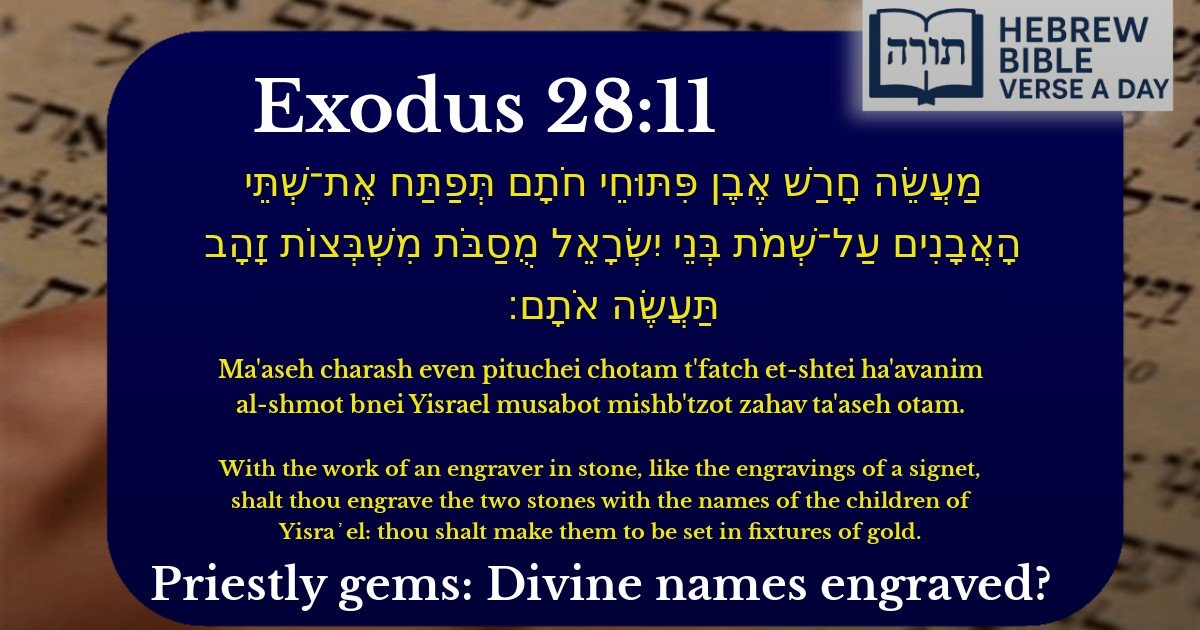
מַעֲשֵׂה חָרַשׁ אֶבֶן פִּתּוּחֵי חֹתָם תְּפַתַּח אֶת־שְׁתֵּי הָאֲבָנִים עַל־שְׁמֹת בְּנֵי יִשְׂרָאֵל מֻסַבֹּת מִשְׁבְּצוֹת זָהָב תַּעֲשֶׂה אֹתָם׃
English Translation
With the work of an engraver in stone, like the engravings of a signet, shalt thou engrave the two stones with the names of the children of Yisra᾽el: thou shalt make them to be set in fixtures of gold.
Transliteration
Ma'aseh charash even pituchei chotam t'fatch et-shtei ha'avanim al-shmot bnei Yisrael musabot mishb'tzot zahav ta'aseh otam.
Hebrew Leining Text
מַעֲשֵׂ֣ה חָרַשׁ֮ אֶ֒בֶן֒ פִּתּוּחֵ֣י חֹתָ֗ם תְּפַתַּח֙ אֶת־שְׁתֵּ֣י הָאֲבָנִ֔ים עַל־שְׁמֹ֖ת בְּנֵ֣י יִשְׂרָאֵ֑ל מֻסַבֹּ֛ת מִשְׁבְּצ֥וֹת זָהָ֖ב תַּעֲשֶׂ֥ה אֹתָֽם׃
🎵 Listen to leining
Parasha Commentary
📚 Talmud Citations
This verse is quoted in the Talmud.
📖 Sotah 36a
The verse is referenced in the discussion about the craftsmanship of the stones on the High Priest's breastplate, emphasizing the skill required to engrave the names of the tribes of Israel.
📖 Yoma 73b
The verse is cited in the context of discussing the details of the High Priest's garments, particularly the breastplate and the engraving of the stones.
Engraving the Stones for the Choshen
The verse (Shemot 28:11) describes the intricate craftsmanship required for the two avnei shoham (shoham stones) on the choshen (breastplate) of the Kohen Gadol. Rashi explains that the phrase "ma'aseh charash even" ("the work of an engraver in stone") refers to a specialized artisan who could engrave letters in reverse, like a signet ring, so that when pressed into wax, the impression would appear correctly. This required exceptional skill, as the letters had to be carved deeply and precisely.
The Significance of the Names
According to the Rambam (Hilchos Klei HaMikdash 9:7), the names of the twelve tribes were engraved on these stones, six on each, in the order of their birth. The Talmud (Sotah 36a) elaborates that the names were written with the letters shin and tav added to Reuven's name and Binyamin's name, respectively, to complete the names of Avraham and Yaakov—emphasizing the divine covenant with the forefathers.
Mishbetzot Zahav (Gold Settings)
The phrase "musabbot mishbetzot zahav" ("set in fixtures of gold") refers to the gold bezels that held the stones securely on the choshen. The Midrash Tanchuma (Tetzaveh 10) teaches that the gold settings symbolized the refinement of character—just as gold is purified through fire, so too must a leader (like the Kohen Gadol) refine his middos (character traits) to properly serve Hashem and the nation.
Spiritual Lessons