

Join Our Newsletter To Be Informed When New Videos Are Posted
Hebrew Text
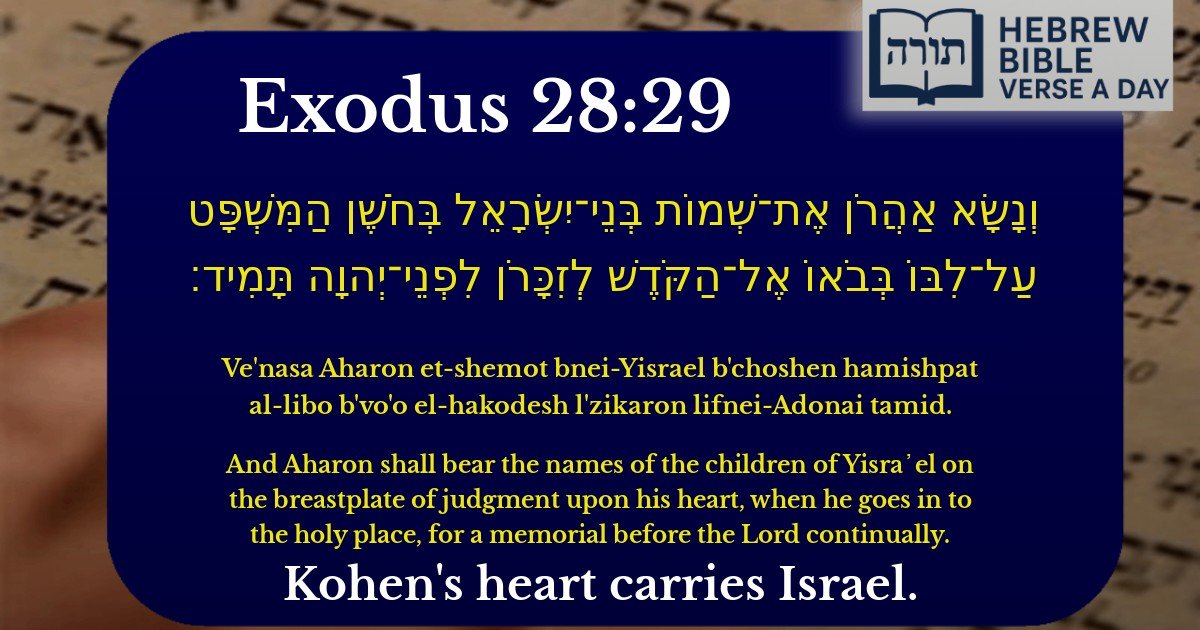
וְנָשָׂא אַהֲרֹן אֶת־שְׁמוֹת בְּנֵי־יִשְׂרָאֵל בְּחֹשֶׁן הַמִּשְׁפָּט עַל־לִבּוֹ בְּבֹאוֹ אֶל־הַקֹּדֶשׁ לְזִכָּרֹן לִפְנֵי־יְהוָה תָּמִיד׃
English Translation
And Aharon shall bear the names of the children of Yisra᾽el on the breastplate of judgment upon his heart, when he goes in to the holy place, for a memorial before the Lord continually.
Transliteration
Ve'nasa Aharon et-shemot bnei-Yisrael b'choshen hamishpat al-libo b'vo'o el-hakodesh l'zikaron lifnei-Adonai tamid.
Hebrew Leining Text
וְנָשָׂ֣א אַ֠הֲרֹ֠ן אֶת־שְׁמ֨וֹת בְּנֵֽי־יִשְׂרָאֵ֜ל בְּחֹ֧שֶׁן הַמִּשְׁפָּ֛ט עַל־לִבּ֖וֹ בְּבֹא֣וֹ אֶל־הַקֹּ֑דֶשׁ לְזִכָּרֹ֥ן לִפְנֵֽי־יְהֹוָ֖ה תָּמִֽיד׃
🎵 Listen to leining
Parasha Commentary
📚 Talmud Citations
This verse is quoted in the Talmud.
The verse is discussed in the context of the High Priest's breastplate (Choshen Mishpat) and its significance during the Yom Kippur service.
📖 Zevachim 88b
The verse is referenced in a discussion about the garments of the High Priest and their role in atonement.
📖 Arachin 16a
The verse is mentioned in a discussion about the importance of the breastplate as a memorial before God.
The Role of the Choshen Mishpat (Breastplate of Judgment)
The verse describes Aharon the Kohen Gadol (High Priest) carrying the names of the tribes of Yisrael on the Choshen Mishpat when entering the Holy Sanctuary. Rashi (Shemos 28:29) explains that this serves as a constant zikaron (remembrance) before Hashem, ensuring that He recalls the merits of Bnei Yisrael favorably. The placement "al libo" (upon his heart) signifies that the Kohen Gadol must carry the concerns of the nation with deep compassion, as the heart is the seat of emotion and care.
The Twelve Tribes and Their Representation
According to the Rambam (Hilchos Klei HaMikdash 9:9), each of the twelve stones on the Choshen was engraved with the name of a tribe, symbolizing their unity before Hashem. The Midrash (Shemos Rabbah 38:9) teaches that the stones also reflected the unique spiritual qualities of each tribe, and their collective presence on the breastplate served as a reminder of the covenant between Hashem and Klal Yisrael.
The Eternal Remembrance Before Hashem
The phrase "l’zikaron lifnei Hashem tamid" (for a memorial before the Lord continually) emphasizes that the Choshen was not merely a ceremonial object but an active conduit for divine mercy. The Talmud (Yoma 73a) states that the Choshen was used for seeking divine guidance (Urim v’Tumim), showing that the names of the tribes were integral to the Kohen Gadol’s role as an intermediary for the people.
Symbolism of the Heart
The placement of the Choshen on the Kohen Gadol’s heart carries deeper meaning. The Kli Yakar (Shemos 28:29) explains that the heart represents both intellect and emotion—Aharon was to serve with wisdom and love, bearing the spiritual and physical needs of Bnei Yisrael. This aligns with the teaching in Pirkei Avos (1:12) that one should be among the disciples of Aharon, "loving peace and pursuing peace, loving people and bringing them closer to Torah."