

Join Our Newsletter To Be Informed When New Videos Are Posted
Hebrew Text
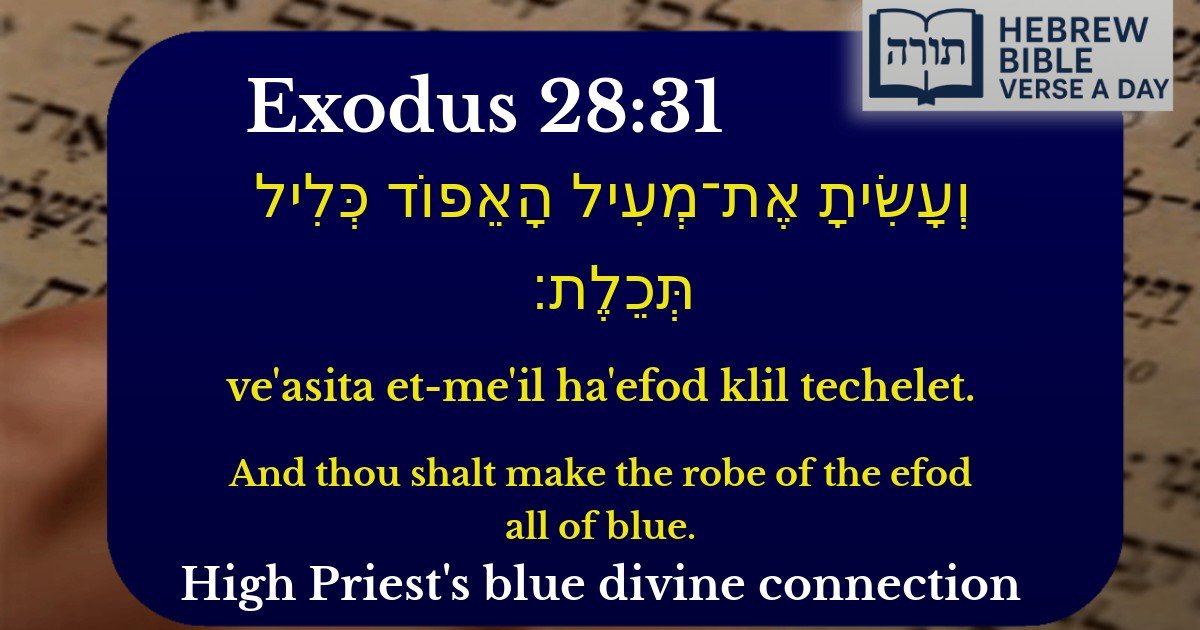
וְעָשִׂיתָ אֶת־מְעִיל הָאֵפוֹד כְּלִיל תְּכֵלֶת׃
English Translation
And thou shalt make the robe of the efod all of blue.
Transliteration
Ve'asita et-me'il ha'efod klil techelet.
Hebrew Leining Text
וְעָשִׂ֛יתָ אֶת־מְעִ֥יל הָאֵפ֖וֹד כְּלִ֥יל תְּכֵֽלֶת׃
🎵 Listen to leining
Parasha Commentary
📚 Talmud Citations
This verse is quoted in the Talmud.
📖 Zevachim 88b
The verse is referenced in a discussion about the priestly garments, specifically the robe of the efod, and its significance in the Temple service.
📖 Arakhin 16a
Mentioned in the context of the garments of the High Priest and their symbolic meanings.
The Significance of the Blue Robe
The verse (Shemot 28:31) commands the creation of the me'il ha'efod (the robe of the efod), specifying that it must be made entirely of techelet (blue wool). Rashi explains that this robe was worn beneath the efod and was seamless, woven in one piece. The color techelet is significant, as it resembles the sea, which reflects the sky, and ultimately symbolizes the divine throne (Chagigah 12b). This connection elevates the garment to a representation of heavenly sanctity.
Symbolism of Techelet
According to the Talmud (Menachot 43b), techelet is associated with the mitzvah of tzitzit, serving as a reminder of Hashem's commandments. The Rambam (Hilchot Klei HaMikdash 9:1) elaborates that the entirely blue robe signifies unity and wholeness, reflecting the seamless nature of divine service. The Midrash Tanchuma (Tetzaveh 10) further connects the color to the heavens, emphasizing that the Kohen Gadol, when wearing this garment, embodies a conduit between the Jewish people and the divine presence.
Structural Details of the Me'il
Spiritual Lessons
The Kli Yakar (Shemot 28:31) teaches that the all-blue robe represents the need for consistency in avodat Hashem—just as the color is uniform, so too should our dedication to mitzvot be unwavering. Additionally, the Chizkuni notes that the me'il's placement beneath the efod signifies humility, reminding us that even in spiritual leadership, one must remain grounded.