Frequently Asked Questions
Q: What does Exodus 29:2 teach us about the offerings in the Mishkan (Tabernacle)?
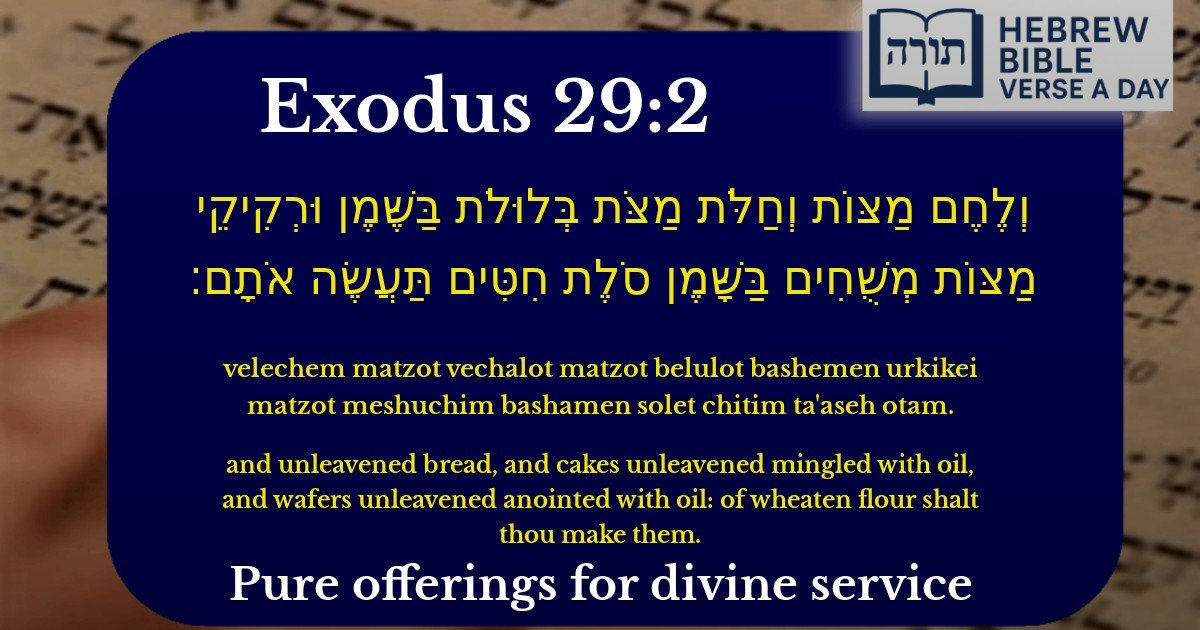
A: Exodus 29:2 describes the types of unleavened bread (matzah) used in the offerings for the consecration of the Kohanim (priests) in the Mishkan. According to Rashi, these matzah offerings—plain, mixed with oil, or anointed with oil—symbolize purity and humility, as leaven (chametz) represents arrogance and sin. The Torah emphasizes using fine wheat flour (סלת) to show the importance of giving the best quality for sacred service.
Q: Why is only unleavened bread (matzah) used in these offerings?
A: The Talmud (Menachot 52b) explains that leaven (chametz) is avoided in sacred offerings because it represents the yetzer hara (evil inclination), which 'puffs up' like leavened dough. Matzah, being flat and unleavened, symbolizes humility and submission to Hashem’s will. This aligns with the spiritual purity required for the Mishkan service, as noted by the Rambam in Hilchot Ma’aseh HaKorbanot.
Q: What is the significance of the oil in the matzah offerings?
A: Oil (shemen) in the Torah often symbolizes wisdom and divine inspiration (see Rashi on Exodus 29:2). The three types of matzah—plain, mixed with oil, or anointed with oil—teach that holiness can be expressed in different ways. The Midrash (Shemot Rabbah 36:1) connects this to the idea that Torah scholars, like oil, illuminate the world with wisdom.
Q: How does this verse relate to the mitzvah of matzah on Passover?
A: While Exodus 29:2 discusses matzah for the Mishkan offerings, the connection to Passover (Exodus 12:8) lies in the shared theme of humility and haste. Rashi notes that both contexts avoid chametz to remind us of urgency in serving Hashem—whether leaving Egypt (Passover) or dedicating the Mishkan. However, the Passover matzah is specifically linked to the Exodus narrative.
Q: Can we derive practical lessons from this verse today?
A: Yes! The Vilna Gaon teaches that just as the Kohanim used the finest flour (סלת) for sacred service, we should offer our best efforts in avodat Hashem (divine service). The emphasis on matzah reminds us to cultivate humility, and the oil hints at enriching our mitzvot with wisdom. Though the Temple offerings are paused, these ideals apply to prayer, Torah study, and acts of kindness today.


Explanation of the Verse
The verse describes various types of matzah (unleavened bread) used in the korbanot (offerings) brought in the Mishkan (Tabernacle) and later in the Beit HaMikdash (Temple). These matzot were made from fine wheat flour (solet chitim) and prepared in different ways—some mixed with oil (belulot ba-shemen), some anointed with oil (meshuchim ba-shemen), and some plain (lechem matzot).
Types of Matzot in the Offerings
Symbolism and Halachic Significance
According to the Midrash (Sifra, Nedavah 13:4), the different preparations teach that one should serve Hashem in multiple ways—sometimes with simplicity, sometimes with extra devotion. The Talmud (Menachot 75a) explains that the oil represents wisdom, suggesting that Torah study should accompany sacrificial service.
Connection to Pesach and Matzah
While this verse refers to Temple offerings, the Chatam Sofer (Torat Moshe, Shemot) notes a thematic link to Pesach: just as matzah in the korbanot must be free of chametz (leaven), so too must the matzah eaten on Pesach be free of any delay that could cause fermentation, reflecting spiritual vigilance.