

Join Our Newsletter To Be Informed When New Videos Are Posted
Hebrew Text
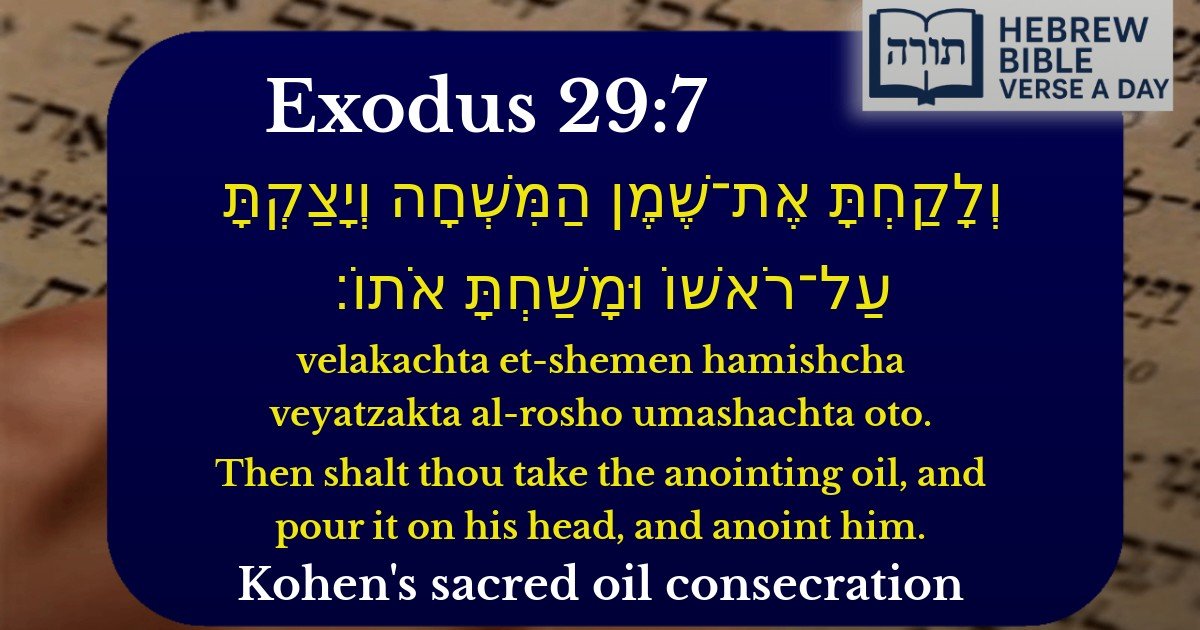
וְלָקַחְתָּ אֶת־שֶׁמֶן הַמִּשְׁחָה וְיָצַקְתָּ עַל־רֹאשׁוֹ וּמָשַׁחְתָּ אֹתוֹ׃
English Translation
Then shalt thou take the anointing oil, and pour it on his head, and anoint him.
Transliteration
Velakachta et-shemen hamishcha veyatzakta al-rosho umashachta oto.
Hebrew Leining Text
וְלָֽקַחְתָּ֙ אֶת־שֶׁ֣מֶן הַמִּשְׁחָ֔ה וְיָצַקְתָּ֖ עַל־רֹאשׁ֑וֹ וּמָשַׁחְתָּ֖ אֹתֽוֹ׃
🎵 Listen to leining
Parasha Commentary
📚 Talmud Citations
This verse is quoted in the Talmud.
📖 Horayot 12a
The verse is referenced in a discussion about the anointing of kings and high priests, emphasizing the significance of the anointing oil in consecration.
📖 Keritot 5b
The verse is cited in a discussion about the laws of anointing and the specific requirements for the anointing oil used in the consecration of priests.
The Anointing of the Kohen Gadol
The verse (Shemot 29:7) describes the mitzvah of anointing Aharon as Kohen Gadol with the sacred anointing oil (shemen hamishchah). Rashi explains that this anointing was performed by pouring the oil on Aharon's head in the shape of the Greek letter chi (like an "X"), symbolizing the divine wisdom and kedushah bestowed upon him.
The Significance of the Anointing Oil
Rambam (Hilchot Klei HaMikdash 1:7) teaches that the anointing oil was used exclusively for:
The Spiritual Meaning of Anointing
The Midrash (Shemot Rabbah 30:12) explains that anointing represents:
The Quantity of Oil Used
The Talmud (Keritot 5b) states that the anointing required a log (approximately half a liter) of oil. This large quantity demonstrated the importance of the position and the abundance of divine blessing being conferred.
The Lasting Effect of the Anointing
Ramban notes that the original anointing of Aharon had an eternal quality, as later Kohanim Gedolim didn't require physical anointing - they derived their sanctity from Aharon's original anointing, showing how this single act established an everlasting priestly covenant.