

Join Our Newsletter To Be Informed When New Videos Are Posted
Hebrew Text
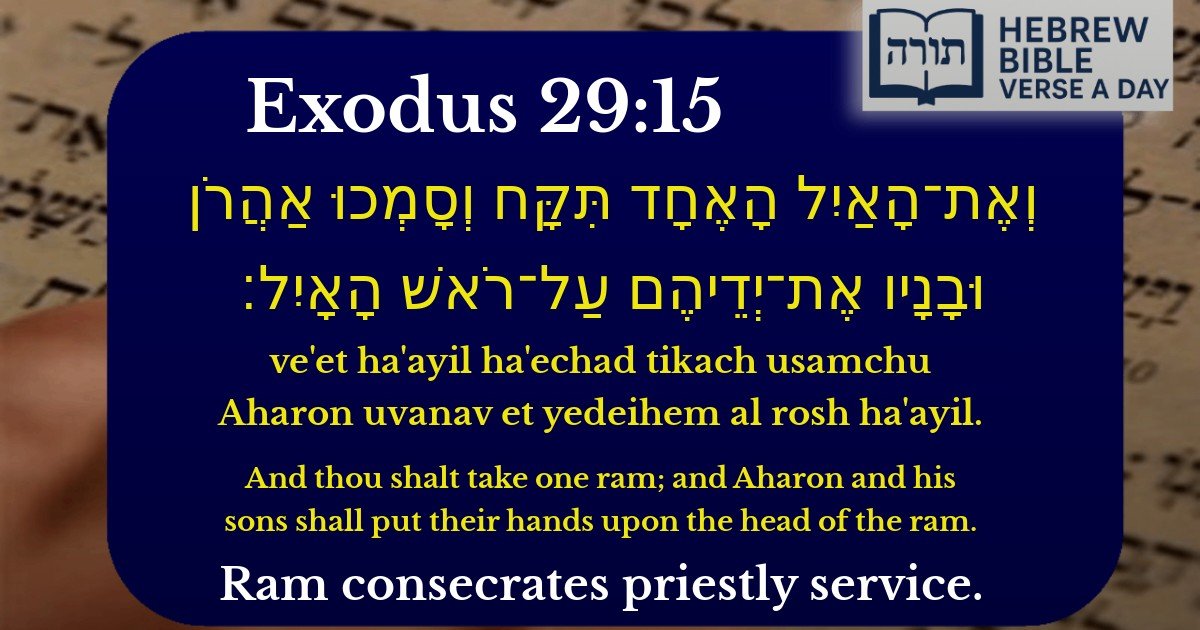
וְאֶת־הָאַיִל הָאֶחָד תִּקָּח וְסָמְכוּ אַהֲרֹן וּבָנָיו אֶת־יְדֵיהֶם עַל־רֹאשׁ הָאָיִל׃
English Translation
And thou shalt take one ram; and Aharon and his sons shall put their hands upon the head of the ram.
Transliteration
Ve'et ha'ayil ha'echad tikach usamchu Aharon uvanav et yedeihem al rosh ha'ayil.
Hebrew Leining Text
וְאֶת־הָאַ֥יִל הָאֶחָ֖ד תִּקָּ֑ח וְסָ֨מְכ֜וּ אַהֲרֹ֧ן וּבָנָ֛יו אֶת־יְדֵיהֶ֖ם עַל־רֹ֥אשׁ הָאָֽיִל׃
🎵 Listen to leining
Parasha Commentary
📚 Talmud Citations
This verse is quoted in the Talmud.
📖 Menachot 93b
The verse is referenced in the discussion about the laying of hands (semikha) on sacrificial animals, particularly in the context of the consecration of Aaron and his sons.
📖 Zevachim 19b
The verse is cited in the context of the laws pertaining to the sacrifices and the proper procedure for the laying of hands on the sacrificial animal.
The Significance of the Ram in the Consecration Service
The verse (Shemot 29:15) describes part of the consecration ceremony for Aharon and his sons as Kohanim. The ram mentioned here is the Ayil HaMiluim (the ram of inauguration), one of the offerings brought during the seven-day consecration process. Rashi explains that this ram was distinct from the other offerings in this ceremony, as it was entirely burned on the altar (an Olah offering), symbolizing complete dedication to divine service.
The Act of Semichah (Laying of Hands)
The Torah commands that Aharon and his sons perform Semichah—placing their hands on the ram's head. Rambam (Hilchos Maaseh HaKorbanos 3:6) teaches that Semichah involves leaning with full force, transferring ownership and atonement onto the sacrifice. The Talmud (Menachos 93b) states that Semichah was performed specifically with both hands, demonstrating total involvement in the sacrificial process.
Symbolism of the Ram
Aharon and His Sons as a Unified Entity
The verse emphasizes that both Aharon and his sons perform Semichah together. The Ohr HaChaim explains that this demonstrates the transmission of the Kehunah through generations—Aharon's sanctity directly influences his sons. Additionally, the Talmud (Zevachim 17b) derives from here that Semichah must be performed by the owners of the sacrifice, emphasizing personal responsibility in the atonement process.