Frequently Asked Questions
Q: What is the meaning of cutting the ram into pieces in Exodus 29:17?
A: In Exodus 29:17, the instruction to cut the ram into pieces is part of the detailed process for the consecration of the Kohanim (priests). According to Rashi, this act symbolizes complete dedication and submission to Hashem. The thorough preparation—including washing the inner parts and legs—teaches us the importance of purity and meticulousness in serving Hashem.
Q: Why were the inward parts and legs of the ram washed in this verse?
A: The Torah commands washing the inward parts and legs of the ram to remove any impurities before offering it on the altar. The Rambam explains in Hilchot Ma'aseh HaKorbanot that this teaches us that offerings must be physically clean and free from defects, reflecting spiritual purity and respect for the service of Hashem.
Q: What lesson can we learn from Exodus 29:17 about serving Hashem today?
A: From Exodus 29:17, we learn that serving Hashem requires attention to detail, cleanliness, and wholehearted dedication. Just as the Kohanim prepared the ram meticulously, we should approach mitzvot (commandments) with care and reverence. The Talmud (Menachot 110a) teaches that every detail in the sacrificial service has lasting spiritual lessons for our daily avodah (service to Hashem).
Q: How does the order of preparing the ram in this verse teach us about hierarchy in service?
A: The verse lists a specific order—cutting, washing, and arranging the parts—which the Midrash (Sifra) explains as teaching the importance of proper procedure in divine service. Just as the ram's parts were arranged carefully, our spiritual growth should follow structured steps, prioritizing inner purity (symbolized by washing) before outward actions.
Q: Why is the ram's head mentioned separately in Exodus 29:17?
A: The ram's head is mentioned separately to emphasize its importance as the leading part of the offering. Rashi notes that the head represents thought and intention, teaching that our service to Hashem must begin with proper kavanah (focus and sincerity). This aligns with the Talmudic principle (Berachot 13a) that mitzvot require both action and conscious devotion.

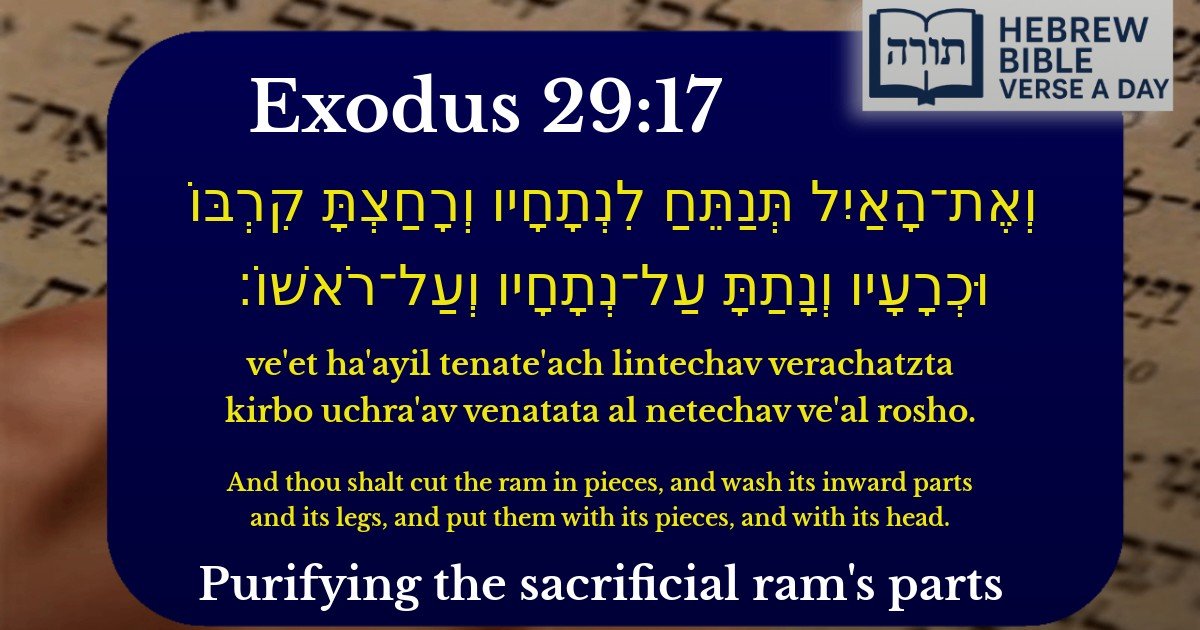

Explanation of the Verse
The verse describes the procedure for preparing the ram as part of the sacrificial service. This process is detailed in the context of the consecration of the Kohanim (priests) in Shemot (Exodus) 29:17. The meticulous preparation of the sacrifice reflects the sanctity and precision required in the Divine service.
Rashi's Commentary
Rashi (Exodus 29:17) explains that the phrase "תְּנַתֵּחַ לִנְתָחָיו" ("cut the ram in pieces") means dividing the ram into distinct sections, as was customary for sacrifices. The washing of the inward parts ("קִרְבּוֹ") and legs ("וּכְרָעָיו") symbolizes purification, ensuring that no impurities remain before offering them on the altar.
Rambam's Perspective
In Hilchot Maaseh HaKorbanot (Laws of Sacrificial Procedure), the Rambam (Maimonides) elaborates on the necessity of washing the innards and legs to remove any residual filth. This act underscores the principle that offerings must be presented in a state of cleanliness and dignity, befitting their sacred purpose.
Midrashic Insights
The Midrash Tanchuma (Tzav 14) connects this process to the broader theme of spiritual refinement. Just as the physical parts of the sacrifice are cleansed, so too must a person purify their inner self when approaching Divine service. The ram's division and washing serve as a metaphor for self-examination and repentance.
Symbolism in the Sacrificial Act
Halachic Implications
The Gemara in Zevachim (26a) discusses the technical requirements for proper dissection and washing, emphasizing that neglecting these steps invalidates the sacrifice. This highlights the importance of precision in fulfilling mitzvot, especially those related to the Beit HaMikdash (Temple).