

Join Our Newsletter To Be Informed When New Videos Are Posted
Hebrew Text
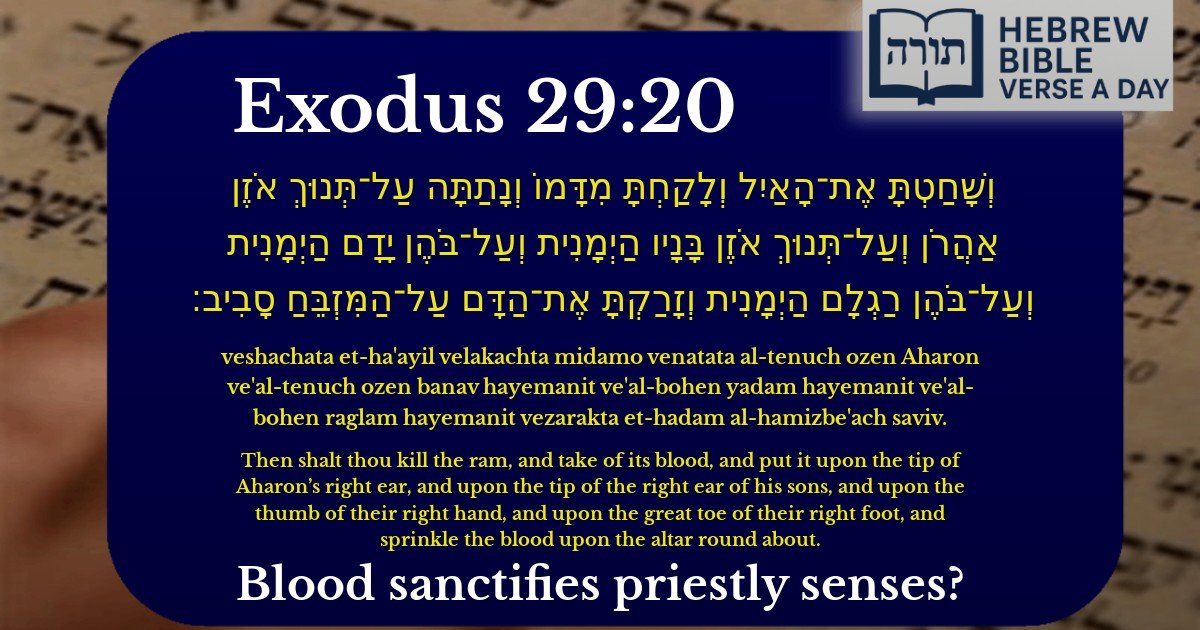
וְשָׁחַטְתָּ אֶת־הָאַיִל וְלָקַחְתָּ מִדָּמוֹ וְנָתַתָּה עַל־תְּנוּךְ אֹזֶן אַהֲרֹן וְעַל־תְּנוּךְ אֹזֶן בָּנָיו הַיְמָנִית וְעַל־בֹּהֶן יָדָם הַיְמָנִית וְעַל־בֹּהֶן רַגְלָם הַיְמָנִית וְזָרַקְתָּ אֶת־הַדָּם עַל־הַמִּזְבֵּחַ סָבִיב׃
English Translation
Then shalt thou kill the ram, and take of its blood, and put it upon the tip of Aharon’s right ear, and upon the tip of the right ear of his sons, and upon the thumb of their right hand, and upon the great toe of their right foot, and sprinkle the blood upon the altar round about.
Transliteration
Veshachata et-ha'ayil velakachta midamo venatata al-tenuch ozen Aharon ve'al-tenuch ozen banav hayemanit ve'al-bohen yadam hayemanit ve'al-bohen raglam hayemanit vezarakta et-hadam al-hamizbe'ach saviv.
Hebrew Leining Text
וְשָׁחַטְתָּ֣ אֶת־הָאַ֗יִל וְלָקַחְתָּ֤ מִדָּמוֹ֙ וְנָֽתַתָּ֡ה עַל־תְּנוּךְ֩ אֹ֨זֶן אַהֲרֹ֜ן וְעַל־תְּנ֨וּךְ אֹ֤זֶן בָּנָיו֙ הַיְמָנִ֔ית וְעַל־בֹּ֤הֶן יָדָם֙ הַיְמָנִ֔ית וְעַל־בֹּ֥הֶן רַגְלָ֖ם הַיְמָנִ֑ית וְזָרַקְתָּ֧ אֶת־הַדָּ֛ם עַל־הַמִּזְבֵּ֖חַ סָבִֽיב׃
🎵 Listen to leining
Parasha Commentary
📚 Talmud Citations
This verse is quoted in the Talmud.
📖 Zevachim 19b
The verse is discussed in the context of the sacrificial service, particularly the application of blood to the priests during their consecration.
📖 Keritot 5b
The verse is referenced in a discussion about the rituals of consecration and the significance of the blood application.
The Consecration of Aharon and His Sons
The verse (Shemot 29:20) describes part of the consecration ceremony for Aharon and his sons as Kohanim (priests). This ritual involved applying the blood of a ram to specific parts of their bodies—the right ear, right thumb, and right big toe—followed by sprinkling blood on the altar. This act symbolizes their complete dedication to divine service.
Symbolism of the Blood Application
Rashi explains that the application of blood to these extremities represents the Kohen's obligation to sanctify all his faculties in service to Hashem:
The Role of the Altar
The sprinkling of blood on the altar (מִזְבֵּחַ) signifies that the Kohanim’s service is intrinsically connected to the Beit HaMikdash. The Ramban notes that the altar represents atonement and divine connection, emphasizing that the Kohanim must serve with purity and devotion.
Right Side Significance
The Torah specifies the right side for each application. The Talmud (Zevachim 19b) teaches that the right side symbolizes strength and favor, indicating that the Kohanim must serve with their utmost capability. The Kli Yakar adds that the right side represents חסד (kindness), teaching that their service should be infused with compassion.
Connection to Milu'im (Inauguration)
This ritual was part of the seven-day Milu'im ceremony (Vayikra 8:33). The Sforno explains that the blood application was a physical act representing spiritual readiness—just as blood gives life to the body, the Kohanim must enliven their service with sincerity.