

Join Our Newsletter To Be Informed When New Videos Are Posted
Hebrew Text
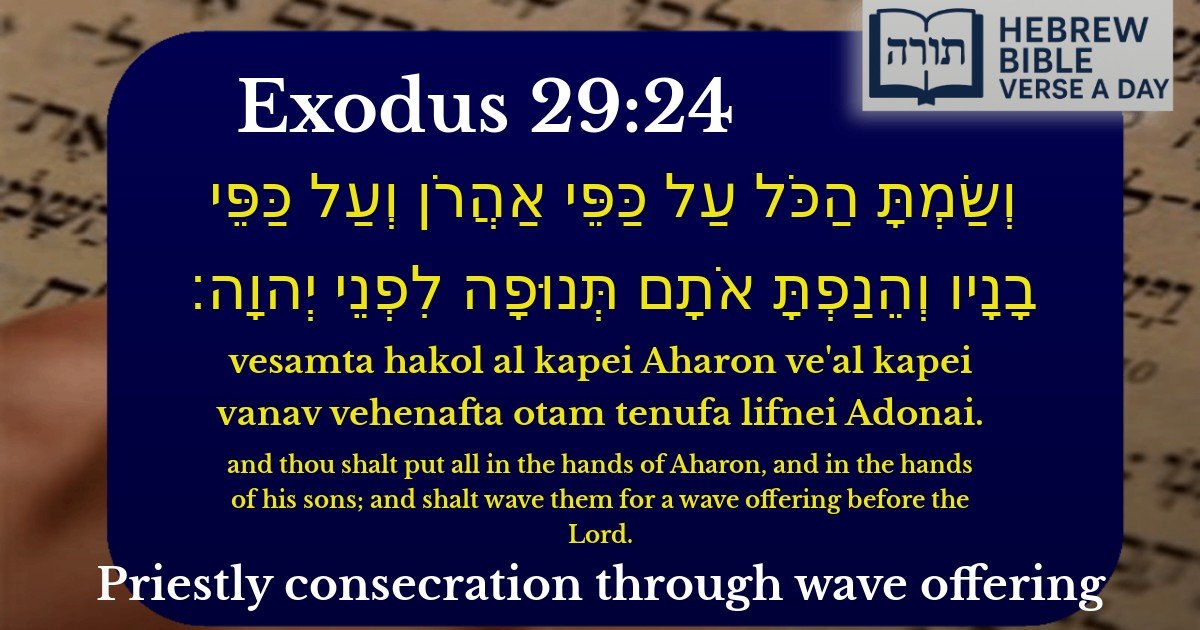
וְשַׂמְתָּ הַכֹּל עַל כַּפֵּי אַהֲרֹן וְעַל כַּפֵּי בָנָיו וְהֵנַפְתָּ אֹתָם תְּנוּפָה לִפְנֵי יְהוָה׃
English Translation
and thou shalt put all in the hands of Aharon, and in the hands of his sons; and shalt wave them for a wave offering before the Lord.
Transliteration
Vesamta hakol al kapei Aharon ve'al kapei vanav vehenafta otam tenufa lifnei Adonai.
Hebrew Leining Text
וְשַׂמְתָּ֣ הַכֹּ֔ל עַ֚ל כַּפֵּ֣י אַהֲרֹ֔ן וְעַ֖ל כַּפֵּ֣י בָנָ֑יו וְהֵנַפְתָּ֥ אֹתָ֛ם תְּנוּפָ֖ה לִפְנֵ֥י יְהֹוָֽה׃
🎵 Listen to leining
Parasha Commentary
📚 Talmud Citations
This verse is quoted in the Talmud.
📖 Menachot 61b
The verse is discussed in the context of the laws of wave offerings, particularly regarding the roles of Aaron and his sons in the sacrificial service.
📖 Zevachim 19b
The verse is referenced in a discussion about the proper procedures for offerings and the participation of the priests in these rituals.
Context in the Torah
The verse (Shemot 29:24) appears in the context of the consecration of Aharon and his sons as Kohanim (priests) during the inauguration of the Mishkan (Tabernacle). The "wave offering" (תְּנוּפָה) is part of the ritual sacrifices performed to sanctify them for their priestly service.
Explanation of the Wave Offering (תְּנוּפָה)
Rashi explains that the תְּנוּפָה involves moving the offering forward and backward, upward and downward, symbolizing that everything belongs to Hashem, who controls all directions. The Rambam (Hilchos Maaseh HaKorbanos 9:6) elaborates that the Kohen moves the offering in these four directions to acknowledge Hashem's dominion over the entire universe.
Significance of Placing on Aharon and His Sons' Hands
The instruction to place the offerings "on the hands of Aharon and his sons" signifies their active participation in the service. The Kli Yakar emphasizes that this act represents the transfer of responsibility and authority to the Kohanim for performing the divine service in the Mishkan. It also symbolizes their complete dedication to their sacred role.
Spiritual Meaning of the Wave Offering
Halachic Implications
The Talmud (Menachos 61a) discusses the precise manner of performing the תְּנוּפָה, noting that it must be done with intent (כַּוָונָה) for the mitzvah to be valid. The Shulchan Aruch (Yoreh De'ah 289) later codifies these details, ensuring the proper fulfillment of the commandment.