

Join Our Newsletter To Be Informed When New Videos Are Posted
Hebrew Text
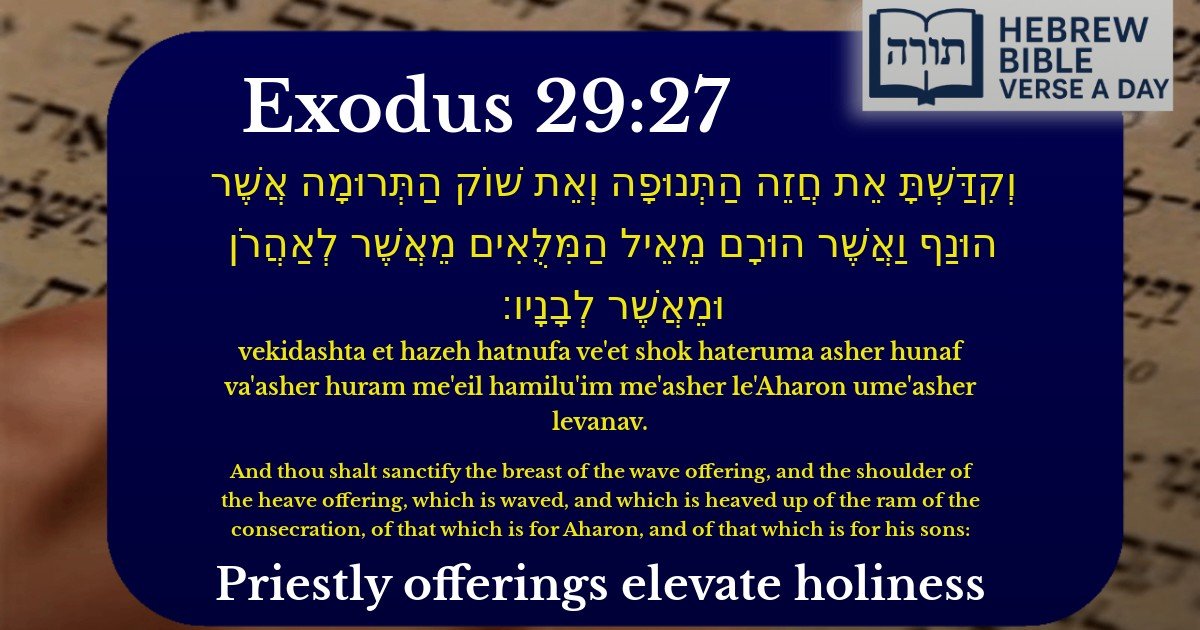
וְקִדַּשְׁתָּ אֵת חֲזֵה הַתְּנוּפָה וְאֵת שׁוֹק הַתְּרוּמָה אֲשֶׁר הוּנַף וַאֲשֶׁר הוּרָם מֵאֵיל הַמִּלֻּאִים מֵאֲשֶׁר לְאַהֲרֹן וּמֵאֲשֶׁר לְבָנָיו׃
English Translation
And thou shalt sanctify the breast of the wave offering, and the shoulder of the heave offering, which is waved, and which is heaved up of the ram of the consecration, of that which is for Aharon, and of that which is for his sons:
Transliteration
Vekidashta et hazeh hatnufa ve'et shok hateruma asher hunaf va'asher huram me'eil hamilu'im me'asher le'Aharon ume'asher levanav.
Hebrew Leining Text
וְקִדַּשְׁתָּ֞ אֵ֣ת&thinsp
🎵 Listen to leining
Parasha Commentary
📚 Talmud Citations
This verse is quoted in the Talmud.
📖 Zevachim 37b
The verse is discussed in the context of the laws pertaining to the wave offering and heave offering, specifically how these offerings are sanctified and their relevance to the priests.
📖 Menachot 61b
The verse is referenced in a discussion about the procedures for wave offerings and heave offerings, emphasizing the roles of Aaron and his sons in these rituals.
Sanctification of the Wave and Heave Offerings
The verse (Shemot 29:27) discusses the sanctification of the ḥazeh hatenufah (breast of the wave offering) and the shok haterumah (shoulder of the heave offering) from the ram of consecration (eil hamilluim). These portions were designated for Aharon and his sons as part of their priestly consecration.
Explanation of the Offerings
Significance of the Ram of Consecration
The eil hamilluim (ram of consecration) was central to the inauguration of the Kohanim (Vayikra 8:22). The Midrash (Sifra) teaches that its parts—the breast and shoulder—were sanctified to establish Aharon and his sons in their priestly duties. The wave and heave offerings symbolized their complete devotion to divine service.
Allocation to Aharon and His Sons
The verse specifies that these portions were for Aharon and his sons, emphasizing the hereditary nature of the Kehunah. Ibn Ezra highlights that this was an eternal covenant, ensuring that the Kohanim would always have a portion in the offerings, as reiterated in Bamidbar 18:19.