

Join Our Newsletter To Be Informed When New Videos Are Posted
Hebrew Text
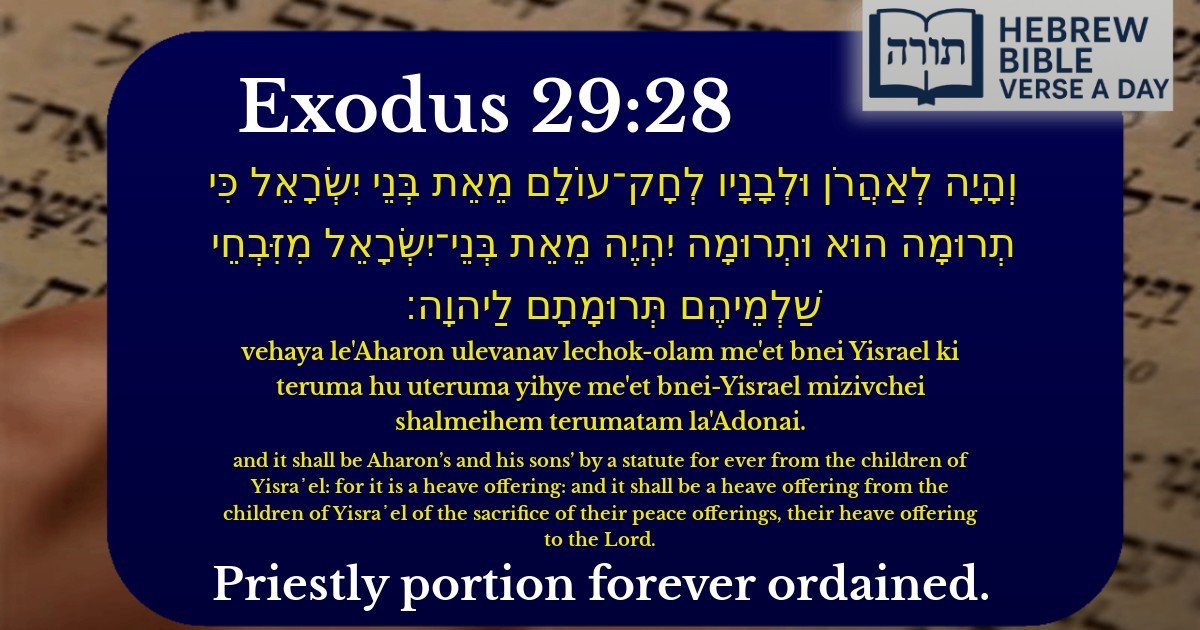
וְהָיָה לְאַהֲרֹן וּלְבָנָיו לְחָק־עוֹלָם מֵאֵת בְּנֵי יִשְׂרָאֵל כִּי תְרוּמָה הוּא וּתְרוּמָה יִהְיֶה מֵאֵת בְּנֵי־יִשְׂרָאֵל מִזִּבְחֵי שַׁלְמֵיהֶם תְּרוּמָתָם לַיהוָה׃
English Translation
and it shall be Aharon’s and his sons’ by a statute for ever from the children of Yisra᾽el: for it is a heave offering: and it shall be a heave offering from the children of Yisra᾽el of the sacrifice of their peace offerings, their heave offering to the Lord.
Transliteration
Vehaya le'Aharon ulevanav lechok-olam me'et bnei Yisrael ki teruma hu uteruma yihye me'et bnei-Yisrael mizivchei shalmeihem terumatam la'Adonai.
Hebrew Leining Text
וְהָיָה֩ לְאַהֲרֹ֨ן וּלְבָנָ֜יו לְחׇק־עוֹלָ֗ם מֵאֵת֙ בְּנֵ֣י יִשְׂרָאֵ֔ל כִּ֥י תְרוּמָ֖ה ה֑וּא וּתְרוּמָ֞ה יִהְיֶ֨ה מֵאֵ֤ת בְּנֵֽי־יִשְׂרָאֵל֙ מִזִּבְחֵ֣י שַׁלְמֵיהֶ֔ם תְּרוּמָתָ֖ם לַיהֹוָֽה׃
🎵 Listen to leining
Parasha Commentary
📚 Talmud Citations
This verse is quoted in the Talmud.
📖 Menachot 73b
The verse is referenced in a discussion about the laws of terumah (heave offerings) and the portions given to the priests from the sacrifices.
📖 Chullin 132b
The verse is cited in the context of discussing the priestly portions from peace offerings and the perpetual statute regarding these offerings.
The Eternal Portion for Aharon and His Sons
The verse establishes the perpetual right of the Kohanim (priests) to receive terumah (heave offerings) from the shelamim (peace offerings) brought by Bnei Yisrael. Rashi (Shemot 29:28) explains that this is one of the 24 matnot kehunah (priestly gifts) given to Aharon and his descendants as an eternal covenant. The Rambam (Hilchot Bikkurim 1:1) emphasizes that these gifts are not merely compensation for service but a Divine entitlement, reinforcing the sanctified role of the Kohanim.
The Nature of Terumat HaShem
The phrase "terumatam laHashem" ("their heave offering to the Lord") indicates that the offering retains its sacred status even after being given to the Kohanim. The Talmud (Chulin 132a) derives from here that terumah must be treated with the same reverence as offerings on the Mizbeach (altar). The Sforno notes that this underscores the principle that gifts to the Kohanim are ultimately offerings to Hashem Himself, as they facilitate the continuation of the Temple service.
The Shelamim Connection
The Eternal Statute (Chok Olam)
The term "lechukat olam" establishes this law as immutable. The Ramban (Vayikra 7:34) clarifies that even during periods when the Temple is not standing, this statute remains binding in principle, awaiting future fulfillment. The Meshech Chochmah adds that the eternal nature of this law reflects the unbroken covenant between Hashem, the Kohanim, and Klal Yisrael.