Frequently Asked Questions
Q: What does Exodus 29:40 mean in simple terms?
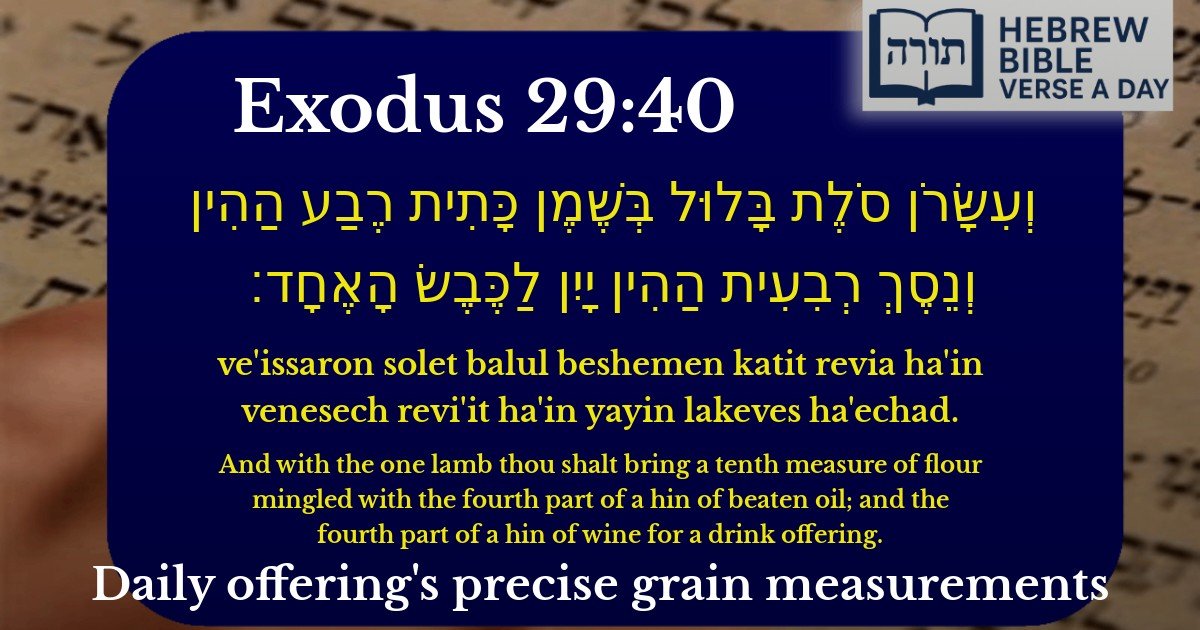
A: Exodus 29:40 describes the meal offering (mincha) and wine libation (nesech) that accompanied the daily lamb sacrifice (korban tamid) in the Mishkan (Tabernacle). It specifies precise measurements: a tenth of an ephah of fine flour mixed with oil, and a quarter hin of wine for each lamb. This teaches the importance of precision and devotion in serving Hashem.
Q: Why is the measurement of the offerings important in Exodus 29:40?
A: The Torah gives exact measurements (like a tenth of an ephah of flour and a quarter hin of wine) to teach us that serving Hashem requires care and exactness. The Rambam explains that these details reflect the importance of consistency and order in divine service, ensuring every offering meets the same standard of holiness.
Q: What can we learn today from the offerings in Exodus 29:40?
A: Though we no longer bring sacrifices, the verse teaches timeless lessons: (1) Serving Hashem requires preparation (symbolized by the flour and oil). (2) Joy is part of divine service (symbolized by the wine). (3) Consistency matters—just as the tamid offering was brought daily, we should make Torah and mitzvos a regular part of life (Rashi, Bamidbar 28:6).
Q: What is the significance of the flour, oil, and wine in this verse?
A: The flour (soles) represents sustenance, the oil (shemen katit) represents wisdom (as oil illuminates), and the wine symbolizes joy (Talmud, Berachos 35b). Together, they teach that serving Hashem should engage our entire being—physical sustenance (flour), intellectual clarity (oil), and emotional joy (wine)—as explained in Midrash Tanchuma (Tetzaveh 14).
Q: Why was the oil in Exodus 29:40 'beaten' (katit)?
A: Rashi (on Shemos 27:20) explains that 'beaten oil' (shemen katit) refers to the highest quality olive oil, extracted by crushing olives without heat or presses. This pure oil symbolizes the ideal of serving Hashem with sincerity and without external 'heat' (ulterior motives), as taught in Mesillas Yesharim (Ch. 19).


Explanation of the Verse
The verse describes the meal and drink offerings that accompany the daily Korban Tamid (continual offering) in the Beit HaMikdash. According to Rashi (Bamidbar 28:5), this offering consists of a lamb, fine flour mixed with oil, and wine, symbolizing the dedication of the Jewish people to Hashem through their physical and spiritual sustenance.
Components of the Offering
Symbolism and Halachic Significance
The Midrash (Sifrei Bamidbar 143) teaches that these offerings represent the three pillars of Jewish life: Torah (flour, the staple of wisdom), Avodah (oil, used in the Menorah and anointing), and Gemilut Chasadim (wine, representing kindness and joy). The precise measurements emphasize the importance of exactness in Divine service, as taught in the Talmud (Menachot 89a).
Proportionality in Service
The Ramban (Bamidbar 28:5) notes that the quantities—tenth of flour and quarter-hin of oil and wine—reflect a balance between human effort (symbolized by the flour) and Divine blessing (symbolized by the oil and wine). This teaches that our service to Hashem must be measured and intentional, combining both physical and spiritual elements.