

Join Our Newsletter To Be Informed When New Videos Are Posted
Hebrew Text
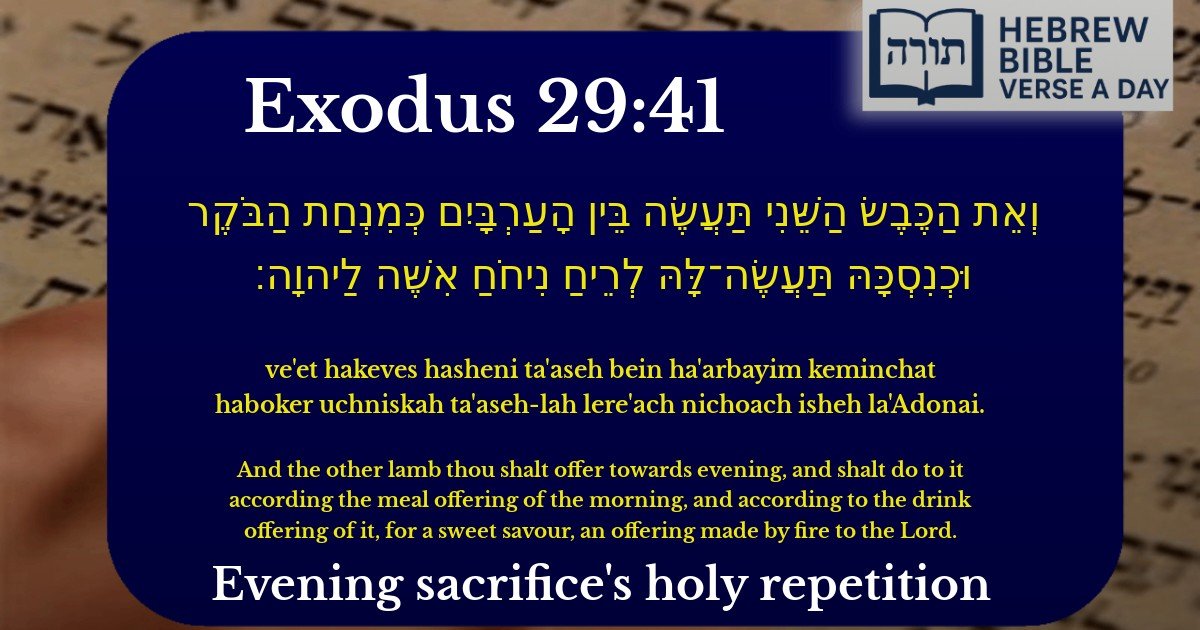
וְאֵת הַכֶּבֶשׂ הַשֵּׁנִי תַּעֲשֶׂה בֵּין הָעַרְבָּיִם כְּמִנְחַת הַבֹּקֶר וּכְנִסְכָּהּ תַּעֲשֶׂה־לָּהּ לְרֵיחַ נִיחֹחַ אִשֶּׁה לַיהוָה׃
English Translation
And the other lamb thou shalt offer towards evening, and shalt do to it according the meal offering of the morning, and according to the drink offering of it, for a sweet savour, an offering made by fire to the Lord.
Transliteration
Ve'et hakeves hasheni ta'aseh bein ha'arbayim keminchat haboker uchniskah ta'aseh-lah lere'ach nichoach isheh la'Adonai.
Hebrew Leining Text
וְאֵת֙ הַכֶּ֣בֶשׂ הַשֵּׁנִ֔י תַּעֲשֶׂ֖ה בֵּ֣ין הָעַרְבָּ֑יִם כְּמִנְחַ֨ת הַבֹּ֤קֶר וּכְנִסְכָּהּ֙ תַּֽעֲשֶׂה־לָּ֔הּ לְרֵ֣יחַ נִיחֹ֔חַ אִשֶּׁ֖ה לַיהֹוָֽה׃
🎵 Listen to leining
Parasha Commentary
📚 Talmud Citations
This verse is quoted in the Talmud.
📖 Menachot 49b
The verse is discussed in the context of the daily offerings, specifically the timing and procedures for the evening sacrifice.
📖 Yoma 26b
Referenced in a discussion about the sequence and timing of sacrifices, particularly the evening offering.
Overview of the Verse
The verse (Shemot 29:39) describes the daily Korban Tamid (continual offering) brought in the Mishkan (Tabernacle) and later in the Beit HaMikdash (Holy Temple). It specifies the timing and procedure for the afternoon offering, paralleling the morning offering mentioned earlier in the Torah.
Rashi's Commentary
Rashi explains that the phrase "בֵּין הָעַרְבָּיִם" (towards evening) refers to the time when the sun begins to descend in the west, starting from midday onward. He notes that the afternoon Tamid could be offered anytime after Chatzot (halachic midday) until nightfall, though the ideal time was closer to sunset.
Rambam's Explanation
In Hilchot Temidin uMusafin (1:2-3), the Rambam codifies that both the morning and afternoon Tamid offerings were perpetual obligations, never to be omitted. He emphasizes that the afternoon offering had to include the same components as the morning one: a lamb, a mincha (meal offering), and a nesech (wine libation).
Symbolism of the Tamid
Halachic Details from the Talmud
The Talmud (Pesachim 58a) discusses the precise timing of the afternoon Tamid, stating it was slaughtered at 8½ hours into the day (about 2:30 PM) and offered at 9½ hours (about 3:30 PM). This demonstrates the meticulous care taken with the Temple service.
Midrashic Insight
The Midrash Tanchuma (Tetzaveh 14) connects the two daily offerings to the two tablets of the Ten Commandments, symbolizing that our service to Hashem must be constant, just as the Torah's teachings apply at all times.