Frequently Asked Questions
Q: What is being described in Exodus 30:2?
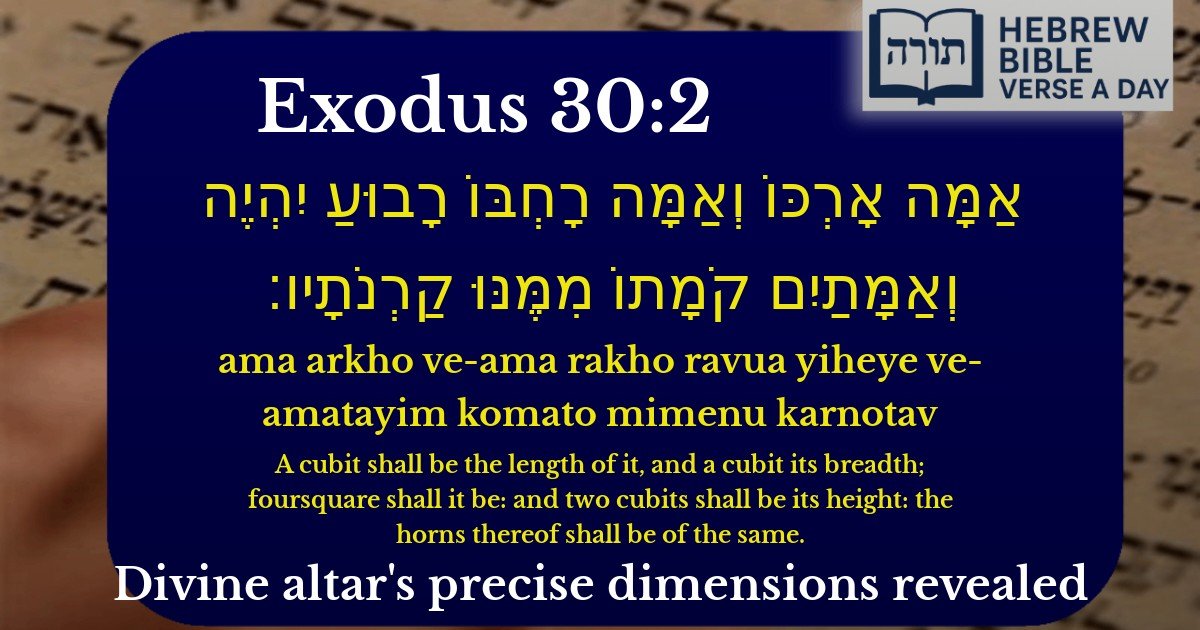
A: Exodus 30:2 describes the dimensions of the golden altar (Mizbe'ach HaKetoret) in the Tabernacle. It was one cubit long, one cubit wide (making it square), and two cubits high, with horns on its corners. This altar was used for burning incense.
Q: Why was the golden altar square?
A: The golden altar was square (one cubit by one cubit) to symbolize perfection and completeness, as the number four often represents wholeness in Jewish thought (like the four directions or four seasons). Rashi notes that its square shape matched the square shape of the Holy of Holies, showing its sacred purpose.
Q: What were the 'horns' on the golden altar for?
A: The horns on the golden altar were protrusions on its four corners. According to the Talmud (Zevachim 53b), these horns had spiritual significance—they represented power and atonement. The Kohen (priest) would sometimes apply blood from sacrifices to these horns during certain rituals.
Q: How tall was the golden altar, and why does it matter?
A: The golden altar was two cubits tall (about 3 feet or 90 cm). Its height was significant because it was lower than other altars, symbolizing that prayer (represented by incense) should come from humility. The Rambam explains that its dimensions were precise to teach us the importance of following divine instructions carefully.
Q: Can we learn anything from this verse today?
A: Yes! This verse teaches us about the importance of precision in serving Hashem (just as the altar's measurements were exact) and the value of prayer (symbolized by the incense altar). The Midrash (Tanchuma, Tetzaveh 14) also connects the altar's square shape to unity, reminding us to strive for harmony in our communities.


Dimensions of the Mizbeach (Altar)
The verse describes the dimensions of the Mizbeach HaKetoret (Incense Altar) in the Mishkan (Tabernacle). According to Rashi (Shemot 30:2), this altar was square in shape, measuring one cubit in length, one cubit in width, and two cubits in height. The term רָבוּעַ ("foursquare") emphasizes its perfectly square base, symbolizing balance and completeness in divine service.
Symbolism of the Horns
The verse concludes by stating מִמֶּנּוּ קַרְנֹתָיו ("the horns thereof shall be of the same"), meaning the horns were integrally connected to the altar rather than added separately. The Rambam (Hilchot Beit HaBechira 2:8) explains that these horns were hollow protrusions at the four corners, symbolizing strength and elevation in prayer, as the altar represents the connection between man and Hashem.
Spiritual Significance