

Join Our Newsletter To Be Informed When New Videos Are Posted
Hebrew Text
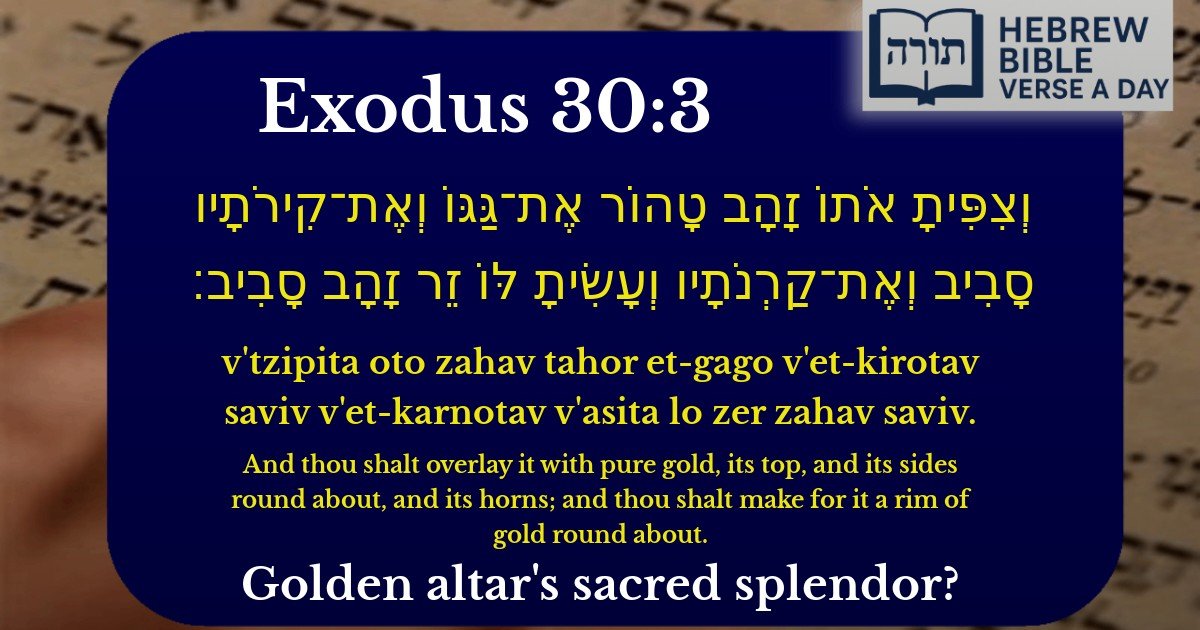
וְצִפִּיתָ אֹתוֹ זָהָב טָהוֹר אֶת־גַּגּוֹ וְאֶת־קִירֹתָיו סָבִיב וְאֶת־קַרְנֹתָיו וְעָשִׂיתָ לּוֹ זֵר זָהָב סָבִיב׃
English Translation
And thou shalt overlay it with pure gold, its top, and its sides round about, and its horns; and thou shalt make for it a rim of gold round about.
Transliteration
V'tzipita oto zahav tahor et-gago v'et-kirotav saviv v'et-karnotav v'asita lo zer zahav saviv.
Hebrew Leining Text
וְצִפִּיתָ֨ אֹת֜וֹ זָהָ֣ב טָה֗וֹר אֶת־גַּגּ֧וֹ וְאֶת־קִירֹתָ֛יו סָבִ֖יב וְאֶת־קַרְנֹתָ֑יו וְעָשִׂ֥יתָ לּ֛וֹ זֵ֥ר זָהָ֖ב סָבִֽיב׃
🎵 Listen to leining
Parasha Commentary
📚 Talmud Citations
This verse is quoted in the Talmud.
📖 Yoma 72a
The verse is discussed in relation to the construction and overlay of the Ark of the Covenant, emphasizing the importance of purity and the use of gold in sacred objects.
📖 Menachot 28b
The verse is referenced in the context of the detailed requirements for the construction of the Tabernacle and its utensils, highlighting the meticulousness required in fulfilling divine commandments.
Overview of the Verse
The verse (Exodus 30:3) describes the commandment to overlay the Mizbe'ach HaKetoret (the Altar of Incense) with pure gold, covering its top, sides, horns, and adding a golden rim around it. This altar was a central vessel in the Mishkan (Tabernacle) and later in the Beit HaMikdash (Temple), used exclusively for burning the sacred incense.
Rashi's Commentary
Rashi (Exodus 30:3) explains that the phrase "וְצִפִּיתָ אֹתוֹ זָהָב טָהוֹר" ("And thou shalt overlay it with pure gold") emphasizes the requirement for the gold to be of the highest purity, without any alloy. He notes that this is unlike the Ark and the Table, which were made of wood and then overlaid with gold. The Altar of Incense, however, was constructed entirely of wood and then completely covered in gold, symbolizing its elevated sanctity.
Rambam's Perspective
In Hilchot Beit HaBechirah (Laws of the Temple), the Rambam (Maimonides) elaborates on the significance of the golden overlay. He explains that the gold covering serves both a practical and spiritual purpose—protecting the wood from the heat of the incense while also reflecting the altar's role in facilitating divine service. The golden rim ("זֵר זָהָב") is described as a crown-like adornment, symbolizing the honor bestowed upon the mitzvah of the incense offering.
Midrashic Insights
The Midrash (Tanchuma, Tetzaveh 14) connects the gold overlay to the concept of refinement and purity in avodat Hashem (divine service). Just as gold is refined through fire, so too must a person's service to G-d be sincere and unblemished. The horns of the altar, also overlaid in gold, are interpreted as symbols of strength and atonement, as they were used in the Yom Kippur service.
Symbolism of the Golden Rim
Practical Halachic Implications
The Shulchan Aruch (Orach Chaim 98:4) draws a lesson from this verse regarding the construction of synagogue arks (Aron Kodesh), emphasizing that items used for sacred purposes should be beautified to reflect their holiness, just as the Altar of Incense was adorned with gold.