Frequently Asked Questions
Q: What does Exodus 30:10 mean?
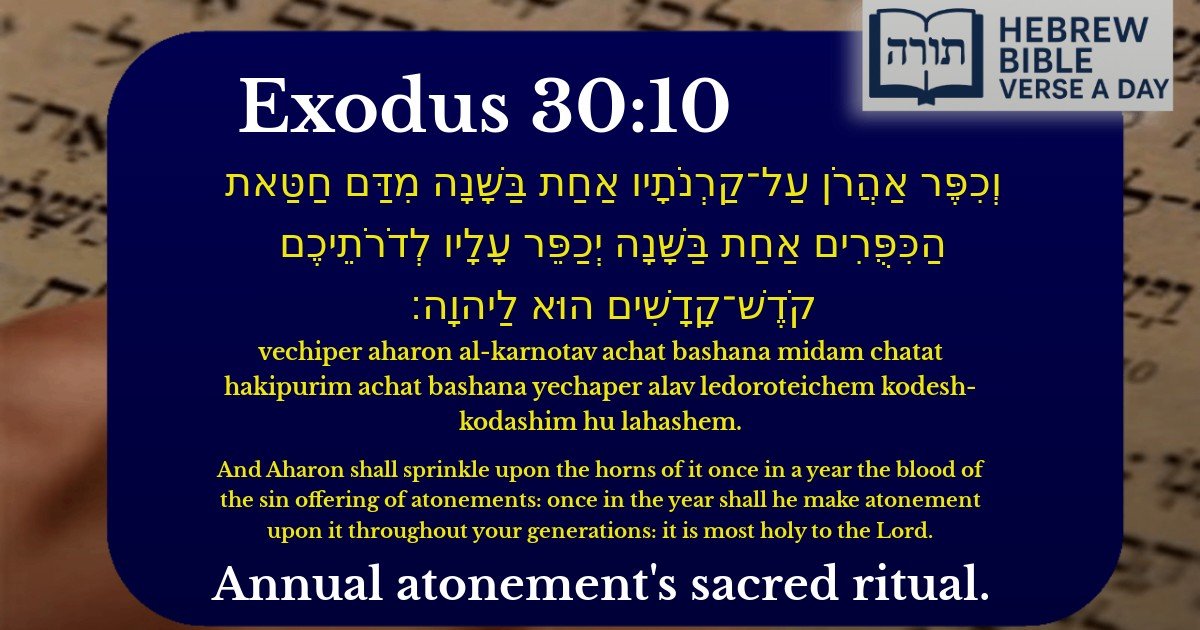
A: Exodus 30:10 describes the annual atonement ritual performed by Aharon (Aaron), the High Priest, on the altar in the Mishkan (Tabernacle). Once a year, on Yom Kippur (the Day of Atonement), he would sprinkle the blood of the sin offering on the horns of the altar to atone for the sins of the people. This verse emphasizes the holiness of the altar and the importance of this yearly atonement process.
Q: Why is the altar called 'most holy to the Lord' in this verse?
A: The altar is called 'most holy to the Lord' (קֹדֶשׁ־קָדָשִׁים) because it was used for sacred rituals, including the sprinkling of the blood of atonement. In Jewish tradition, objects or places designated as 'most holy' have the highest level of sanctity and are reserved for specific divine service. Rashi explains that this designation underscores the altar's central role in maintaining the spiritual purity of the Jewish people.
Q: How does this verse connect to Yom Kippur today?
A: Although the Temple no longer stands and we cannot bring sacrifices, the concept of atonement on Yom Kippur remains central in Judaism. The verse highlights the original atonement process performed by the High Priest, which serves as the foundation for our modern observance of repentance, prayer, and charity on Yom Kippur. The Rambam (Maimonides) teaches that sincere repentance achieves atonement even without the Temple service.
Q: What can we learn from the yearly atonement in this verse?
A: This verse teaches the importance of regular spiritual reflection and atonement. Just as the High Priest performed atonement once a year for the nation, we too are encouraged to examine our actions, seek forgiveness, and renew our commitment to Torah and mitzvot. The Talmud (Yoma 85b) explains that Yom Kippur atones for those who truly repent, emphasizing personal responsibility alongside the communal aspect of atonement.
Q: Why was the blood sprinkled on the horns of the altar?
A: The horns of the altar were considered the most prominent and elevated part, symbolizing strength and divine mercy. Rashi explains that sprinkling the blood on the horns signified the elevation of the atonement process, as the horns were visible and represented a 'lifting up' of the people's repentance. The Midrash (Tanchuma) also connects the horns to the idea of 'raising' our deeds to Hashem for purification.


Context and Source
The verse (Shemot 30:10) describes the annual atonement ritual performed by Aharon the Kohen Gadol on the golden altar (Mizbe'ach HaZahav) in the Mishkan (and later the Beit HaMikdash). This is part of the broader Yom Kippur service, as elaborated in Vayikra 16.
Rashi's Explanation
Rashi clarifies that "once in a year" refers specifically to Yom Kippur. He notes that the sprinkling of blood on the altar's horns was done with the blood of the chatas (sin offering) of Yom Kippur, connecting this verse to the detailed service in Vayikra 16:18-19.
Rambam's Perspective
In Hilchot Avodat Yom HaKippurim (1:7), the Rambam codifies this as one of the essential avodot (services) of Yom Kippur. He emphasizes that this atonement applies even when the altar is not physically present, indicating its eternal spiritual significance.
Symbolism of the Horns
Nature of the Atonement
The Meshech Chochmah explains that this annual atonement differs from regular korbanot in that it provides kaparah (atonement) even without the owner's conscious repentance, though complete teshuva is always preferable. This reflects the unique power of Yom Kippur.
Kodesh Kodashim Status
The concluding phrase "kodesh kodashim hu laHashem" teaches, as the Malbim explains, that the altar maintains its supreme holiness even when not in active use, just as Yom Kippur's sanctity endures beyond the actual day.