

Join Our Newsletter To Be Informed When New Videos Are Posted
Hebrew Text
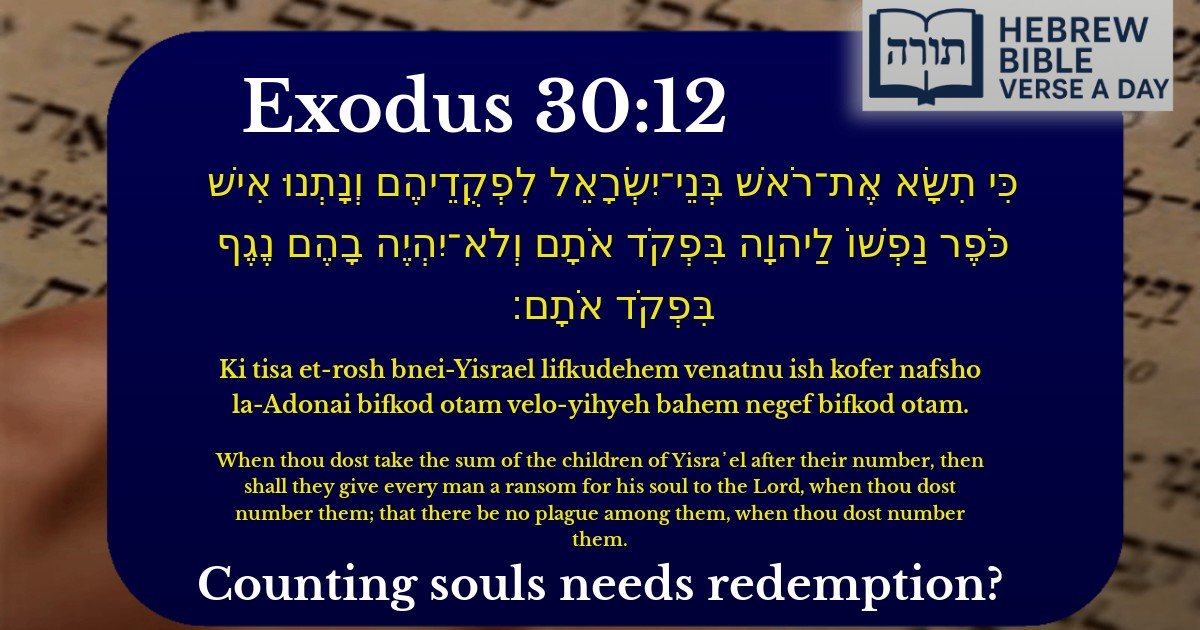
כִּי תִשָּׂא אֶת־רֹאשׁ בְּנֵי־יִשְׂרָאֵל לִפְקֻדֵיהֶם וְנָתְנוּ אִישׁ כֹּפֶר נַפְשׁוֹ לַיהוָה בִּפְקֹד אֹתָם וְלֹא־יִהְיֶה בָהֶם נֶגֶף בִּפְקֹד אֹתָם׃
English Translation
When thou dost take the sum of the children of Yisra᾽el after their number, then shall they give every man a ransom for his soul to the Lord, when thou dost number them; that there be no plague among them, when thou dost number them.
Transliteration
Ki tisa et-rosh bnei-Yisrael lifkudehem venatnu ish kofer nafsho la-Adonai bifkod otam velo-yihyeh bahem negef bifkod otam.
Hebrew Leining Text
כִּ֣י תִשָּׂ֞א אֶת־רֹ֥אשׁ בְּנֵֽי־יִשְׂרָאֵל֮ לִפְקֻדֵיהֶם֒ וְנָ֨תְנ֜וּ אִ֣ישׁ כֹּ֧פֶר נַפְשׁ֛וֹ לַיהֹוָ֖ה בִּפְקֹ֣ד אֹתָ֑ם וְלֹא־יִהְיֶ֥ה בָהֶ֛ם נֶ֖גֶף בִּפְקֹ֥ד אֹתָֽם׃
🎵 Listen to leining
Parasha Commentary
📚 Talmud Citations
This verse is quoted in the Talmud.
📖 Yoma 22b
The verse is discussed in the context of the prohibition of counting Jews directly, referencing the ransom given to avoid plague during a census.
📖 Bava Batra 10b
Mentioned in relation to the concept of charity and giving, drawing a parallel between the ransom money and acts of tzedakah.
Context of the Verse
The verse (Shemot 30:12) appears in the context of the commandment to conduct a census of Bnei Yisrael. Unlike a conventional census, where people are counted directly, Hashem instructs Moshe to count them indirectly by collecting a half-shekel from each individual. This method avoids the potential spiritual danger of directly numbering the Jewish people.
The Danger of Direct Counting
Rashi (ad loc.) explains that counting individuals directly can invite the "evil eye" (עין הרע) or a plague (נגף), as seen later in the story of King David's census (Shmuel II 24). The Midrash (Tanchuma, Ki Tisa 9) further elaborates that when people are counted as individuals, they become subject to strict divine judgment, making them vulnerable to calamity. The half-shekel serves as a protective measure, ensuring the count is conducted in a way that invites blessing rather than punishment.
The Half-Shekel as a Ransom (כֹּפֶר נַפְשׁוֹ)
The Rambam (Hilchot Shekalim 1:1) emphasizes that the half-shekel serves as an atonement (כפרה) for one's soul. The Kli Yakar (Shemot 30:12) explains that the word "כֹּפֶר" (ransom) implies protection, as the half-shekel shields the individual from harm during the counting process. Additionally, the half-shekel symbolizes humility—since no one gives a full shekel, it teaches that no individual is complete on their own, but rather, we are all interdependent.
Spiritual Lessons from the Half-Shekel
Halachic Implications
The Talmud (Bava Batra 10b) derives from this verse that tzedakah (charity) has the power to save a person from death. The half-shekel, given for the upkeep of the Mishkan, was considered an act of communal tzedakah. The Shulchan Aruch (Orach Chaim 694:1) later applies this principle to the mitzvah of giving machatzit hashekel before Purim, reinforcing the idea that financial contributions for sacred causes bring protection and atonement.