

Join Our Newsletter To Be Informed When New Videos Are Posted
Hebrew Text
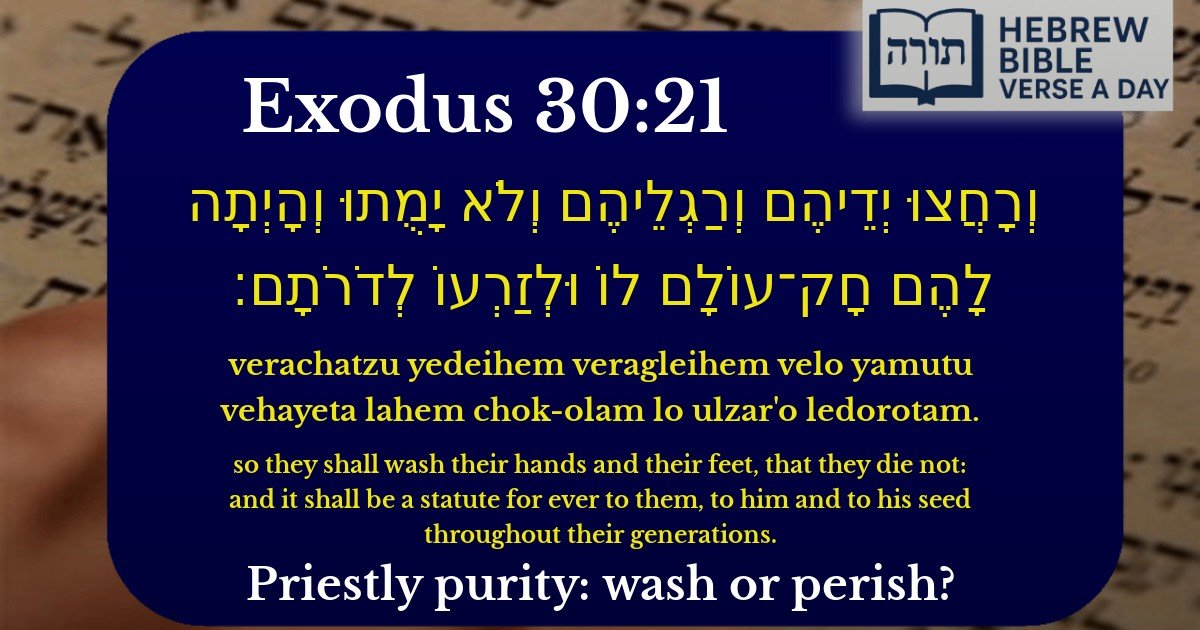
וְרָחֲצוּ יְדֵיהֶם וְרַגְלֵיהֶם וְלֹא יָמֻתוּ וְהָיְתָה לָהֶם חָק־עוֹלָם לוֹ וּלְזַרְעוֹ לְדֹרֹתָם׃
English Translation
so they shall wash their hands and their feet, that they die not: and it shall be a statute for ever to them, to him and to his seed throughout their generations.
Transliteration
Verachatzu yedeihem veragleihem velo yamutu vehayeta lahem chok-olam lo ulzar'o ledorotam.
Hebrew Leining Text
וְרָחֲצ֛וּ יְדֵיהֶ֥ם וְרַגְלֵיהֶ֖ם וְלֹ֣א יָמֻ֑תוּ וְהָיְתָ֨ה לָהֶ֧ם חׇק־עוֹלָ֛ם ל֥וֹ וּלְזַרְע֖וֹ לְדֹרֹתָֽם׃ {פ}
🎵 Listen to leining
Parasha Commentary
📚 Talmud Citations
This verse is quoted in the Talmud.
📖 Zevachim 19b
The verse is cited in the context of discussing the requirements for priestly service and the consequences of neglecting the washing of hands and feet before performing sacred duties.
📖 Yoma 30a
The verse is referenced in the discussion about the rituals performed by the High Priest on Yom Kippur, emphasizing the importance of washing hands and feet to avoid death as a divine punishment.
Context of the Verse
The verse (Shemot 30:21) appears in the context of the commandment regarding the Kiyor (the copper laver) used by the Kohanim (priests) in the Mishkan (Tabernacle) and later in the Beit HaMikdash (Temple). It instructs the Kohanim to wash their hands and feet before performing sacred service to avoid death, establishing this as an eternal statute for all generations.
Explanation of the Washing (Netilat Yadayim v'Raglayim)
Rashi (Shemot 30:19) explains that this washing was not merely for physical cleanliness but served as a spiritual preparation. The act symbolized purification from worldly matters before engaging in divine service. The Rambam (Hilchot Bi'at HaMikdash 5:1-2) elaborates that failure to perform this washing invalidated the Kohen's service and rendered him liable for karet (divine excision).
Why Hands and Feet?
Eternal Statute (Chok Olam)
The phrase "חָק־עוֹלָם" (statute forever) emphasizes the unchanging nature of this mitzvah. The Talmud (Zevachim 19b) derives from this that even in future times, such as the era of the Third Temple, this law remains binding. The Ramban adds that this underscores the perpetual sanctity of the Kehunah (priesthood) and its duties.
Spiritual Lessons
The Midrash Tanchuma (Tetzaveh 10) connects this washing to humility: just as water flows downward, the Kohen must lower his pride before serving Hashem. The Chatam Sofer further teaches that this mitzvah reminds all Jews to purify themselves—both in deed (hands) and path (feet)—before approaching holiness.