Frequently Asked Questions
Q: What is the significance of the spices mentioned in Exodus 30:23?
A: The spices listed in Exodus 30:23—pure myrrh, sweet cinnamon, and sweet calamus—were key ingredients for the sacred anointing oil (Shemen HaMishcha) used to consecrate the Mishkan (Tabernacle), its vessels, and the Kohanim (priests). Rashi explains that these specific spices were chosen for their purity and fragrance, symbolizing the sanctity and spiritual elevation required for divine service.
Q: Why are the quantities of the spices specified in this verse?
A: The Torah specifies exact quantities (500 shekels of myrrh, 250 of cinnamon, and 250 of calamus) to teach precision in fulfilling mitzvot. Rambam (Hilchos Klei HaMikdash 1:3) emphasizes that the measurements were divinely ordained, ensuring the oil's unique sanctity. The imbalance in quantities (myrrh being double) hints at the importance of each spice's role, with myrrh representing steadfastness in service (Midrash Tanchuma, Tetzaveh 5).
Q: How does this verse apply to us today without the Temple?
A: While we no longer prepare the anointing oil, the verse teaches enduring lessons: (1) The care in selecting ingredients reminds us to pursue excellence in mitzvot (Malbim). (2) The blend of spices symbolizes unity—just as diverse fragrances combined for holiness, Jews must unite in divine service (Talmud, Keritot 6b). (3) Today, we 'anoint' spiritually through Torah study and prayer, elevating our actions like the sacred oil (Likutei Torah, Tzav).
Q: What does 'pure myrrh' (מר־דרור) mean in this context?
A: The term 'מר־דרור' (mar-dror) is interpreted by Rashi as 'myrrh that flows freely'—the highest quality, extracted naturally without artificial pressing. The word 'דרור' also means 'freedom,' alluding to how Torah liberates the soul (Sifsei Chachamim). The Talmud (Keritot 5a) notes it was so valuable that its weight in gold was equal to its weight in myrrh.
Q: Why is this anointing oil forbidden for personal use (as stated later in Exodus 30:32-33)?
A: The Torah prohibits using the sacred oil for mundane purposes to preserve its holiness (Rambam, Hilchos Klei HaMikdash 1:10). The Talmud (Horayot 11b) compares this to the unique status of korbanot (offerings)—just as sacrifices are dedicated to Hashem, so too the oil symbolizes total devotion to divine service. Any misuse would diminish its sanctity, akin to exploiting sacred objects for personal benefit.

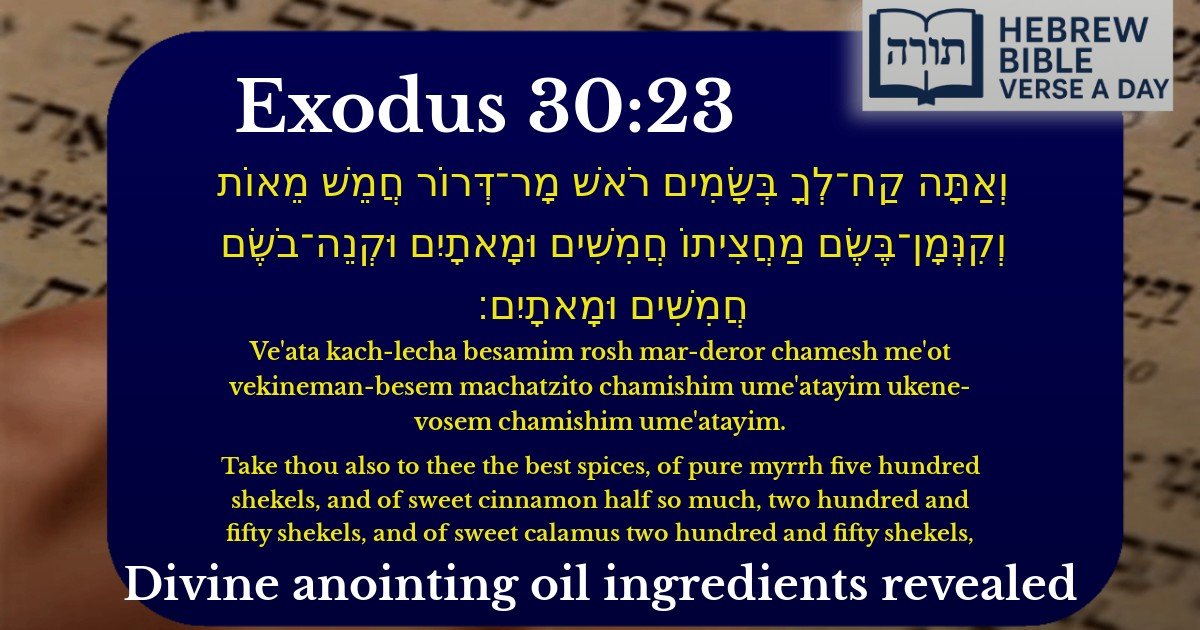

Context of the Verse
This verse (Shemot 30:23) is part of the Torah's instructions regarding the preparation of the shemen hamishcha (anointing oil) used to consecrate the Mishkan (Tabernacle), its vessels, and the Kohanim (priests). The ingredients listed here are the finest spices, each measured precisely, reflecting the sanctity and importance of this sacred oil.
Explanation of the Spices
Symbolism of the Measurements
The precise weights (500, 250, 250 shekels) are expounded in the Zohar (Terumah 2:218) as alluding to spiritual concepts: 500 corresponds to the hidden realms of holiness, while the two 250 portions reflect the balanced forces of chesed (kindness) and gevurah (judgment) harmonized in divine worship. The Kli Yakar emphasizes that the total (1000 shekels) represents completeness in sanctity.
Practical Halachic Insights
The Rambam (Hilchot Kelei HaMikdash 1:4) rules that these measurements were absolute requirements for the anointing oil’s validity. The Talmud (Horayot 11b) states that this oil was never to be replicated for mundane use, underscoring its unique sanctity. The Sefer HaChinuch (Mitzvah 107) derives from this verse the eternal principle that sacred objects must be prepared with the finest materials, reflecting honor for divine service.