Frequently Asked Questions
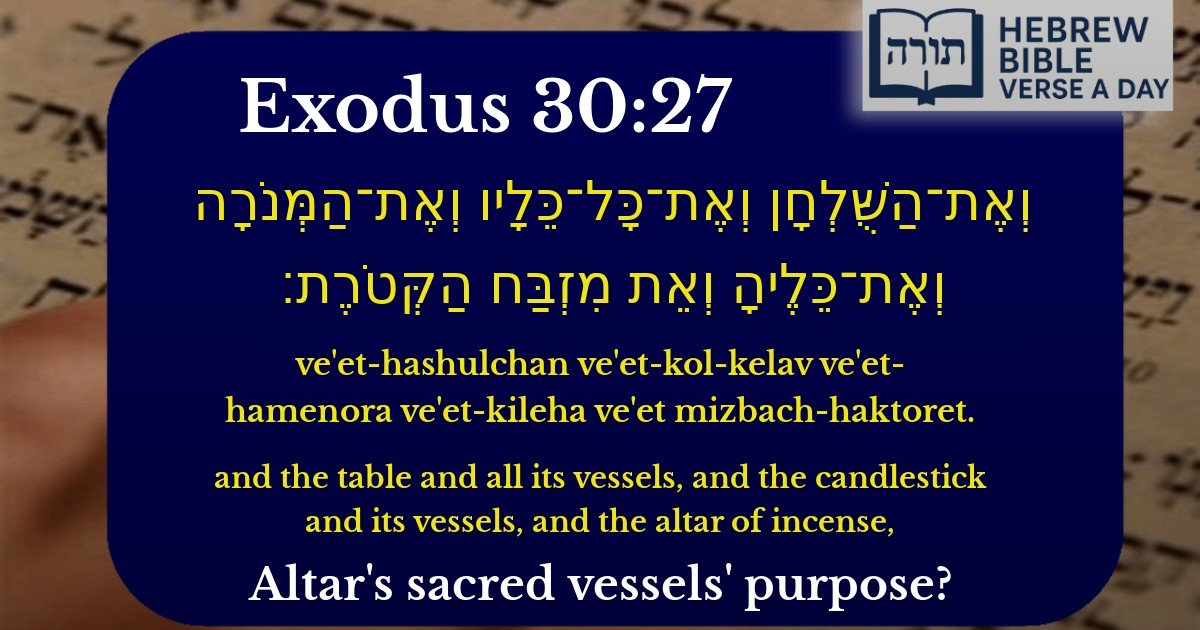
Q: What is the significance of the table, candlestick, and altar of incense mentioned in Exodus 30:27?
A: These items were essential vessels in the Mishkan (Tabernacle), each serving a unique purpose in the service of Hashem. The table held the 'Lechem HaPanim' (Showbread), the candlestick (Menorah) provided light, and the altar of incense was used for burning the sacred Ketoret (incense). Rashi explains that each vessel symbolizes different aspects of divine service and spiritual elevation.
Q: Why does the Torah list these vessels in Exodus 30:27?
A: The Torah lists these vessels to emphasize their holiness and their role in the Mishkan. The Rambam (Hilchot Beit HaBechirah) teaches that each vessel had a specific function in connecting the Jewish people to Hashem. Their detailed mention highlights the importance of precision and reverence in divine worship.
Q: What can we learn today from the vessels described in Exodus 30:27?
A: The vessels teach us about the importance of dedicating objects and actions to a higher purpose. Just as the table, Menorah, and altar of incense were sanctified for divine service, we can elevate our daily actions—such as eating (symbolized by the table), spreading light (Menorah), and prayer (incense altar)—to serve Hashem with holiness.
Q: How were the vessels in Exodus 30:27 used in the Mishkan?
A: The table held 12 loaves of Showbread, replaced weekly (Vayikra 24:5-9). The Menorah was lit daily (Shemot 27:20-21), and the altar of incense was used twice daily for the Ketoret offering (Shemot 30:7-8). The Talmud (Menachot 88b) discusses their precise roles in the Temple service.
Q: Why is the altar of incense mentioned separately from other altars in Exodus 30:27?
A: The altar of incense (Mizbach HaKetoret) was unique because it was used exclusively for burning incense, symbolizing prayer and spiritual connection (Talmud Yoma 44a). Unlike the outer altar for sacrifices, this altar represented inner devotion, as Rashi notes (Shemot 30:1), highlighting the intimate relationship between Hashem and the Jewish people.


The Table (Shulchan) and Its Vessels
Rashi (Exodus 25:23) explains that the Shulchan (table) symbolizes material sustenance, as it held the Lechem HaPanim (Showbread), which remained fresh for a week—a miracle demonstrating Hashem's providence. The Rambam (Hilchos Beis HaBechira 3:14) notes that its vessels included dishes, pans, and bowls, all used in the service of the Showbread. The Midrash Tanchuma (Terumah 10) teaches that the Shulchan represents the concept of parnassah (livelihood), as it was placed in the north—a direction associated with material blessing (Bava Basra 25a).
The Menorah and Its Vessels
The Menorah, as Rashi (Exodus 25:31) explains, symbolizes wisdom and Torah light, with its seven branches alluding to the totality of divine wisdom. The Rambam (Hilchos Beis HaBechira 3:12) lists its vessels as tongs and fire pans, used for maintaining the flame. The Talmud (Menachos 28b) discusses the intricate craftsmanship required for the Menorah, emphasizing that it was hammered from a single piece of gold, representing the unity of Torah. The Midrash (Bamidbar Rabbah 15:7) connects the Menorah to the light of the Jewish people's mission in the world.
The Altar of Incense (Mizbach HaKetoret)
Rashi (Exodus 30:1) highlights that the Mizbach HaKetoret was used exclusively for burning incense, representing prayer and spiritual elevation (Talmud Yerushalmi, Yoma 4:5). The Rambam (Hilchos Klei HaMikdash 2:4) describes its golden overlay as a symbol of purity. The Talmud (Kerisos 6b) teaches that the incense atoned for lashon hara (evil speech), as its smoke ascends like whispered prayers. The Zohar (Vayikra 14b) connects the ketoret to the binding power of mitzvos that elevate the physical world.