
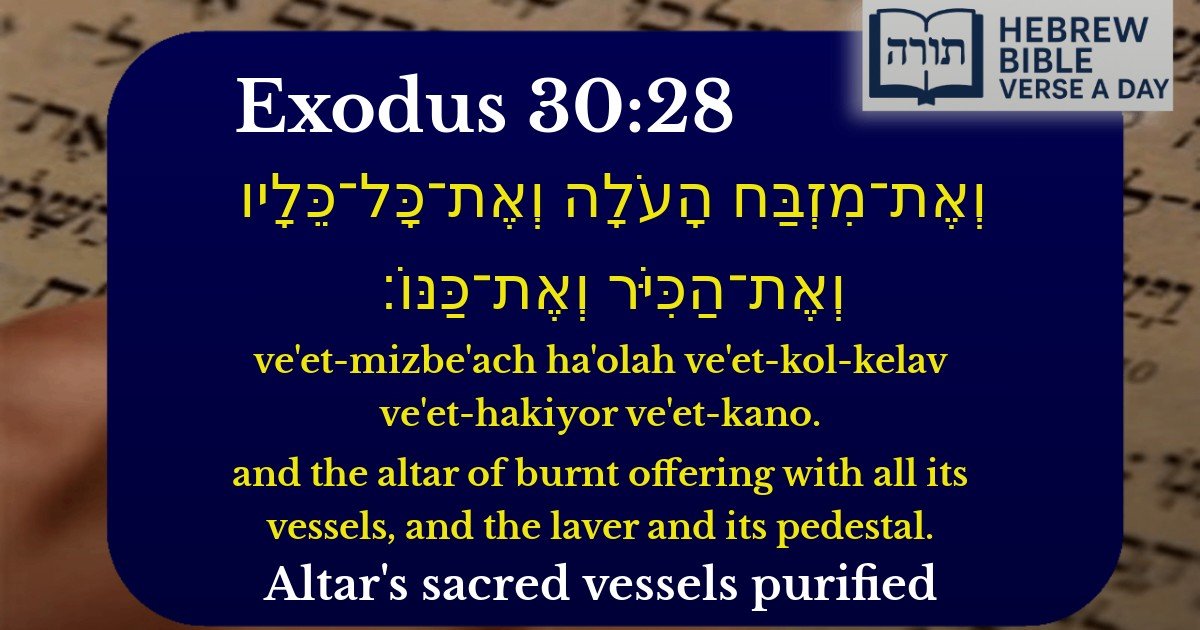

Exodus 30:28 - Altar's sacred vessels purified

Exodus 30:28 - שמות 30:28

Hebrew Text

וְאֶת־מִזְבַּח הָעֹלָה וְאֶת־כָּל־כֵּלָיו וְאֶת־הַכִּיֹּר וְאֶת־כַּנּוֹ׃

English Translation

and the altar of burnt offering with all its vessels, and the laver and its pedestal.

Transliteration

Ve'et-mizbe'ach ha'olah ve'et-kol-kelav ve'et-hakiyor ve'et-kano.

Hebrew Leining Text

וְאֶת־מִזְבַּ֥ח הָעֹלָ֖ה וְאֶת־כׇּל־כֵּלָ֑יו וְאֶת־הַכִּיֹּ֖ר וְאֶת־כַּנּֽוֹ׃

🎵 Listen to leining

Parasha Commentary

The Altar of Burnt Offering (Mizbach HaOlah)

This verse describes the copper altar used for animal sacrifices (korban olah) in the Mishkan (Tabernacle). Rashi (Shemot 38:30) explains that this altar was constructed from acacia wood and overlaid with copper, as commanded earlier in the Torah (Shemot 27:1-8). The Rambam (Hilchot Beit HaBechira 2:1) notes that this altar served as the prototype for the altar in the Beit HaMikdash (Holy Temple), emphasizing the continuity of sacrificial service.

The Vessels of the Altar

The "vessels" (kelim) mentioned here include the essential implements for sacrificial service. The Talmud (Zevachim 96b) enumerates these as:

  • The mizrak - a basin for collecting blood
  • The yaseh - a pan for ashes
  • The mahtah - a firepan
  • The kapot - flesh hooks

Rambam (Hilchot Klei HaMikdash 2:8) explains that each vessel had a specific, sacred purpose in the sacrificial process.

The Laver (Kiyor) and Its Pedestal

The Kiyor was a copper basin used by the Kohanim (priests) for ritual washing of hands and feet before service. The Midrash (Tanchuma, Pekudei 11) teaches that this laver was made from the copper mirrors donated by the righteous women of Israel, symbolizing purification and spiritual refinement. The pedestal (kan) elevated the laver, as Ibn Ezra (Shemot 30:18) notes, to make it accessible yet prominent in the courtyard.

Spiritual Significance

The Kli Yakar (Shemot 38:30) explains that these items represent different aspects of divine service:

  • The altar symbolizes atonement and connection to Hashem through sacrifice
  • The vessels represent the tools needed for proper service
  • The laver teaches that purification must precede any sacred act

This arrangement, as the Sforno notes, demonstrates the progression from physical preparation (laver) to actual service (vessels) culminating in the altar's sacrificial worship.

📚 Talmud Citations

This verse is not quoted in the Talmud.

Frequently Asked Questions

Q: What is the 'altar of burnt offering' mentioned in Exodus 30:28?
A: The 'altar of burnt offering' (מִזְבַּח הָעֹלָה) was the large copper altar in the Tabernacle courtyard where animal sacrifices were offered. Rashi explains that this was where daily sacrifices (Korban Tamid) and other offerings were brought to atone for sins or express devotion to Hashem.
Q: Why does the Torah list the vessels of the Tabernacle like the laver (כִּיֹּר)?
A: The Torah details each vessel to teach us their importance in the Tabernacle service. The Kiyor (laver) was used by the Kohanim to wash their hands and feet before service, as Rambam explains (Hilchot Beit HaBechirah 5:6). Each item had a sacred purpose in connecting the Jewish people to Hashem.
Q: What can we learn today from the vessels of the Tabernacle?
A: The Midrash (Tanchuma Terumah 11) teaches that just as the Tabernacle vessels were sanctified for holy use, we must sanctify our actions for serving Hashem. Today, though we lack the Temple, we can 'sanctify' ordinary items by using them for mitzvot—like a cup for Kiddush or a table for hosting guests.
Q: Why was the altar made of copper?
A: The Talmud (Yoma 72a) explains that copper symbolizes atonement, as the word for copper (נְחֹשֶׁת) resembles the word for 'snake' (נָחָשׁ), reminding us of the sin of Adam and Chava. The altar's copper covering served as a constant reminder of repentance and purification through sacrifices.
Q: What was the purpose of the laver's pedestal (כַּנּוֹ)?
A: Rashi (on Exodus 30:18) notes that the pedestal elevated the Kiyor (laver) to make it easier for the Kohanim to wash. This teaches the importance of preparing properly for divine service—just as the Kohanim purified themselves before serving, we too must approach prayer and mitzvot with preparation and respect.