

Join Our Newsletter To Be Informed When New Videos Are Posted
Hebrew Text
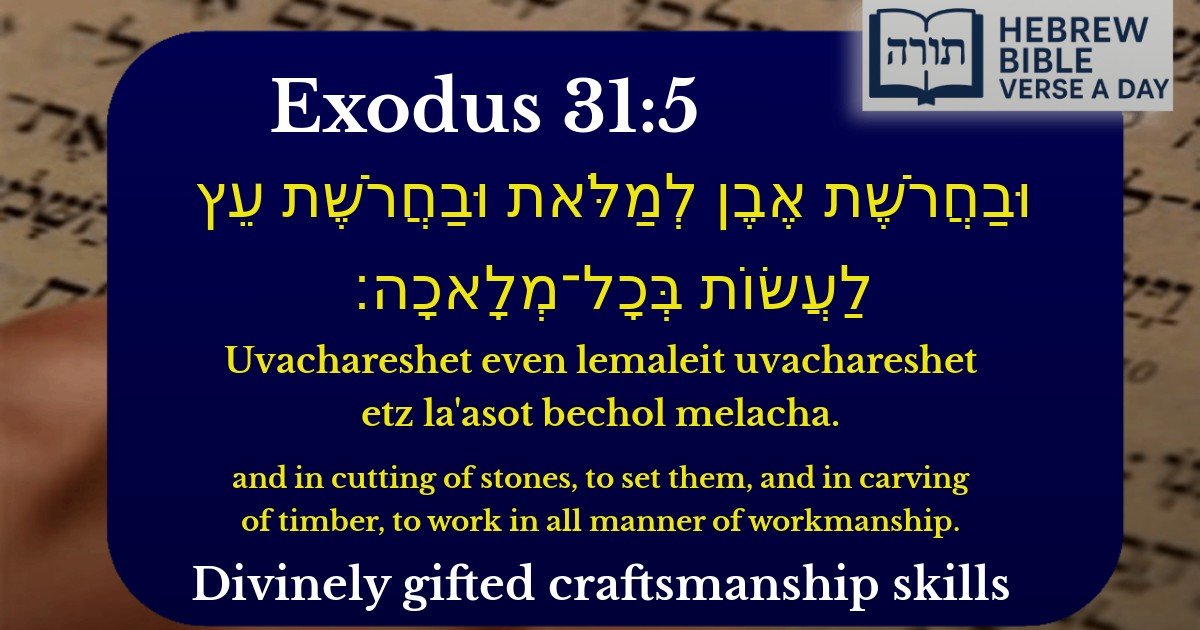
וּבַחֲרֹשֶׁת אֶבֶן לְמַלֹּאת וּבַחֲרֹשֶׁת עֵץ לַעֲשׂוֹת בְּכָל־מְלָאכָה׃
English Translation
and in cutting of stones, to set them, and in carving of timber, to work in all manner of workmanship.
Transliteration
Uvachareshet even lemaleit uvachareshet etz la'asot bechol melacha.
Hebrew Leining Text
וּבַחֲרֹ֥שֶׁת אֶ֛בֶן לְמַלֹּ֖את וּבַחֲרֹ֣שֶׁת עֵ֑ץ לַעֲשׂ֖וֹת בְּכׇל־מְלָאכָֽה׃
🎵 Listen to leining
Parasha Commentary
📚 Talmud Citations
This verse is not quoted in the Talmud.
Explanation of the Verse
The verse (Exodus 31:5) describes the divinely inspired craftsmanship of Betzalel, who was endowed with wisdom to perform intricate work in the construction of the Mishkan (Tabernacle). The phrase "וּבַחֲרֹשֶׁת אֶבֶן לְמַלֹּאת" ("in cutting of stones, to set them") refers to the precise skill of engraving and setting precious stones, particularly for the Choshen (breastplate) of the Kohen Gadol. "וּבַחֲרֹשֶׁת עֵץ לַעֲשׂוֹת" ("and in carving of timber") highlights the artistry in shaping wood for the Mishkan's structure and holy vessels.
Insights from Rashi
Rashi (Exodus 31:5) explains that "חֲרֹשֶׁת" (craftsmanship) implies both engraving and joining materials seamlessly. Regarding stones, he notes that Betzalel could miraculously carve names of the tribes onto the gemstones without removing any fragments—a supernatural skill granted by Hashem. For woodwork, Rashi emphasizes that the craftsmanship extended to intricate joinery, ensuring the Mishkan's components fit perfectly.
Midrashic Perspectives
Halachic Implications (Rambam)
Rambam (Hilchot Klei HaMikdash 9:7) derives from this verse that sacred craftsmanship requires both technical skill and ruach hakodesh (divine inspiration). The artisans’ work was not merely functional but imbued with spiritual intent, ensuring the Mishkan’s sanctity.
Symbolism in the Craftsmanship
The Or HaChaim (Exodus 31:5) highlights that the integration of stone and wood symbolizes the harmony of middat hadin (strict justice) and middat harachamim (mercy). The stones (hard and unyielding) represent justice, while the wood (pliable and growing) reflects compassion—united in the service of Hashem.