

Join Our Newsletter To Be Informed When New Videos Are Posted
Hebrew Text
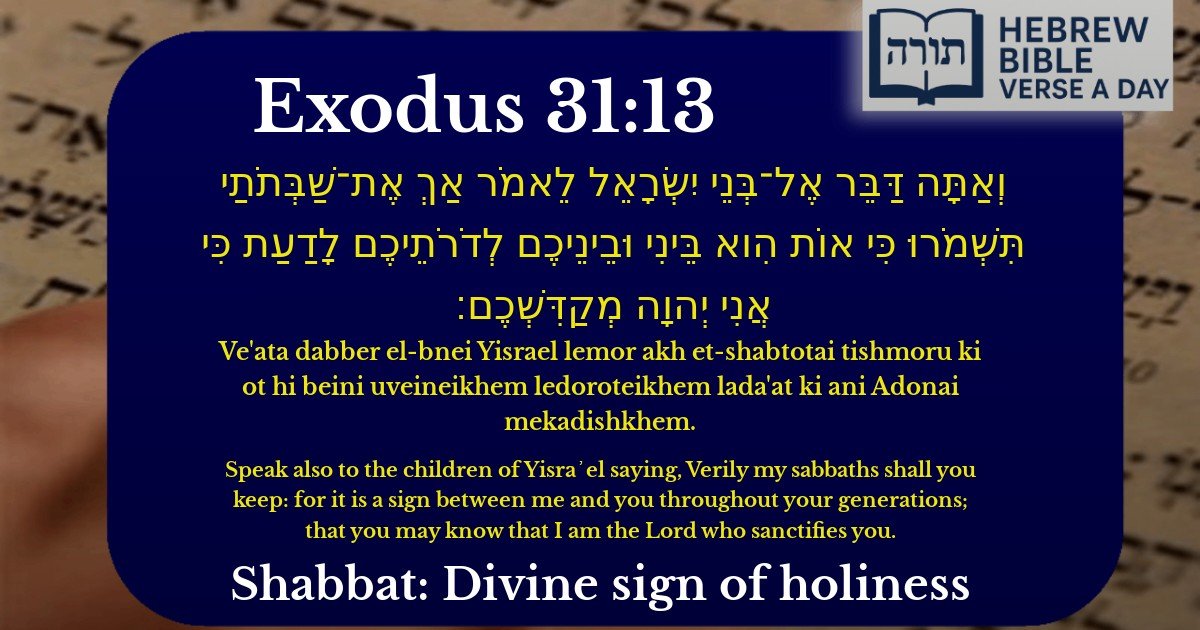
וְאַתָּה דַּבֵּר אֶל־בְּנֵי יִשְׂרָאֵל לֵאמֹר אַךְ אֶת־שַׁבְּתֹתַי תִּשְׁמֹרוּ כִּי אוֹת הִוא בֵּינִי וּבֵינֵיכֶם לְדֹרֹתֵיכֶם לָדַעַת כִּי אֲנִי יְהוָה מְקַדִּשְׁכֶם׃
English Translation
Speak also to the children of Yisra᾽el saying, Verily my sabbaths shall you keep: for it is a sign between me and you throughout your generations; that you may know that I am the Lord who sanctifies you.
Transliteration
Ve'ata dabber el-bnei Yisrael lemor akh et-shabtotai tishmoru ki ot hi beini uveineikhem ledoroteikhem lada'at ki ani Adonai mekadishkhem.
Hebrew Leining Text
וְאַתָּ֞ה דַּבֵּ֨ר אֶל־בְּנֵ֤י יִשְׂרָאֵל֙ לֵאמֹ֔ר אַ֥ךְ אֶת־שַׁבְּתֹתַ֖י תִּשְׁמֹ֑רוּ כִּי֩ א֨וֹת הִ֜וא בֵּינִ֤י וּבֵֽינֵיכֶם֙ לְדֹרֹ֣תֵיכֶ֔ם לָדַ֕עַת כִּ֛י אֲנִ֥י יְהֹוָ֖ה מְקַדִּשְׁכֶֽם׃
🎵 Listen to leining
Parasha Commentary
📚 Talmud Citations
This verse is quoted in the Talmud.
📖 Shabbat 118b
The verse is discussed in the context of the importance of observing the Sabbath as a sign between God and the Jewish people.
📖 Yoma 85b
The verse is referenced in a discussion about the sanctity of the Sabbath and its role as a covenant between God and Israel.
The Significance of Shabbat as a Divine Sign
The verse (Shemot 31:13) emphasizes Shabbat as an eternal covenant between Hashem and Bnei Yisrael. Rashi explains that the word "אַךְ" ("verily") comes to exclude other mitzvot from being considered signs in the same way as Shabbat. The Rambam (Hilchot Shabbat 30:15) teaches that Shabbat testifies to the creation of the world yesh me'ayin (ex nihilo), serving as a foundational belief in Hashem as Creator.
Shabbat as a Unique Covenant
The phrase "אוֹת הִוא בֵּינִי וּבֵינֵיכֶם" ("it is a sign between Me and you") is interpreted by the Mechilta as demonstrating the special relationship between Hashem and Klal Yisrael. Unlike other mitzvot, Shabbat is given specifically as a sign of this bond. The Sforno adds that by observing Shabbat, we publicly declare our faith in Hashem as the Creator and Master of the universe.
The Sanctifying Power of Shabbat
The concluding words "לָדַעַת כִּי אֲנִי יְהוָה מְקַדִּשְׁכֶם" ("that you may know that I am the Lord who sanctifies you") are explained by the Or HaChaim to mean that through Shabbat observance, Hashem imbues us with kedusha (holiness). The Talmud (Beitza 16a) states that every Jew receives a neshama yetera (additional soul) on Shabbat, elevating us to a higher spiritual state.
Practical Implications from Halachic Sources