

Join Our Newsletter To Be Informed When New Videos Are Posted
Hebrew Text
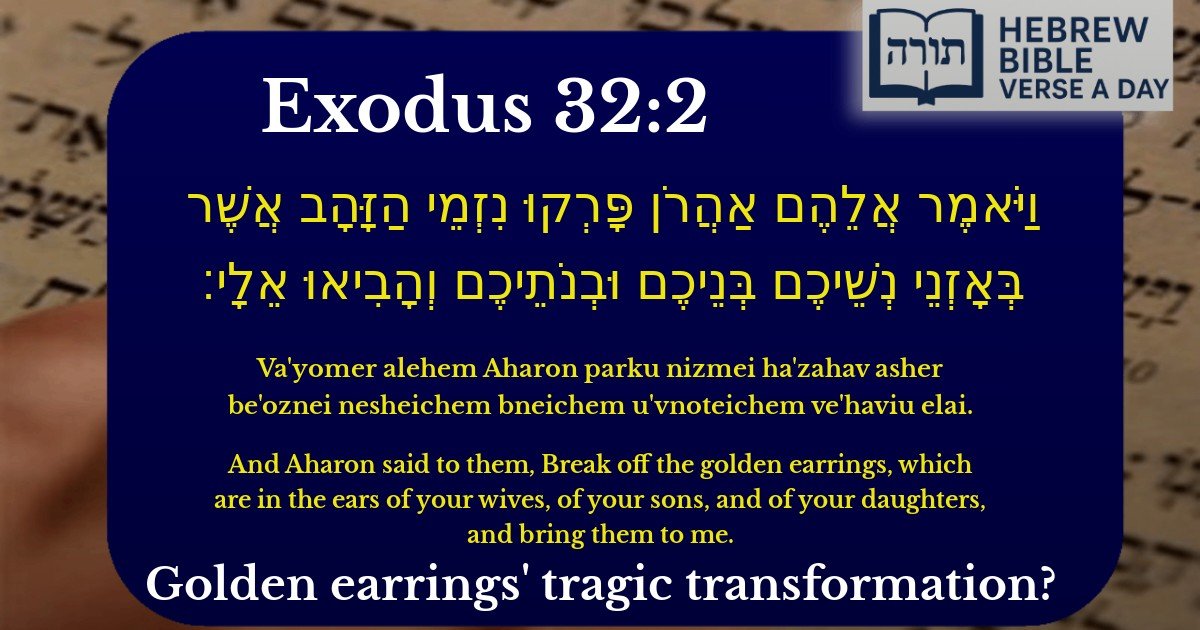
וַיֹּאמֶר אֲלֵהֶם אַהֲרֹן פָּרְקוּ נִזְמֵי הַזָּהָב אֲשֶׁר בְּאָזְנֵי נְשֵׁיכֶם בְּנֵיכֶם וּבְנֹתֵיכֶם וְהָבִיאוּ אֵלָי׃
English Translation
And Aharon said to them, Break off the golden earrings, which are in the ears of your wives, of your sons, and of your daughters, and bring them to me.
Transliteration
Va'yomer alehem Aharon parku nizmei ha'zahav asher be'oznei nesheichem bneichem u'vnoteichem ve'haviu elai.
Hebrew Leining Text
וַיֹּ֤אמֶר אֲלֵהֶם֙ אַהֲרֹ֔ן פָּֽרְקוּ֙ נִזְמֵ֣י הַזָּהָ֔ב אֲשֶׁר֙ בְּאׇזְנֵ֣י נְשֵׁיכֶ֔ם בְּנֵיכֶ֖ם וּבְנֹתֵיכֶ֑ם וְהָבִ֖יאוּ אֵלָֽי׃
🎵 Listen to leining
Parasha Commentary
📚 Talmud Citations
This verse is quoted in the Talmud.
📖 Avodah Zarah 44a
The verse is referenced in the discussion about the sin of the Golden Calf, illustrating Aharon's role in the incident.
📖 Sanhedrin 63a
The verse is cited in the context of discussing idolatry and the events surrounding the creation of the Golden Calf.
Context of the Verse
This verse (Shemot 32:2) describes Aharon's response to the people's demand for a physical representation of a deity after Moshe delayed descending from Har Sinai. The request for golden earrings led to the creation of the Egel HaZahav (Golden Calf), a grave sin in Jewish tradition.
Aharon's Intentions
Rashi explains that Aharon sought to delay the people's sinful request, hoping Moshe would return in the meantime. He asked for the earrings of their wives and children, assuming they would hesitate to part with them, thereby buying time. However, the men eagerly contributed their own jewelry instead (Rashi on Shemot 32:2).
Symbolism of the Earrings
Aharon's Leadership Challenge
The Ramban suggests Aharon faced an impossible choice: outright refusal might have led to bloodshed, while compliance was sinful. His attempt at compromise, though well-intentioned, failed (Ramban on Shemot 32:1-5). The Talmud (Sanhedrin 7a) later discusses the complexities of leadership under public pressure.
Lessons from the Incident